
Follow Us


Copyright MHI © 2026 | All Rights Reserved

The Institute of Caster & Wheel Manufacturers (ICWM), an Industry Group of MHI, has approved Heritage Manufacturing LLC as its newest member during the 2026 Spring Meeting held May 18–20 in Jacksonville, Florida.By joining ICWM, Heritage Manufacturing strengthens its commitment to advancing the caster and wheel industry through collaboration, technical leadership, and the development of industry standards. Membership provides opportunities to work alongside leading manufacturers on initiatives involving product safety, engineering standards, education, and best practices that benefit customers across the global material handling market.MHI member companies have the opportunity to participate in Industry Groups that conduct research, develop standards, publish technical resources, promote safety, collect industry statistics, and provide educational programming. These collaborative groups help ensure the material handling industry continues to innovate while addressing common technical and market challenges.For more information about MHI Industry Groups, visit mhi.org/industrygroups. To learn more about ICWM, visit mhi.org/ICWM.About Heritage Manufacturing LLCHeritage Manufacturing LLC is a U.S. manufacturer of industrial wheels and engineered polymer components serving OEM, industrial, and material handling markets. With expertise in injection molding and advanced material technologies, Heritage produces high-quality wheel solutions designed for durability, performance, and long-term reliability. The company is committed to continuous innovation, domestic manufacturing excellence, and delivering products that help customers move materials safely and efficiently.For more information, visit usamadewheels.com.About the Institute of Caster & Wheel Manufacturers (ICWM)The Institute of Caster & Wheel Manufacturers (ICWM) is an Industry Group of MHI representing the industry's leading manufacturers of casters, wheels, industrial trailer trucks, platform trucks, and towline trucks. Founded in 1933, ICWM members supply mobility solutions to virtually every major manufacturing and distribution sector worldwide.About MHIMHI is an international trade association that has represented the material handling, logistics and supply chain industry since 1945. MHI’s over 1,000 members include material handling and logistics equipment and systems manufacturers, integrators, consultants, publishers and third-party logistics providers. MHI offers education, networking and solution sourcing for their members, the members’ customers, and the industry as a whole through programming and events. The association sponsors the ProMat and MODEX expos to showcase the products and services of its member companies and to educate manufacturing and supply chain professionals. The Warehousing Education and Research Council (WERC) is a division of MHI and provides education and research to the warehousing, distribution, and logistics community.

ALBION, Mich., March 20, 2024 /PRNewswire/ -- Caster Concepts, a leading manufacturer of industrial heavy-duty casters and wheels, announced today that their innovative TWERGO® ergonomic caster wheel has earned the industry's first Ergonauts ergonomic approval. The Ergonauts approval confirms that TWERGO® heavy-duty industrial casters have been tested and validated to reduce push forces by 55% compared with traditional cart casters. "Keeping associates safe is critical to optimizing operations effectiveness," said Steve Davis, CVO, Ergonauts. "Lower push forces help ensure associates avoid back strain and other common industrial ergonomic problems, which are leading causes of lost time and injury costs." To earn certification by Ergonauts, a product must be tested, and results confirmed by two senior professional ergonomists. The approval confirms that workplace safety can be enhanced as a result of the ergonomic benefits of an approved product. "We are honored to be the first material handling company to achieve this level of approval. TWERGO casters were designed to minimize back strains and other common issues related to traditional material handling carts'" Doug Backinger, Vice President of Sales at Caster Concepts, explained. "By taking a user first approach with our product development, we design casters that make operations safer and more efficient. We are committed to continuous innovation to improve our customers' safety and productivity." The TWERGO® caster line is built around patented technology features a multiple-wheel-in-one design. The tapered wheels spin independently and can rotate in either direction and at any rate. The advantages of this unique design include minimized friction and reduced initial and continuous push force, as well as the associate force exerted to turn. For more information about Caster Concepts and the TWERGO® caster wheel, visit www.casterconcepts.com/featured-brands/twergo-the-ultimate-ergonomic-caster-wheel. About Caster Concepts Based in Albion, MI, Caster Concepts designs and builds industrial heavy-duty casters and wheels for virtually any application. Companies rely on Caster Concepts to increase productivity and reduce the risk of worker injury in heavy-duty material handling applications. Our high-capacity casters feature load ratings that range from below 3,000 pounds to over 100,000 pounds. Caster Concepts is ISO 9001-2015 certified and offers one of the industry's shortest lead times, making it the premier choice for many industries. The company was awarded the 2022 Corporate Impact Award by the state of Michigan. Visit CasterConcepts.com. About Ergonauts Ergonauts Performance Technologies is a pioneering technology and engineering services development organization, established in 2000. With over two decades of experience, we are composed of a multidisciplinary team of globally recognized experts in the field of Ergonomics. Our dedication to innovation and excellence has positioned us as leaders in providing solutions that enhance human interaction with technology and engineering systems, ensuring optimal performance and user experience across various industries. For more information visit Ergonauts.com/about-us.
July 31, 2025 - Hamilton Caster, a 118-year-old leading manufacturer of heavy-duty industrial casters, wheels, and material handling solutions, introduces its new Drive Wheel Series. For decades, Hamilton has been providing wheels with keyed shafts for thousands of industrial drive system applications. The existing high volume, combined with the higher demand caused by growth in industrial automation, has precipitated the establishment of a new comprehensive product offering. This new series delivers the same proven durability and performance in an easy-to-specify format requiring less effort and shorter lead times.“By pre-engineering and offering our most popular drive wheel configurations, we’re giving our customers faster access to high-performance wheels that are still built to Hamilton’s industry-leading standards,” said Mark Lippert, President at Hamilton Caster. “At the same time, we’re continuing to offer fully custom solutions for unique applications.”Available in diameters ranging from 4" to 12", Hamilton drive wheels are designed with extra-large hubs to endure the most demanding industrial applications.The new Drive Wheel Series features three wheel types, each available in a range of diameters, and keyway sizes, and even includes two set screws for secure mounting: Duralast® Wheels – Featuring a durable, liquid-cast polyurethane tread chemically bonded to an iron core, Duralast® provides excellent traction, wear resistance, and floor protection—ideal for drive applications requiring quiet, cushioned rolling. Single Flange Track Wheels – Built from steel or cast iron and designed to run on flat track systems, these wheels offer guided directional control and are commonly used in rail-based systems or production-line setups. V-Grooved Wheels – Machined to run on inverted angle iron, these wheels provide consistent tracking and are self-cleaning by design. A partial flat tread allows smooth rolling on flat surfaces when needed.Whether you’re designing new drive wheel applications or need replacements, Hamilton’s new drive wheel product offering is designed to meet the most common industrial specs while still offering room for customization when needed.“We’re excited to bring our customers a standard drive wheel series that offers the same Hamilton toughness they rely on—now with faster availability,” added Lippert. “It’s a smarter way to spec a drive wheel—built for longevity, backed by strength, and ready for action.”Visit the Drive Wheel Landing Page to explore the lineup, view technical specs, and find the right fit for your application.ContactJodi FritschDirector of MarketingJodi.Fritsch@HamiltonCaster.comHamilton Caster & Mfg. Co.www.HamiltonCaster.comwww.CartsAndTrailers.com

October 30, 2024 – Hamilton Caster, a leading manufacturer of heavy-duty industrial casters, wheels, and material handling solutions, is thrilled to introduce its latest innovation to enhance workplace safety —the Field Installable Toe Guard. Affectionately known as the Swiss Army knife of toe guards, this versatile solution not only enhances workplace safety by protecting feet from injury but also offers support for two brake styles—heavy-duty contact brakes and ergonomic brakes—and floor brushes, all of which are field-installable.Heavy-duty contact brakes ensure steady support for larger loads, while ergonomic brakes minimize operator strain and fatigue. Optional floor brushes sweep away foreign objects and debris during operation, protecting casters from damage and keeping pathways clear. These features enhance operational efficiency and contribute to a safer work environment, making this an essential upgrade for safeguarding employees across various environments.Constructed from robust 3/16” steel and finished in a sleek platinum gray, this toe guard ensures long-lasting durability and protection. With an industry-standard 1/2” clearance from the floor, the toe guard integrates seamlessly with existing casters, eliminating the need for drilling or modifications. Customers can opt to have the toe guard assembled onto a new caster or order it separately for easy installation on existing casters. This multi-purpose toe guard replaces Hamilton’s previous model, providing a more adaptable and customizable option available for wheel diameters 4” – 12”.“Our field installable toe guard is designed to significantly enhance safety without the need for replacing entire caster assemblies,” said Mark Lippert, president of Hamilton Caster. “Its customizable features allow users to modify protection levels to specific needs, ensuring comprehensive safety in various operational settings.”What truly distinguishes this toe guard is its versatility, offering a range of options to suit different safety needs. Key features include:• Enhanced Safety: Made from 3/16” steel and designed with a standard 1/2” floor clearance to prevent costly injuries and protect workers• Comprehensive Kit: Includes a replacement axle, 2 lock clips, and 4 nuts for a complete and hassle-free installation.• Compatibility: Available in 8 different caster sizes, accommodating 4” - 8” diameter wheels with 2” tread widths and 6” - 12” diameter wheels with 3” tread widths.• Customizable Options: Enhance functionality with 2 heavy duty brake styles that can be mounted on the front or back, and floor brushes“Staying true to Hamilton’s legacy of quality, our field installable toe guards are manufactured in-house, ensuring exceptional durability and faster delivery,” Lippert added.“This streamlined production process reduces lead times and enhances customer satisfaction.”For additional customization, upon request we offer a unique height-adjustable skirt, allowing adjustments up to 1” off the floor, tailoring the level of protection in special cases, such as up-slope travel of casters.Whether you’re seeking a straightforward safety upgrade or a highly customizable solution, Hamilton’s field installable toe guard is the ultimate tool for workplace safety. For complete specs and product details check out the all-new Field Installable Toe Guard Landing Page or contact our team to learn how the Field Installable Toe Guard can elevate safety in your facility.About Hamilton Caster & Mfg. Co.Founded in 1907, Hamilton Caster is an industry leader in designing and manufacturing stock and custom-engineered heavy-duty casters, wheels, carts, and trailers. Family-owned since its inception, the fourth generation remains as committed to quality as the company’s founder, John Weigel. For more information visit www.hamiltoncaster.com.ContactJodi FritschDirector of MarketingJodi.Fritsch@HamiltonCaster.com513.896.3540Hamilton Caster & Mfg. Co.www.HamiltonCaster.comwww.CartsAndTrailers.com(800) 733-7655

This is a paid advertisement. Whether moving across the floor, on a conveyor, on a feed table, or driving a robot, omni wheels combine the simplicity of a fixed wheel with the multi-directional capability of a swivel caster. Not only are they an innovation in themselves, they are a catalyst for innovation, and competitive edge with:• Greater directional control,• Better load stability,• Precision 360° control,• delivering a more intuitive user experience.Check out what our customers around the globe are doing with them, and what our own solutions are capable of. Could your solution be the next leading innovation?
This is a paid advertisment. Whether moving across the floor, on a conveyor, on a feed table, or driving a robot, omni wheels combine the simplicity of a fixed wheel with the multi-directional capability of a swivel caster. Not only are they an innovation in themselves, they are a catalyst for innovation, and competitive edge with:• Greater directional control, • Better load stability,• Precision 360° control, • delivering a more intuitive user experience.Check out what our customers around the globe are doing with them, and what our own solutions are capable of. Could your solution be the next leading innovation?
Formed in 1993, ICWM is the industry's leading supplier of casters, wheels, and more. If you’re in need of caster and wheel solutions, you can count on their team of experts to provide the answers you need.

Institute of Caster and Wheel Manufacturers (ICWM) members are the Industry's leading suppliers of casters, wheels, and industrial trailer trucks, platform trucks and towline trucks. They supply caster and wheel solutions worldwide and in virtually every major manufacturing and distribution sector. The association was formed in 1933.
Wheeled devices, generally made from plastic and/or metal, utilized to move items within a warehouse, distribution center or manufacturing facility. Carts can be equipped with drawers, bins, trays or flat surfaces to secure items for transport and storage. Carts utilize casters as well as pneumatic and semi-pneumatic wheels. See also Trays .
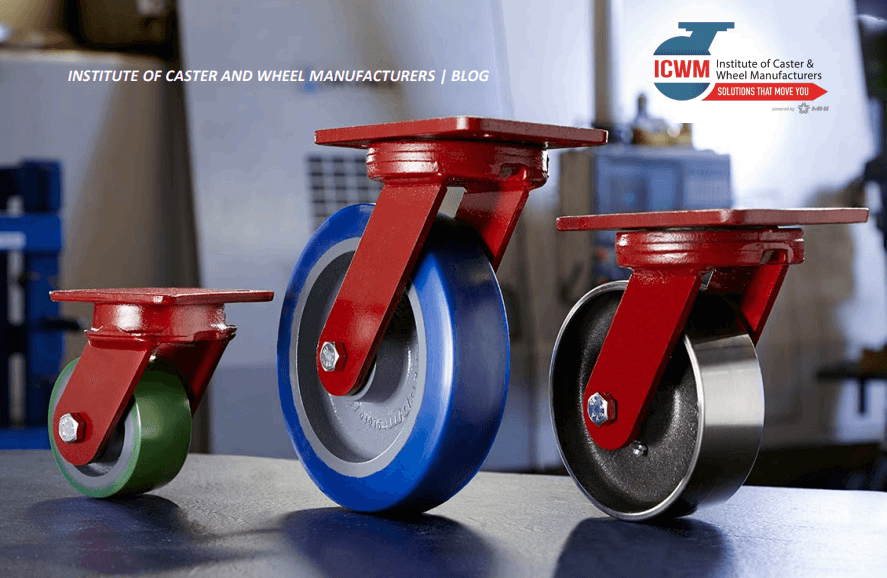
In the dynamic world of material handling, where the efficiency and safety of operations hinge on the reliability of equipment, the often-overlooked heroes are the casters and wheels. Both play a pivotal role in the seamless movement of loads through industrial environments, yet the intricacies of selecting the right ones are often underestimated.Before you add to cart consider these common mistakes to avoid.Ignoring Load Limits: The Pitfalls of Overlooking Capacity RequirementsExceeding the recommended load capacity of casters can result in premature wear, damage, and failure. Most loads don't maintain an even weightacross the length and width of the platform. An off-center load could overload even the most durable casters. If a caster fails due to excessive weight, it can potentially cause injuries to workers and damage to products or infrastructure.It's crucial to accurately assess load requirements and choose casters that can accommodate the appropriate load capacity (including the weight of your cart!) Pro Tip: For optimal load distribution and safety, the common mistake of dividing the load capacity by 4 overlooks crucial factors. Instead, we advise dividing by 3 to account for potential uneven floors and to ensure stability. There are two reasons for this: First, on uneven surfaces, 3 or fewer casters bear a greater load, emphasizing the importance of ensuring the load can be adequately supported by 3 casters for operator safety and equipment integrity.Second, unpredictable load distribution necessitates planning for potential shifts, whether due to floor irregularities or weight imbalances. Adjusting the load rating accordingly ensures a proactive approach to prevent potential issues.Material Mismatch: Why the Right Wheel Matters for Your EnvironmentWheels are used in material handling because they significantly reduce the force required to move an object. Think about the force needed to push a heavy box across a floor. Static friction demands a specific applied force to initiate motion, and once in motion, dynamic friction insists on a consistent force to sustain it. The person exerting the force encounters a delicate balance: their applied force against the friction force generated by the box's weight and the floor. Therefore, it is crucial to understand the factors that impact caster performance.Will it navigate rough or uneven floor conditions? Is floor protection a priority? Does noise or speed play a role? Will the wheel be subjected to washdown or high-heat applications? These are the questions that guide the meticulous selection of the right caster and wheel.The complexities within polyurethane wheels alone can create paralysis in selecting the right type. Add in metal, nylon, rubber, and pneumatic, and it becomes even more crucial to comprehend the environment the wheel will be working in. Choosing caster materials unsuitable for the environment can have a significant impact on rolling resistance, triggering a waterfall effect of potential issues including compromised performance and durability, premature wear, failure, and a more strenuous work environment.Pro Tip: Casters and wheels come in various shapes, sizes, and materials to match unique performance requirements. Some roll-on tracks and temperatures up to 500F. Others bear 40,000-pound loads inside and outside the factory. Gather application data and choose an industrial caster/wheel manufacturer (or distributor) that you trust to help you select the right caster. Taking these extra steps will prevent headaches down the road. RELATED: Casters, Wheels, and Accessories GuideMaintaining Momentum: Why Speed Matters Most casters are rated for walking speed (3-5 mph), but sometimes the need for speed extends beyond this. Faster speeds require a caster that can not only withstand the increased velocity but also the increased severity of impacts. When towing loads at accelerated paces, it becomes imperative to assess not only the wheel material but the bearing type as well.Precision ball bearings can typically handle higher speeds and radial forces. These bearings are best for manual applications due to lower start-up forces. Wheels used in towing applications benefit from tapered wheel bearings as they run at higher speeds and encounter turns under load. These bearings are best for side load conditions as well as higher industrial speeds. Pushing the speed boundaries requires casters that can keep up without compromising performance or safety.Pro Tip: Larger wheel diameters and axles, more robust swivel construction, and bearing selection are critical components that enhance casters' overall performance and endurance at higher speeds. Overlooking Safety Standards: Don’t Put Your Workplace at RiskAccording to the Spine Research Institute at The Ohio State University, over 1.3 billion people suffer from musculoskeletal disorders that lead to low back, neck, shoulder, and other joint pain. While the causal pathways of these disorders are influenced by a multitude of factors, the workplace environment is a consideration.Adhering to safety standards ensures casters used in material handling meet specific load capacity, durability, and design criteria. This compliance is directly tied to workplace safety, reducing the risk of accidents, injuries, and damage to both personnel and property. Following safety standards helps create a safer working environment by ensuring casters can withstand the demands of the application.Pro Tip: Ask if the manufacturer is a member of the Institute of Caster and Wheel Manufacturers (ICWM), a Material Handling Institute (MHI) subgroup. Members are committed to safety and must adhere to certain criteria such as the American National Standard ANSI ICWM-2018, Vocabulary, Performance, and Testing Requirements for Casters and Wheels. This Standard is intended to guide owners, users, designers, purchasers, and/or specifiers of material handling equipment or systems.Neglecting Maintenance: The Silent Killer of Caster LongevityAccording to Forbes, unplanned/unscheduled downtime represents one of the costliest events at any manufacturing plant. Specific to casters, failing to perform regular maintenance, such as cleaning and lubrication, can lead to the accumulation of foreign objects and debris on caster components. This accelerates wear and tear, shortening the lifespan of the casters and increasing the risk of failure and unplanned downtime.Alternatively, planned downtime is a proactive approach to preventing breakdowns, and the build-up of contaminants within your caster to prolong the life of your equipment. Should you be using a caster that is not maintenance-free, it is important to implement a routine maintenance schedule that includes cleaning, inspection, and lubrication of caster components. Pro Tip: Have you considered maintenance-free casters? These casters minimize downtime and reduce maintenance costs by eliminating the need for lubrication or regular upkeep. Featuring sealed precision bearings and durable construction, they provide consistent performance, enhanced safety, and cleaner operation. Perfect for lean manufacturing, automated systems, and industries like aerospace, automotive manufacturing, healthcare, logistics, electronics assembly, cleanrooms, and renewable energy.As we understand the pitfalls explored above, it becomes evident that the right caster choice is not just about functionality but a commitment to safety, efficiency, and longevity. So, before you proceed with your next caster purchase, remember the cardinal rules: respect load limits, choose materials wisely, embrace routine maintenance, adhere to safety standards, and consider the often-underestimated factor – velocity. Each decision contributes to a chain reaction of reliability and performance in the workplace.Never consider casters and wheels a commodity; rather consider them the foundation of a safe, efficient, and enduring material handling environment.For more information visit hamiltoncaster.com or www.mhi.org/icwm.
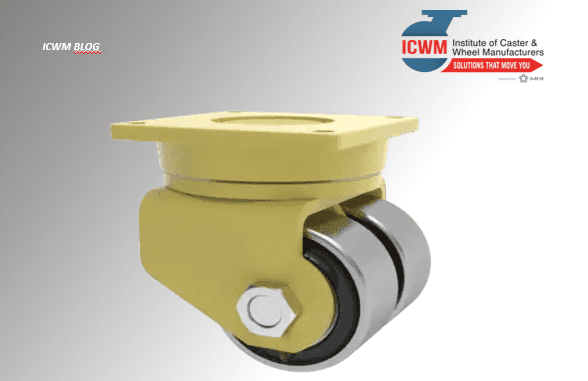
- Load capacity requirements, speed limitations, environmental conditions, and flooring quality are the main challenges for specifying casters carrying loads of 10,000 lbs. or above.- Selecting the appropriate caster and wheel combination is essential to ensure operational efficiency, optimal performance, and worker safety.- Environmental factors impacting caster performance include temperature fluctuations, exposure to moisture or corrosive substances, and the presence of debris or other obstacles.
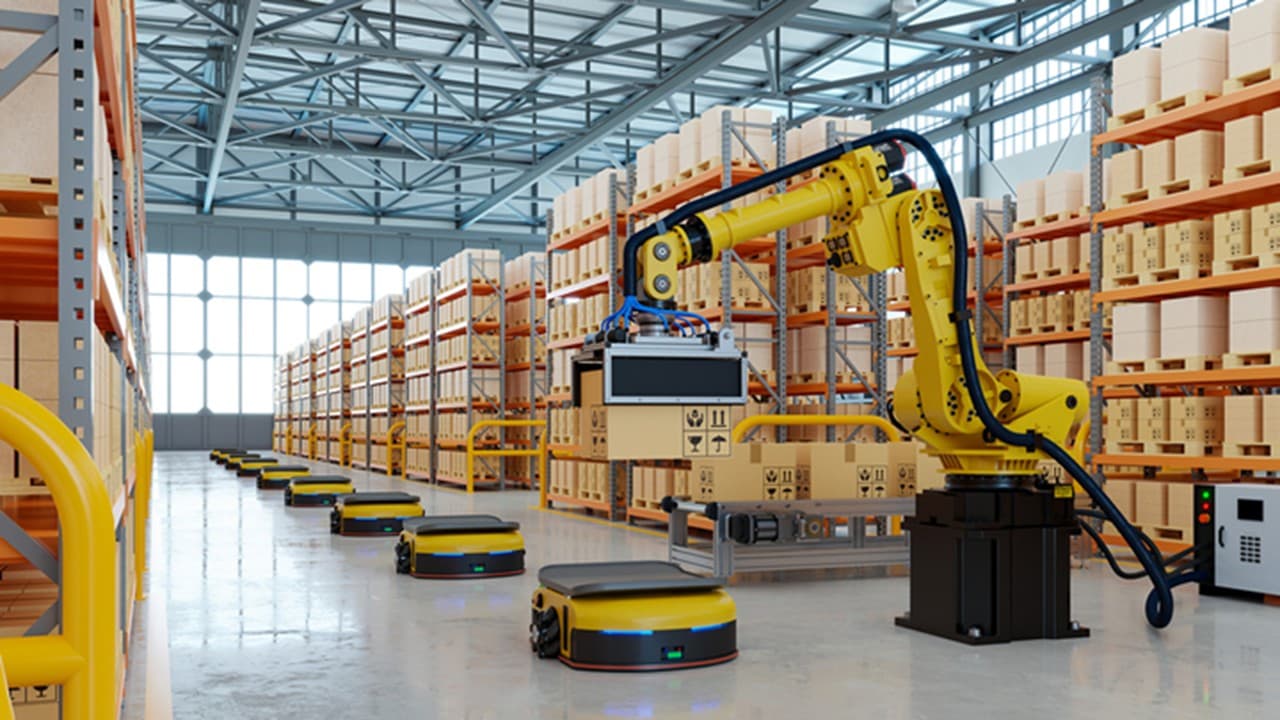
MODEX 2026 Session RecapAs autonomous mobile robots (AMRs) and automated guided vehicles (AGVs) become increasingly common in manufacturing, warehousing, and distribution environments, one component often receives less attention than it deserves: the wheel and caster systems that enable movement.During the MODEX 2026 session, "Efficient Casters and AGVs," industry experts explored the critical relationship between mobility components and automated vehicle performance. While software, sensors, navigation systems, and batteries often dominate automation discussions, the panel highlighted how caster and wheel selection directly impacts efficiency, battery life, throughput, maintenance requirements, and overall system reliability.The message was clear: automation performance starts at ground level.Every Pound of Force MattersFor AGVs and AMRs, efficiency is measured in more than speed. Energy consumption, battery runtime, and system longevity all play a role in determining operational success.One of the key themes discussed was rolling resistance—the force required to keep a wheel moving. Even small improvements in rolling efficiency can have a significant impact when multiplied across hundreds of vehicles operating thousands of hours per year.Reducing rolling resistance can help: Extend battery life Increase vehicle operating time between charges Reduce motor strain Improve throughput Lower total operating costsAs organizations seek greater productivity from their automation investments, optimizing wheel and caster performance becomes an increasingly valuable opportunity.The Floor and the Wheel Must Work TogetherThe session emphasized that AGV performance is heavily influenced by the interaction between the wheel and the facility floor.Factors such as: Floor condition Surface material Debris and contaminants Expansion joints Environmental conditionscan dramatically affect vehicle performance.Selecting the proper wheel material for the application is essential. A wheel that performs exceptionally well in one environment may create unnecessary resistance, wear, or vibration in another.Panelists stressed that successful AGV deployments require evaluating the entire mobility system rather than focusing solely on the vehicle itself.Reliability Drives ROIUnexpected downtime remains one of the most costly challenges facing automated operations.While organizations often focus on motors, controls, and software when troubleshooting AGV performance, mobility components can also contribute significantly to reliability issues.Wheel wear, bearing failures, flat spotting, and improper caster selection can lead to: Reduced efficiency Tracking issues Increased maintenance Unexpected downtime Higher operating costsDesigning mobility systems for durability and long service life helps ensure that AGVs deliver the return on investment organizations expect from automation technologies.Automation Requires PrecisionUnlike manually operated carts and equipment, AGVs rely on precise and repeatable movement.Even small variations in wheel performance can impact navigation accuracy, docking performance, and vehicle consistency.As AGV applications become more sophisticated, mobility systems must support increasingly demanding operational requirements. Precision bearings, high-quality wheel materials, and carefully engineered caster assemblies play an important role in helping automated systems achieve reliable performance.The panel highlighted that mobility components should be viewed as critical system elements rather than commodity parts.Sustainability Through EfficiencyAnother topic discussed was the growing focus on sustainability and energy consumption.Improving rolling efficiency not only reduces operating costs but also decreases overall energy demand. For facilities operating large fleets of AGVs, these gains can be substantial over time.Efficient mobility solutions contribute to sustainability goals by: Reducing energy consumption Extending battery life Lowering replacement frequency Minimizing maintenance requirements Reducing overall system wasteAs sustainability initiatives continue to influence capital investment decisions, mobility optimization is becoming an increasingly important consideration.Collaboration Drives InnovationA recurring theme throughout the discussion was the importance of collaboration between AGV manufacturers, mobility suppliers, end users, and industry organizations.No single component determines automation success. Instead, performance is achieved when all elements of the system work together.By bringing together expertise in automation, material handling, mobility, and operational requirements, the industry continues to develop solutions that improve efficiency, reliability, and productivity across a wide range of applications.Key TakeawayAs automation continues to transform material handling, the fundamentals of mobility remain as important as ever.The efficiency, reliability, and performance of AGVs depend on countless decisions made throughout the design process—including the wheels and casters that keep vehicles moving.The MODEX 2026 session "Efficient Casters and AGVs" reinforced an important lesson for the industry: when it comes to automation, smarter mobility drives better results.Organizations seeking to maximize the value of their AGV investments should look beyond software and sensors and recognize the critical role that efficient wheel and caster systems play in achieving long-term operational success.
The ANSI ICWM‑2018 and ANSI ICWM‑2026 documents both define vocabulary, performance, and testing requirements for casters and wheels, but the 2026 version represents a significant update.The 2026 standard builds on the conceptual framework established in prior versions of the standard.The 2018 standard covers four primary categories: Furniture chair casters Industrial casters Institutional/medical casters Business machine & shopping cart castersThe 2026 version adds new categories of casters to reflect a wider range of real-world applications and specialized equipment, including: Bakery rack casters (casters used in high temperature environment) V-grooved wheels Separation of business machine vs. shopping cart casters, which had previously been lumped together in the standard.The 2026 version of the standard has been restructured such that test methods for the most common tests are grouped together at the beginning of the document. Then the acceptance criteria are listed for each category. Exceptions to this would be specialty test methods that are specific to only one category.The most notable changes in the 2026 standard are: Brake Holding Force acceptance criteria for tread compression brakes has increased from 7% of load capacity to 10% of load capacity. Performance expectations have increased for improved safety. Swivel play measurements / requirements are now listed as linear measurements, alongside angular measurements, to allow for flexibility in how results are reported. Vertical Impact test requirements are no longer defined for Industrial Casters or Institutional / Medical Casters. The reason for this is that vertical dynamic test provides a more realistic representation of how the casters will see impact in the field. Furniture is an exception as furniture is often flipped over onto the casters after the casters are installed. Static test requirement for Institutional Casters has changed from 4 times load capacity applied for 1 minute to 2 times load capacity applied for 1 hour. Static test requirement for Hospital Bed Casters has changed from 4 times load capacity applied for 1 minute to 3 times load capacity applied for 1 hour. Swivel lock and wheel brake efficiency test procedures have been separated in the 2026 standard to provide clearer direction for each test. Alternative test method provided for Swivel Lock efficiency.The new ICWM ANSI-2026 Casters & Wheels Performance and Test standard can be downloaded for free at www.mhi.org/icwm.

The Institute of Caster and Wheel Manufacturers is comprised of the industry's leading suppliers of caster and wheel solutions worldwide. With more than 914 years experience, they are your best resource for navigating the complex world of wheels and casters.
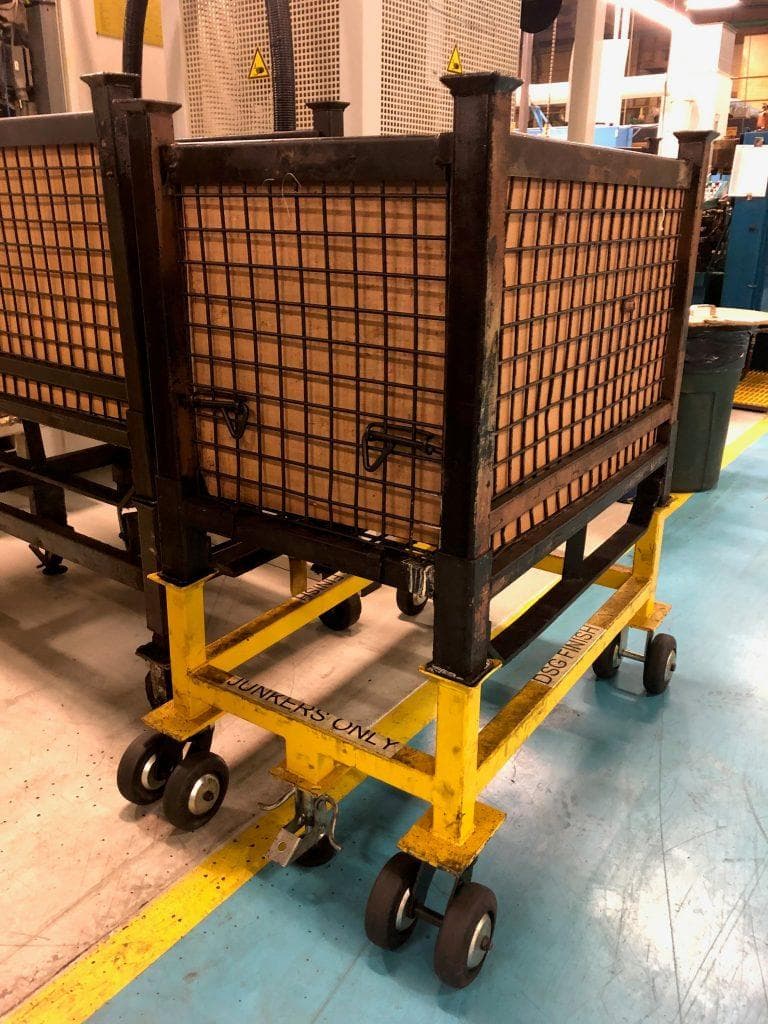
The client’s overall focus was to improve workplace ergonomics. The management team chose to take steps to implement proactive ergonomics. There was concern over the risk of musculoskeletal injuries. Darcor’s twin wheel ergonomic casters was determined to be the best. It reduced push pull forces significantly and, most importantly, received tremendous positive feedback from operators.
This standard is a free downloadThis standard provides manufacturers, specifiers and users with a common basis for evaluating the safety, durability, structural adequacy, and technical requirements for group-specific casters and wheels. The standard defines industry terms, specific tests, equipment/methods that can be used, the conditions of tests, and minimum acceptance levels to be used in evaluating these products. This standard addresses the total range or market for casters and wheels for these categories:furniture chair casters;industrial casters (at or under 2.5 mph and over 2.5 mph);institutional and medical equipment casters; and business machine and shopping cart casters.This standard includes a glossary of caster and wheel terms, definitions, symbols and dimensions. Additionally, appropriate caster and wheel test equipment, procedures and methods are delineated and incorporated into this standard.
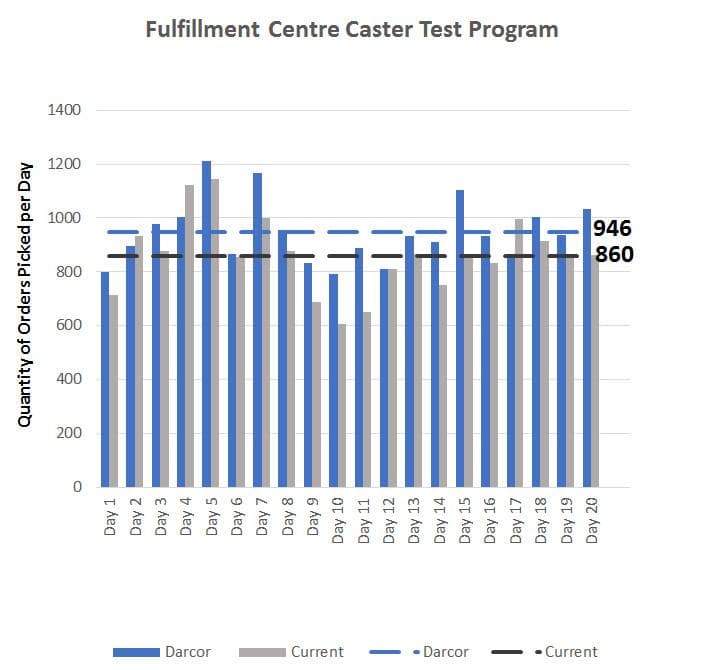
A Closer Look at How Low Quality Casters Will Cost Your Organization in Productivity

This White Paper provides an overview of the issues involved in manual pushing and pulling, including ergonomics; cart, wheel, and caster design; and important operating environment factors.