
Key Areas, Considerations For Integrating Robotics And Automation With Conveyor And Sortation Systems
Warehouse Automation Blog
While high competition for scarce warehouse and distribution labor — and the subsequent rise in wages — had already prompted more operations to investigate robotic and automation solutions to augment their current workforce, COVID-19 compelled many companies to adopt those technologies as quickly as possible. The reason? The surge in e-commerce shopping drove throughput and order volumes to peak levels well before the traditional holiday surge; indeed, McKinsey concluded that the massive, coronavirus-prompted shift in shoppers’ behavior from in-store to online purchasing compressed 10 years of forecasted e-commerce growth into three months.
Already challenged to hire and retain workers, companies further coped with increased absenteeism prompted by illness, fear of contracting coronavirus, and staffers having to care for sick family or children distance learning from home. Likewise reducing headcount were new policies implemented to keep associates safe by reducing the potential for cross-contamination, such as social distancing and staggered shifts. By adding robotic and automated solutions to complement existing conveyor and sorter installations, however, companies can augment their existing workforce’s productivity without struggling to hire additional employees. Currently there are several process areas where these systems are being combined, as well as some key considerations to bear in mind when pairing such solutions together.
Integration Areas
Automation and robotics are enhancing existing conveyor and sortation installations in several areas within warehousing, distribution, and fulfillment. These include:
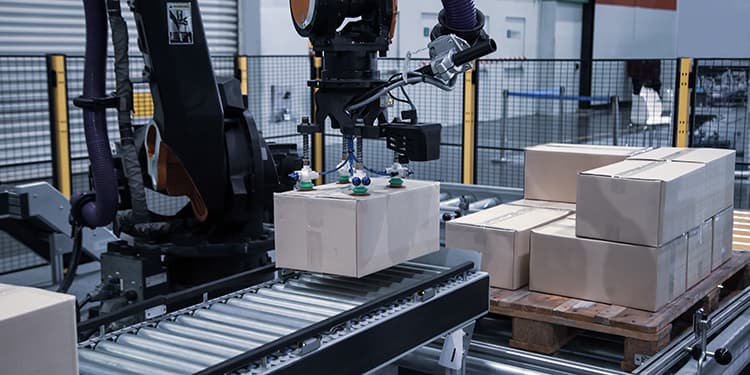
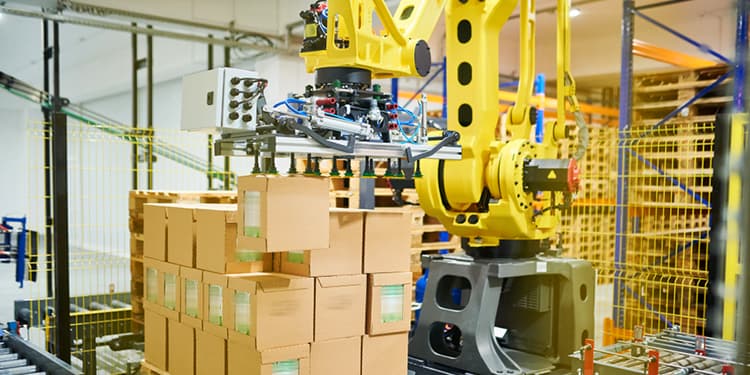
- Palletizing. Because they eliminate the physical labors of bending, lifting, stretching and reaching required to stack cartons on a pallet, a robotic or conventionally automated palletizer placed at the end of a conveyor line is an optimal combination. In retail logistics specifically many pallets are built of a variety of different products: a rainbow pallet. Stacking these mixed loads successfully so that the heaviest items are at the bottom and the lightest at the top — as well as to ensure the pallet doesn’t lean to one side or topple over — requires both skill and experience. A robotic or automated system utilizes algorithms instead to ensure a stable, damage-free load, as well as takes the ergonomic strain off an operator.
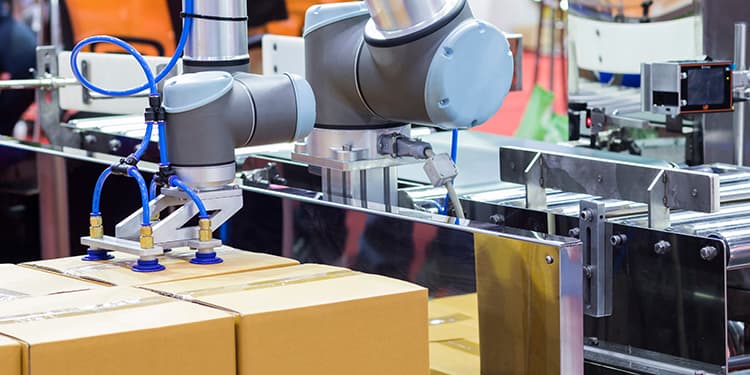
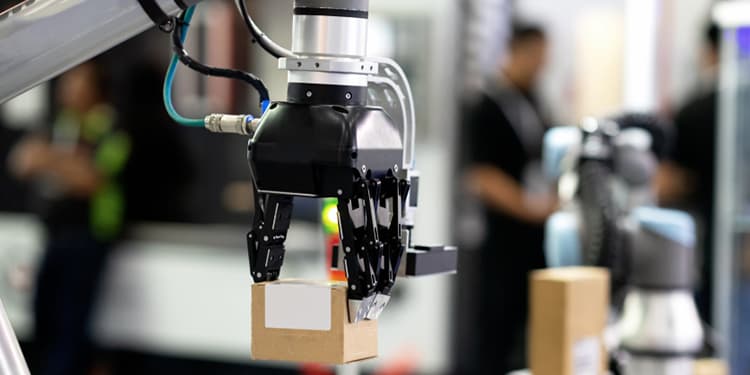
- Goods-to-Person Pick Stations. Many goods-to-person (G2P) solutions utilize conveyor to transport totes of the same product to an associate assigned to a pick station. The worker picks the number of items required of a discrete order and places them in a separate tote or carton on a different conveyor for outbound shipment. Conversely, a robotic picking arm can be integrated into the pick station to select and place required items, enabling an employee to manage a more complicated task.
- Bulk to singulated flow. This is often accomplished by a person manually lifting and placing an item from a stack at specific induction points to a conveyor or sorter. Not only is this task labor-intensive, but also it requires special training and skill to determine where to place each parcel. Automatic singulators or robots can be applied instead to free associates from this repetitive job.
- Transport of Items from Picking Zones. Autonomous mobile robots outfitted with conveyor top attachments are being deployed to transport items selected by employees stationed in designated pick zones. The robot travels from picker to a specific induction point, then propels its load onto the main conveyor line for transport to outbound shipping. This significantly reduces personnel travel time, allowing pickers to be more productive.
Key Considerations
Prior to investing in a robotic or automated technology to enhance an operation’s productivity, consider the following:
- How will this implementation help workers be safer? Robotics in particular excel at performing repeated processes or motions that can result in repetitive stress injuries in humans. When assessing which tasks are ideal for a robotic or automated system to handle, look for the jobs that pose a high risk of injury, such as lifting boxes from a conveyor and placing them onto a pallet. Those staffers can be reallocated elsewhere in the facility to perform less physically strenuous tasks, reducing workers compensation costs and ensuring the long-term health and well-being of employees. Additionally, automation and robotics support social distancing policies by helping staffers maintain a safe distance between one another.
- How can the implementation increase productivity? Robotics and automation work around the clock at a steady pace, without breaks or shift changes. Additionally, they can handle the time-consuming, unproductive tasks associated with order handling and fulfillment — such as transporting completed picks from a picking zone to a conveyor line that routes to pack-out. This frees up human employees to instead pick exclusively with minimal travel, or to handle the types of tasks automation and robotics cannot, such as dealing with exceptions, processing returns, or improving quality control. This can boost overall throughput and productivity.
- Will the robotics or automation perform the task at the same (or higher) rate than a worker? Just because a task can be automated doesn’t mean the technology will outpace a human. The more complex the task at hand, the less likely that a robotic or automated solution will be more efficient than a worker.
- How complex will the control integration of the different systems be? Adding in robotics or automation to an existing conveyor or sortation system will require tight integration of the new technology’s controller with the existing controls. For example, adding a picking robot to a G2P system may necessitate as many as three separate components be programmed to work together: the conveyor, the robot, and the 3D vision system that enables the robot to identify which products to pick. The cost associated with coordinating those separate control systems may be prohibitive or require conversion to a different type of controller that combines all three technologies into a centralized device.
Ready to integrate robotics or automation with your existing conveyor or sortation system? Learn how to ensure a successful implementation with these best practice recommendations for successful project management from the members of the Conveyors and Sortation Systems (CSS) Industry Group of MHI.
- #Blog
- #CSS
- #TRG
- #Automation
- #Conveyor
- #Conveyors And Sortation Systems
- #COVID
- #MHI
- #Robotics
- #Sortation
- #Sorter
View more blogs by:
Related Content
BLOG
5 Ways Robotics Improves Conveyor And Sortation Induction
BLOG
Considering Robotic Palletizing? Follow These Four Steps To Select The Right System And Supplier
BLOG
With Workforce Challenges Prompting Greater Interest In Robots, MHI’s New Robotics Industry Group Offers Resources
BLOG


