
Making Connections: The Importance of IT/OT Convergence
SOLUTIONS COMMUNITY


Does this scenario sound familiar?
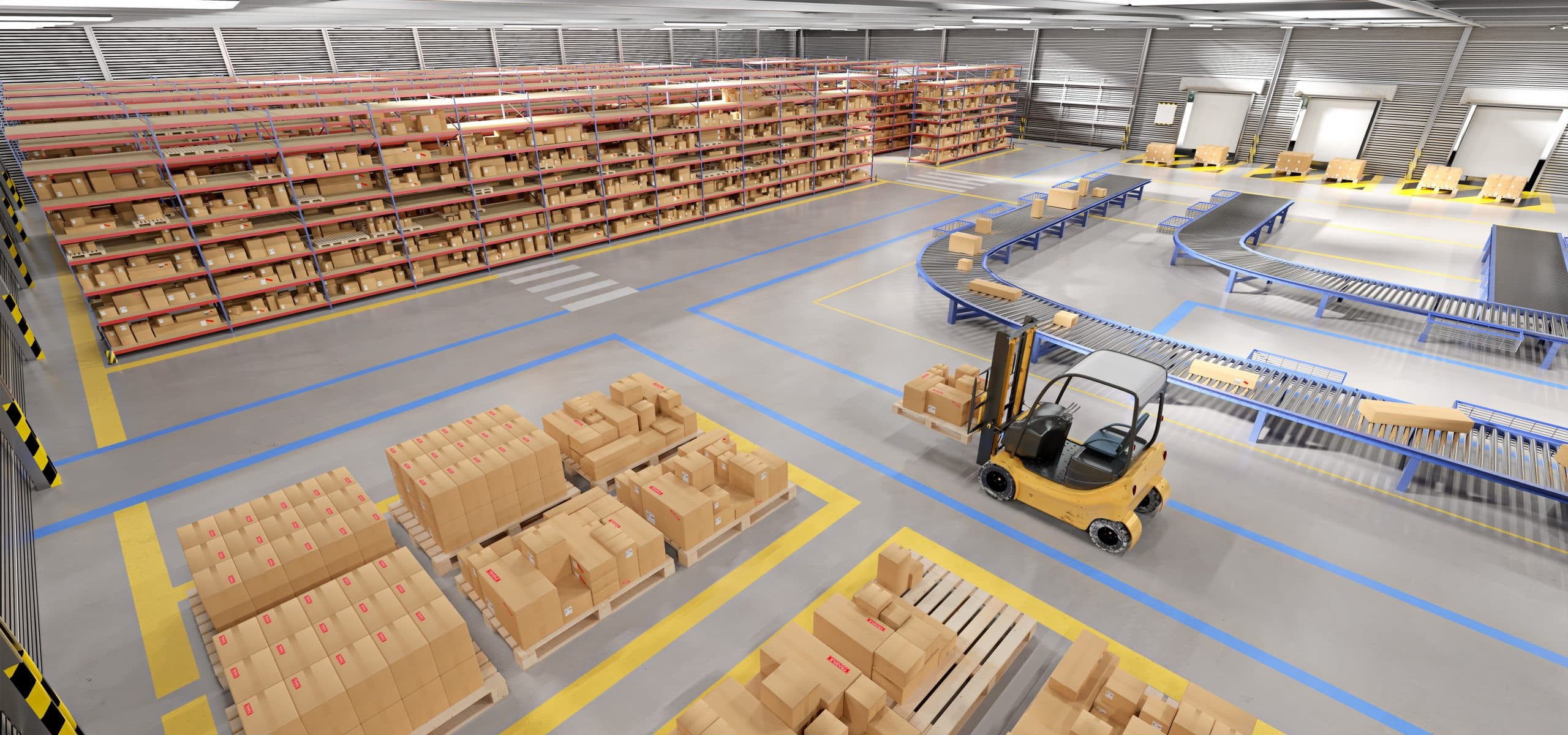
An automated warehouse is buzzing with activity: conveyors humming, AMRs moving, labels printing, all the things that happen in the warehouse – until it doesn’t. An error message is received, but no one knows where it’s coming from. The manager develops a workaround and things start buzzing again. Things work great for a few days and then it comes to a halt. Another workaround and things ramp back up again. This goes on for weeks, maybe months, and the errors keep piling up. Frustrated, the operations staff call the OEM to see if they could figure things. In less than 5 minutes, it is discovered a cable inside one of the machines has failed. After replacing the cable, everything runs without errors.
Why did it take so long to figure out what turned out to be a simple fix? Because the warehouse’s operational technology (OT) and information technology (IT) weren’t talking to each other. With all the amazing technology available to make material handling quicker and more efficient, a lack of connection between the equipment running in facilities and the software systems designed to oversee them can create frustrations like this. Additionally, there is often little to no communication between company IT and OT departments making it difficult to achieve IT/OT Convergence in the warehouse. How do we change that?
What is IT/OT Convergence?
Operational Technology (OT) is the equipment and the software inside it that makes things move, e.g., conveyors, sorters, robots, sensors, and the controller and supervisory screens that run them.
Information Technology (IT) is a software system(s) that moves information, e.g., networks, servers, cloud, and enterprise applications.
IT/OT Convergence is bringing these two things together to work in concert with each other. When it happens, warehouse operations staff have a complete picture of how the applications are functioning. When it doesn’t, different teams get different messages, or no messages at all, leading to miscommunication and errors.
IT and OT are separated into two distinct departments operating in two different realms. Operators run the equipment in the warehouse and software tech staff oversee business information networks. However, today’s automated warehouse equipment has developed its own built-in information-based technology offering insight into maintenance, efficiencies, inventory, and many other areas. As IT and OT continue to overlap, the need to communicate becomes even more important for running the warehouse and for the bottom line.
Consumer products with these two systems working together are commonly called the Internet of Things (IOT). Also called smart devices, you probably use these without even thinking about it. For example, automatic garage doors are built with sensors that can tell you if the door is open when it should be closed or HVAC systems that monitor your home’s temperature to know when to run or turn off. Warehouse equipment has similar devices, such as sensors that track the speed of a conveyor belt, optical sensors to scan labels, or temperature sensors that monitor motors.
Convergence happens when OT equipment is connected to an IT system allowing the system to measure and control OT processes. This can be done physically, with a cable, or it can be done over wifi or in the cloud or whatever information system the business uses. When different IOT devices are connected to an information network, say a home security system, there is IT/OT Convergence and they can work together. For example, the HVAC knows not to run if the garage door is open. The same idea is true for the warehouse, however, because of large facility sizes and the variety and complexity of the equipment used, things get significantly more complicated.
Why Achieving Convergence is Difficult
Achieving convergence is difficult for a variety of reasons. For example, different types of equipment are made by different manufacturers with different software systems. There could also be issues with existing IT systems that are incompatible with equipment software or vice versa, or security measures like firewalls that can interfere with connections. However, according to industry experts, the biggest issue lies in the disconnect between company OT and IT departments. And the disconnect is understandable, says Josh Stearns, Technical Account Manager for Amazon.
“We have two completely different camps, two separate groups of people within a company and they are both right in what they are doing,” he said. “The challenge is getting to a state where they can collaborate more openly and effectively.” Companies can start, he added, by acknowledging that “each side has a stake and something to bring” to the table.
Collaboration is difficult because IT and OT are different departments with their own staff, budgets, priorities, and timelines. While operations might be focused on immediate ordering processes and timelines, IT departments could be focused on security measures and future software updates. For example, if equipment updates are happening in the warehouse, that is the highest priority for the operations staff while IT departments might be more focused on outside security threats. Conversely, IT’s priority is to implement software updates but if that coincides with peak season, that is not ideal for warehouse operations. For businesses with multiple facilities across different locations, convergence gets even more difficult.
Getting to Convergence
Stearns says it starts with businesses knowing what they want to achieve with IT/OT Convergence. Once the goals are set, then it’s a matter of bringing both areas together to build a roadmap. Most material handling equipment already has sensors and controllers that provide large amounts of data, but often that data stops at the machine. Companies need to figure out what data they need to know and then examine how that data fits into the context of operations and then explain that importance to IT so they can added into warehouse systems. Once everyone is on the same page, scenarios like the one mentioned above can be avoided.
Getting everyone together to reach warehouse data in a timely fashion leads to IT/OT Convergence. If you don’t know what data you need or if you have trouble getting IT and OT to collaborate, then it’s time to talk to one of the member companies at MHI’s Solutions Community/Condition Monitoring and Reliability Group to make IT/OT Convergence a reality.
Contributor: With Josh Stearns, Murr Elektronik
Reviewed by Solutions Community Condition Monitoring & Reliability Committee
View more blogs by:
Related Content

BLOG
Please Allow Me to Introduce Myself – Systems Integration Group

BLOG
The Digitization of Intralogistics: Storage
BLOG
Brownfield Integration Challenges in Warehouse Automation
BLOG


