
Take Charge: The Advantages of Charging Lithium-ion Battery-powered Forklifts
Advanced Energy Council
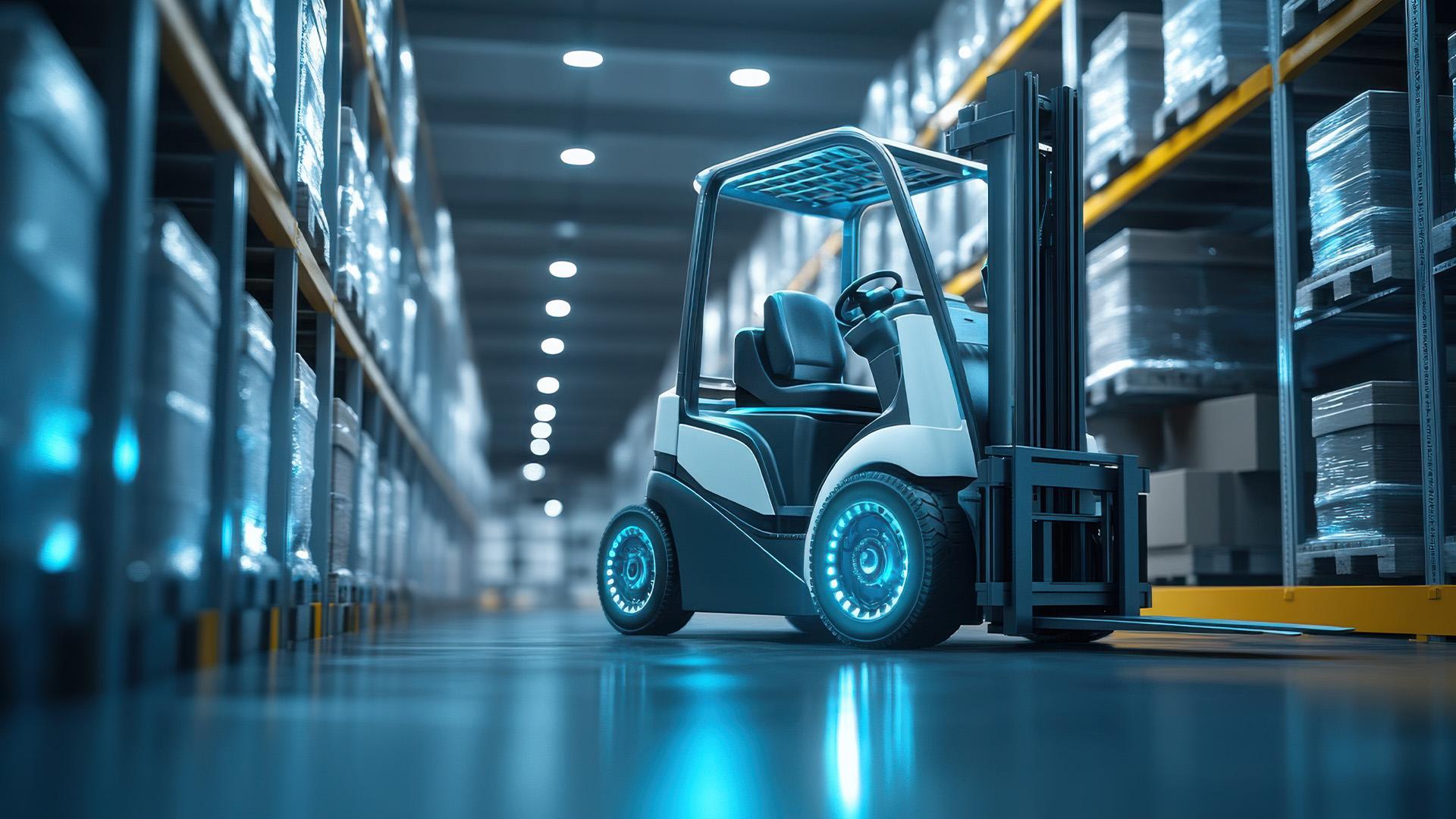
When it comes to the three main sources of power in warehouse forklifts – internal combustion engines (ICE), lead-acid batteries, and lithium-ion batteries – lithium-ion has many advantages over older technologies, such as producing energy that is cleaner, cheaper, and longer-lasting. However, one advantage that gets overlooked is that lithium-ion provides an immediate benefit to warehouses through charging.
Faster, Stronger, Smarter
Lithium-ion has a huge advantage over lead-acid because of faster charging times and opportunity charging. Lead-acid batteries have long relied on the 8-8-8 rule: eight hours of charging, eight hours of cool down, and eight hours of use. If users try to charge lead-acid outside of that schedule, it results in battery degradation. Lithium-ion battery cells, due to their lower internal resistance, accept and transfer electrical current much more efficiently than lead-acid. This low resistance ensures that a higher percentage of the energy is directly stored in the cell rather than lost as wasted heat, allowing them to charge faster and tolerate frequent partial charging with minimal degradation. However, while they far outlast lead-acid in cycle life, lithium-ion cells are still subject to gradual aging from thermal stress or prolonged extreme states of charge, and they require active protection when charging in sub-freezing conditions.
Convenient Charging Stations
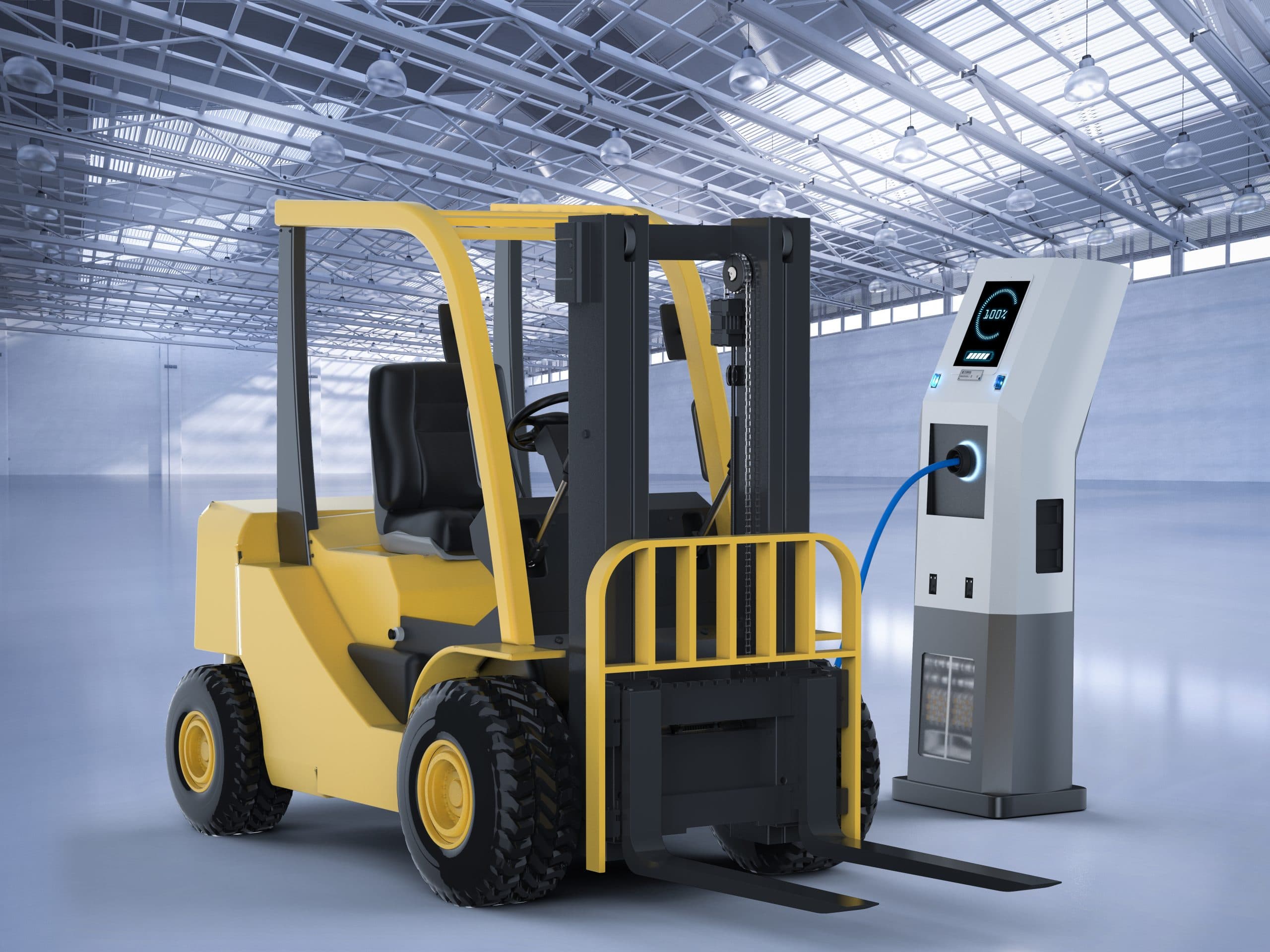
Lithium-ion battery trucks have smaller, more nimble chargers that not only take up less space, they can be placed at strategic locations throughout the warehouse. Gone are the additional battery storage rooms that hold lead-acid chargers and all those extra batteries. Lithium-ion chargers can be spread around the warehouse at convenient locations, including near dock doors, at the end of aisles, or near breakrooms, places where workers can easily plug them in due to their sealed cells and therefore do not off-gas during charging
It also takes fewer batteries to power trucks, eliminating the need for extra battery storage. Some lead-acid powered forklifts individually take up to three batteries. With lithium-ion the goal is to provide one battery per truck sized appropriately and paired with a charger capable of meeting the operational demands. That space can be allocated to more productive warehouse operations.
For internal combustion trucks, there is no longer a need to store highly flammable propane onsite.
Hot and Cold
For warehouses requiring climate control, lead-acid and ICE forklifts have a major disadvantage. Both power sources give off heat, which will increase the temperatures in a cold storage facility causing cooling systems to work harder to offset the heat these power sources emit. Since most cold storage facilities are in the food sector, ICE trucks also emit exhaust gases that can settle on cardboard boxes, conveyor belts, and open food products resulting in product loss thus adding to the costs of running those trucks.
Many people are aware that some lithium-ion consumer products, like smartphones, have poor performance in cold conditions. While that is true on a chemistry level, freezer package equipped lithium batteries for forklifts have internal heating packs placed around the cells to keep them warm enough to function in cold environments, eliminating this issue.
Less Maintenance
Both ICE and lead-acid have maintenance requirements that take significant amounts of time and resources to maintain. ICE engines require oil changes and have lots of moving parts that need maintenance and/or replacement.
Lead-acid batteries also have maintenance issues. One is equalization. Equalization is done periodically, depending on use. When a lead-acid battery is equalized, you are basically overcharging the battery at a controlled high voltage relative to the battery’s nominal voltage, and low current to bring all of the cells back into alignment. Lead-acid batteries are made up of cells, and those cells may discharge their energy at different rates due to variations in cell impedenance and overall battery configuration. So, in equalization, you are bringing all the cells up to full charge. Some cells will reach full charge while others are still trying to get there. The cells that are already fully charged will continue to receive charge while the other cells catch up. This overcharging will degrade lead-acid batteries over time. For lithium the Battery Management System controls cell balancing and communicates with the charger via CAN communication for how and when to balance.
"Watering is another intensive maintenance activity that must be performed regularly on flooded lead-acid batteries. During charging, the battery undergoes a process called gassing, where electricity splits the water in the electrolyte into hydrogen and oxygen gases. Because this water is permanently lost through venting, distilled or deionized water must manually be added back—often weekly depending on shift use—adding notable labor and material costs since standard tap water will ruin the cells. Transitioning to sealed technologies like lithium-ion completely eliminates this fluid topping requirement, delivering immediate operational water savings and supporting facility water conservation goals. Furthermore, for companies targeting carbon neutrality, the low energy efficiency of lead-acid batteries results in substantial energy waste during these charging cycles, drawing heavier loads from the power grid and driving up a facility's indirect carbon footprint." BMS is in the Battery, Not the Charger
Lithium-ion batteries not only require less maintenance, the Battery Management System (BMS) built into the battery helps regulate charging and maintenance upkeep. The BMS controls the modules to accept the charge or discharge when you plug it in to the charger or fork truck.. In lead-acid batteries, charging is regulated by an algorithm that is created by the supplier/manufacturer, but that algorithm lives in the charger, not the battery. Since the BMS holds the profile in lithium-ion batteries, the battery tells the charger what it needs relative to multiple variables instead of a set profile based in the charger going along a preset rate.
Time to Take Charge
While the upfront costs of lithium-ion powered forklifts may give companies pause, the lifetime Total Cost of Ownership (TCO) and rapid ROI add up quickly across reduced electricity usage, zero maintenance, reclaimed storage space, and eliminated fuel costs. Industrial electricity rates typically span from $0.06 to $0.12+ per kilowatt-hour depending on the facility's region, making energy waste costly. Because lithium-ion batteries operate at around 95% charging efficiency, they significantly reduce a facility's overall electricity consumption compared to lead-acid, ensuring that power is directly transferred into the cell for active operations rather than lost as wasted heat. On top of these direct financial gains, this transition inherently elevates your company’s energy sustainability, lowers your carbon footprint, reduces warehouse noise, and reclaims valuable floor space.
With all these advantages, now is the time to “take charge” and update your truck fleet. The members of MHI’s Advanced Energy Council are available to help companies make the change.
Contributor: Jonathan Ward at Micropower
View more blogs by:
Related Content

BLOG
Opportunity Gained: Busting Old Myths About Advanced Energy Forklifts in Smaller Operations
BLOG
Recalculating: Including Productivity Gains in Total Cost of Ownership
BLOG
Advanced Power ROI: Efficiency
BLOG


