
Building a Greenfield Facility for Mobile Robots? Start with the Floor
The Robotics Group (TRG)

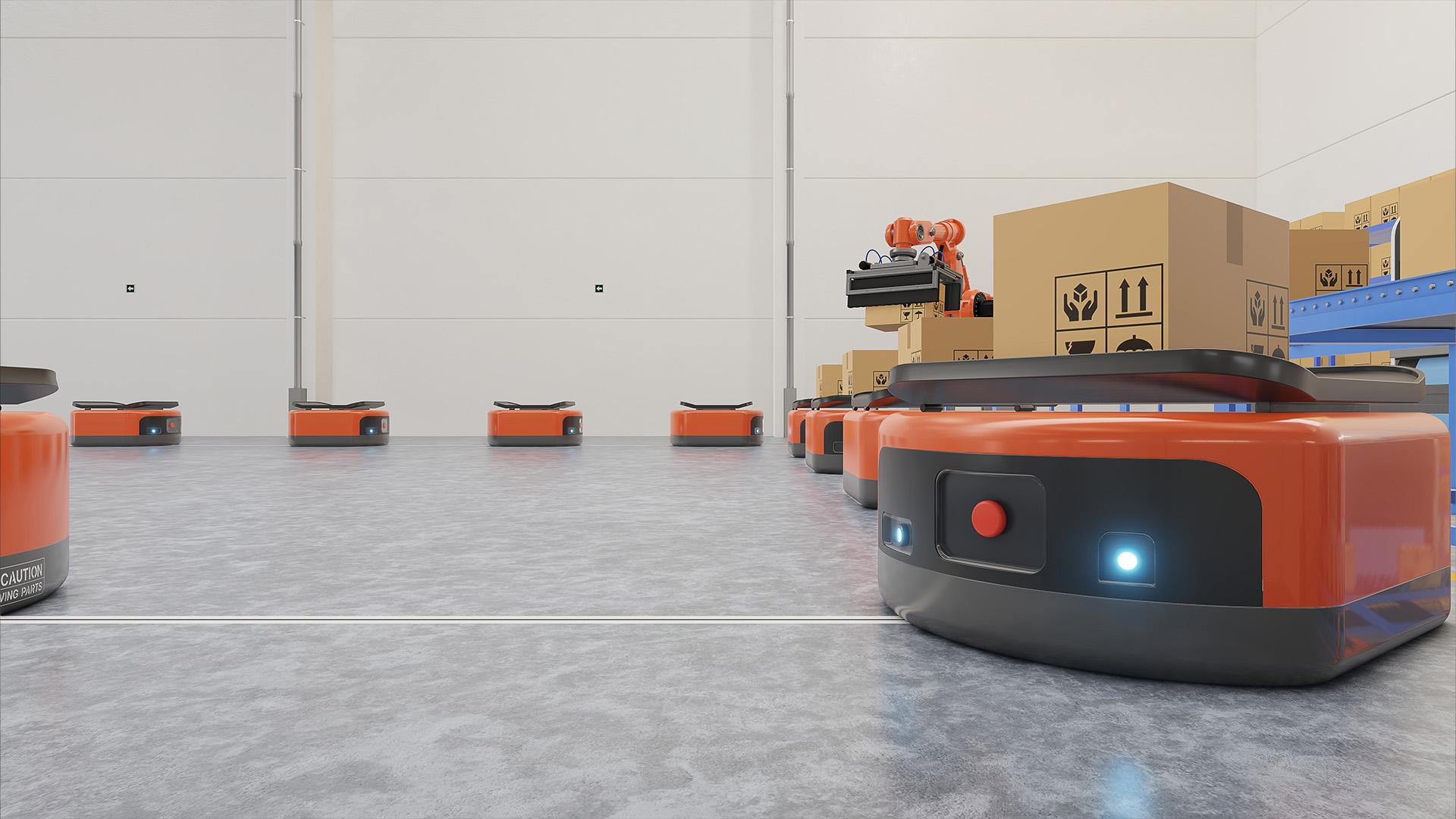
When planning a greenfield facility that will run autonomous mobile robots (AMRs) or automated guided vehicles (AGVs), it’s easy to focus on the robots, the software, and the throughput targets. The floor those robots will travel on often gets far less attention. Yet it’s one of the earliest and hardest-to-change decisions in the project. Furthermore, it’s often locked in before the fleet is even selected.
Whether robots will run at ground level or on mezzanines, rack supported platforms, or pick modules, the floor affects their speed, navigation accuracy, uptime and maintenance costs. Specifying it with the robots in mind from day one avoids costly retrofits later. On every level of the building, the choice comes down to two options: concrete or engineered wood flooring panels.
Getting that choice right matters more every year. LogisticsIQ reported AGV and AMR sales at about $6 billion in 2024. The firm projects the market to reach roughly $22 billion by 2030. It expects AMRs to lead that growth, at a compound annual growth rate (CAGR) of about 30%, versus about 18% for AGVs. By 2030, the firm forecasts some 700,000 mobile robots shipped each year and an installed base of about 3 million.
The investment drivers are familiar: rising e-commerce volumes, persistent labor shortages, and the cost of staffing equipment around the clock. LogisticsIQ estimates that running a single forklift 24/7 with three or four operators can cost more than $200,000 a year. With that much riding on automation, the surface beneath it can’t be an afterthought.
What AMRs and AGVs Need from a Floor
Robots follow the same paths thousands of times a day, often at higher speeds and tighter tolerances than manned equipment. Small surface flaws that a forklift driver would never notice can slow a robot, throw off its navigation, or wear out its wheels.
“The floor is part of the automation system. If the surface isn’t right, the robots won’t perform the way they were designed to, no matter how good the fleet is,” said Dave Paquin, Director of Business Development for Cornerstone Specialty Wood Products. Cornerstone is a member of The Robotics Group of MHI.
Before comparing surfaces, it helps to know what robots require:
Flatness and levelness. Dips, swales, and slopes can pull a robot off its path or cause load shift.
Smooth transitions. Joints, cracks, and edges create bumps that jar onboard electronics and payloads.
The right traction. A surface that’s too slick can cause wheels to slip, while one that’s too rough accelerates wheel wear.
Low glare and consistent color. Shiny finishes reflect light that can confuse vision and floor-marker navigation. Also, some systems perform best on a specific color.
Abrasion and wear resistance. Repetitive travel, pivoting turns, and debris can scuff and gouge the surface over time.
Static control. Electrostatic dissipative (ESD) surfaces help protect sensitive onboard electronics.
Capacity and stiffness. The floor and its supporting structure must carry the robots and their loads with limited deflection.
Concrete: The Familiar Default, with Trade-Offs
Concrete is the standard for ground-level slabs, and for good reason. It’s strong in compression, widely available, and familiar to every general contractor. Under constant robotic traffic, though, its weaknesses show up quickly—at ground level and on elevated structures alike. Among them:
Flatness varies. Slabs can curl at the edges, settle, or finish with swales and dips that cause robots to drift from their intended path.
Joints and cracks. Control joints, shrinkage cracks, and spalled edges create bumps at exactly the spots robots cross most often.
Wear and dust. Repeated wheel passes and pivot turns abrade the surface, especially when dirt and debris are present. Many slabs need sealers or coatings, yet some of those finishes are glossy enough to interfere with navigation.
Heavy Weight. Normal-weight concrete weighs roughly 145 to 150 pounds per cubic foot, so even a few inches over an elevated steel deck adds dozens of pounds per square foot of dead load. That means heavier steel, larger columns and footings, and higher structure costs.
Extended schedule. Concrete needs time to dry and cure before it reaches design strength, which can push back robot commissioning timelines.
Complex repairs. Fixing cracks or worn areas usually means grinding, patching, and recoating, often with the area out of service.
“Concrete works well for a lot of things, but robots are unforgiving,” Paquin said. “A slab can look fine to the eye. But it still has the dips, joints, and worn spots that slow a fleet down or send a robot off course.”
Engineered Wood Flooring Panels: Built for Robotic Traffic
Engineered wood flooring panels are dense composite panels, typically made from wood fiber bonded with resin under heat and pressure. They’re installed over steel decking on mezzanines, rack supported platforms, pick modules, and sortation platforms. They can also be installed at ground level as the robot travel surface in place of exposed concrete.
Floor panels engineered for robotic traffic address the floor requirements above in several ways:
Light weight. A typical 3/4-inch panel weighs under 4 pounds per square foot, a fraction of a concrete deck. That can reduce the steel and foundation needed to support an elevated structure.
A flat, continuous surface. Flooring manufacturers produce panels with consistent thickness. Additionally, tongue-and-groove edges transfer wheel loads across joints to limit deflection where panels meet.
Rolling-load capacity. Depending on panel density and the gauge of the steel deck below, robot-rated panels can support AMR and AGV rolling loads of several thousand pounds.
Engineered finishes. Coating options support a variety of characteristics, including coefficient of friction, gloss level, color, and durability. Some are rated for tens of millions of robot passes, and ESD versions dissipate static.
Faster installation. Panels are fastened from the top with screws or from underneath with concealed fasteners, with no cure time required before the robots’ deployment.
Simpler repairs. Gouges can be patched with epoxy filler and touch-up coating, and a damaged panel can be replaced individually.
“With panels, the surface is engineered in the factory instead of finished in the field,” Paquin said. “That means you can match the coating’s friction, gloss, and color to the robot’s navigation system and know how it will wear before the fleet ever arrives.”
Flooring panels engineered for robotic use aren’t limited to elevated structures. The flatness, joint, wear, and glare problems that affect concrete on a mezzanine affect a ground-level slab just as much, added Paquin.
“Engineered panels can serve as the robot-ready surface on the ground floor too. That lets a facility run its entire fleet on one consistent surface, from the ground floor to the top level,” he explained. He further noted that—as with any floor—the panels and the structure beneath them must be engineered together to meet the specific robots and loads.
Test Before You Deploy
No spec sheet replaces a real-world trial. Paquin recommends bringing the robot vendor and the flooring supplier together early, before specifying the floor. Together, these partners can test how the robots perform on prospective surfaces.
“Viability testing is the best insurance you can buy. Run the actual robots, at actual speeds and loads, on the actual surface,” Paquin said. “If something needs adjusting—whether that’s the coating, the color, or the structure—it’s far easier to fix on paper than after the fleet goes live.”
With mobile robot fleets projected to reach millions of units by the end of the decade, the floor deserves the same attention as the robots themselves. In a new facility, choosing the right surface at the design stage protects throughput, uptime, and the return on the automation investment.
Learn More About Robotics in Material Handling
The Robotics Group members offer guidance on planning, specifying and deploying AMRs, AGVs, and the infrastructure that supports them. To learn more, visit mhi.org/trg.
- #Autonomous Mobile Robot (AMR)
- #Automatic Guided Vehicle (AGV)
- #Flooring for AGV
- #Flooring for AMR
- #Flooring for robots
View more blogs by:
Related Content

BLOG
When Flooring Takes Center Stage in Robotics

BLOG
Demystifying Robots
BLOG
Robots Make Work Easier for Humans

BLOG


