Loading Dock Equipment Manufacturers A loading dock is typically an elevated opening (or openings) in a building’s sidewall where shipments are sorted and staged for loading and unloading of trailers, shipping containers or rail cars. To make that area more accessible and safe during the movement of goods, loading dock equipment and attachments are used. Because the shipping and receiving process requires personnel to conduct loading and unloading processes, dock equipment is designed to ensure the safety of both the workers and the loads as they enter and exit the trailer. Typical equipment includes attachments that secure and bridge the gap between the vehicle and the dock, lighting to illuminate the inside of the trailer, building-to-vehicle communication systems and weather protection.
What Is Dock Equipment?
There are several types of dock equipment. These include:
Security: To secure the trailer, shipping container or rail car to the dock face, or outside wall of the dock door area, and ensure that it does not roll or shift away, a variety of devices are employed. These include:
Dock bumpers - Pieces of rubber located at the floor level of a dock opening to cushion the building from truck trailer impact.
Chocks (also called wheel chocks - Triangular blocks of rubber, wood or metal placed in front of, between or behind truck wheels to prevent trailer movement.
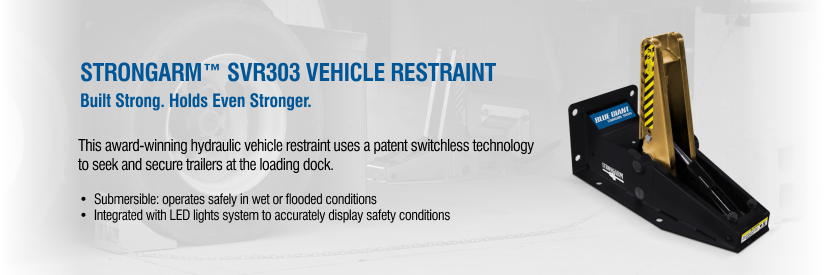
Trailer restraint - Mechanical or hydraulic devices attached to the dock face that connect to the trailer to prevent its movement.
Trailer jack – A device used to support the vehicle end of an over-the-road trailer when the vehicle departs, leaving the trailer behind for extended loading or unloading.
Gap bridging: To properly align the floor of the dock and the floor of the trailer, shipping container or railcar—or to close any space between the two—a variety of devices are used to adjust the elevation of the vehicle and bridge the gap. These include:
Dock board or dock plate- A portable plate that can be placed manually or with a lift truck.
Dock ramp or yard ramp – A portable metal ramp with curbs and wheels attached, pushed into position at the rear of a truck or side of a railcar to provide a bridge down to ground level for personnel or lift trucks to use in loading and unloading. The longer the ramp, the less steep the angle to be climbed.
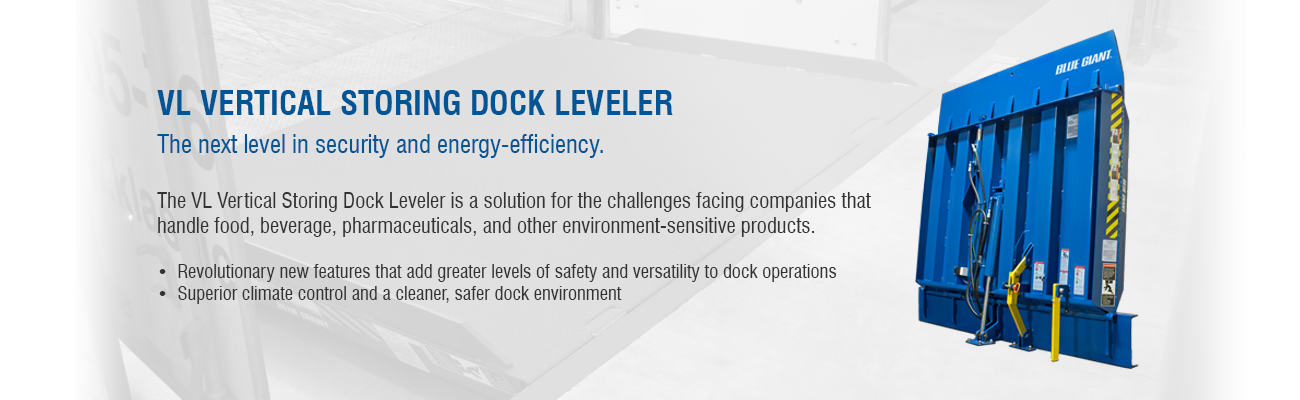
Dock leveler or edge-of-dock leveler - A manually, hydraulically air or electrically operated plate, located at the dock entrance, that can be raised and lowered to accommodate varying trailer floor heights.
Dock lift – A fixed lift whose travel is generally 5 feet or less that is used to load/unload material from trucks and transfer it to dock or ground elevation. For loading and unloading trailers when no direct access to the building is available, a movable device can be used instead. These portable dock platforms use a scissor lift mechanism to lift the surface up to the level of the trailer. This allows personnel and handling equipment to ride up to the trailer and back down to ground level with loads.
Hinged bridge - A hinged transition plate attached to the edge of the dock platform that unfolds to reach the truck bed.
Conveyor – In certain facilities, trailers can be loaded or unloaded from a conveyor line in a fluid load process.
Lighting: Lights are often used at the dock to both illuminate the work area, as well as to facilitate communication between personnel at the dock and a truck driver. Types include:
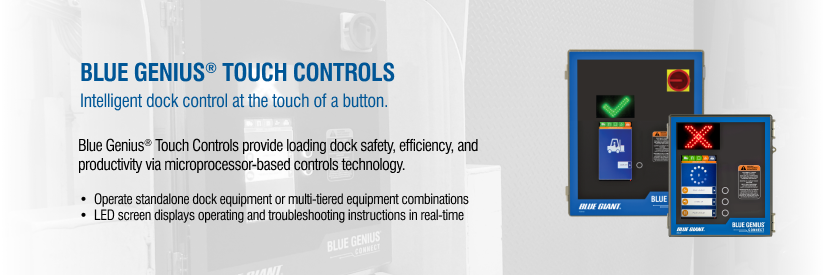
Communication lights – Similar to traffic signals, these two- or three-light devices operate in pairs. The exterior light station signals to the truck driver when it is safe to dock the vehicle or depart from the dock. The interior light station notifies warehouse personnel that a vehicle is present at the dock face.
Illumination lighting – Because dock areas are often utilized at night, dock lights are used to illuminate the work area, as well as to bring light into the trailer, shipping container or railcar to help personnel do their jobs safely.
Weather protection: For dock areas that are exposed to the elements, a variety of devices are used to protect workers and surfaces from rain, snow, ice, heat and humidity. These include:
Loading dock door – Similar to a residential garage door, these retractable doors can be made of panels or curtains to control ambient temperature and humidity inside the building. They can be opened manually or automatically when a trailer is secured to the dock face.
Dock seal or weather seal - A rubber or canvas covered pad or drape that extends a few inches out from a dock face to seal the gap between the dock and the trailer’s entrance.
Dock shelter - A cover that can be extended to protect the opening between the door of a rail car or truck and a warehouse from inclement weather.
How Is Dock Equipment Used?
Dock equipment is used at the point where a trailer, shipping container or railcar is loaded or unloaded.
Shipping: At the dock faces where outbound shipments leave the facility
Receiving: At the dock faces where inbound shipments arrive at a facility
Yard: If a building has no elevated dock openings, or if all dock openings are occupied by other vehicles, loading and unloading can be accomplished in the yard
What Are the Benefits?
Dock equipment provides a variety of benefits:
Communication: Lighting that indicates and directs truck drivers and warehouse personnel that it is safe to park, enter or exit a trailer
Illumination: Lighting that extends into the trailer to help warehouse personnel as they load or unload contents
Loading and unloading: Providing safe access by bridging the gap between the dock face and trailer, shipping container or railcar
Safety: Preventing personnel or loads from tripping or falling through any gap between the trailer, shipping container or railcar and the dock face
Security: Securing the transport vehicle to the building to prevent movement until the loading or unloading process is complete
Weather protection: Protecting personnel and loads from inclement weather
Where Is Dock Equipment Used?
Dock equipment can be found in facilities in nearly every industry, including:
Aerospace
Appliance
Automotive
Beverage
Chemicals
Construction
Consumer goods
E-Commerce
Food
Hardware
Hospital
Manufacturing
Materials processing
Paper
Pharmaceutical
Plastics
Retail
Warehousing and distribution
Read more about how Dock Equipment is used in different industries and applications. Case studies detailing the use of Dock Lifts can be found here.
Learn More About Dock Equipment
Loading Dock Equipment Manufacturers (LODEM) Industry Group
Loading Dock Equipment Manufacturers (LODEM) Industry Group Members
Dock Equipment Standards
GO TO INDUSTRY GROUP