
Follow Us


Copyright MHI © 2026 | All Rights Reserved
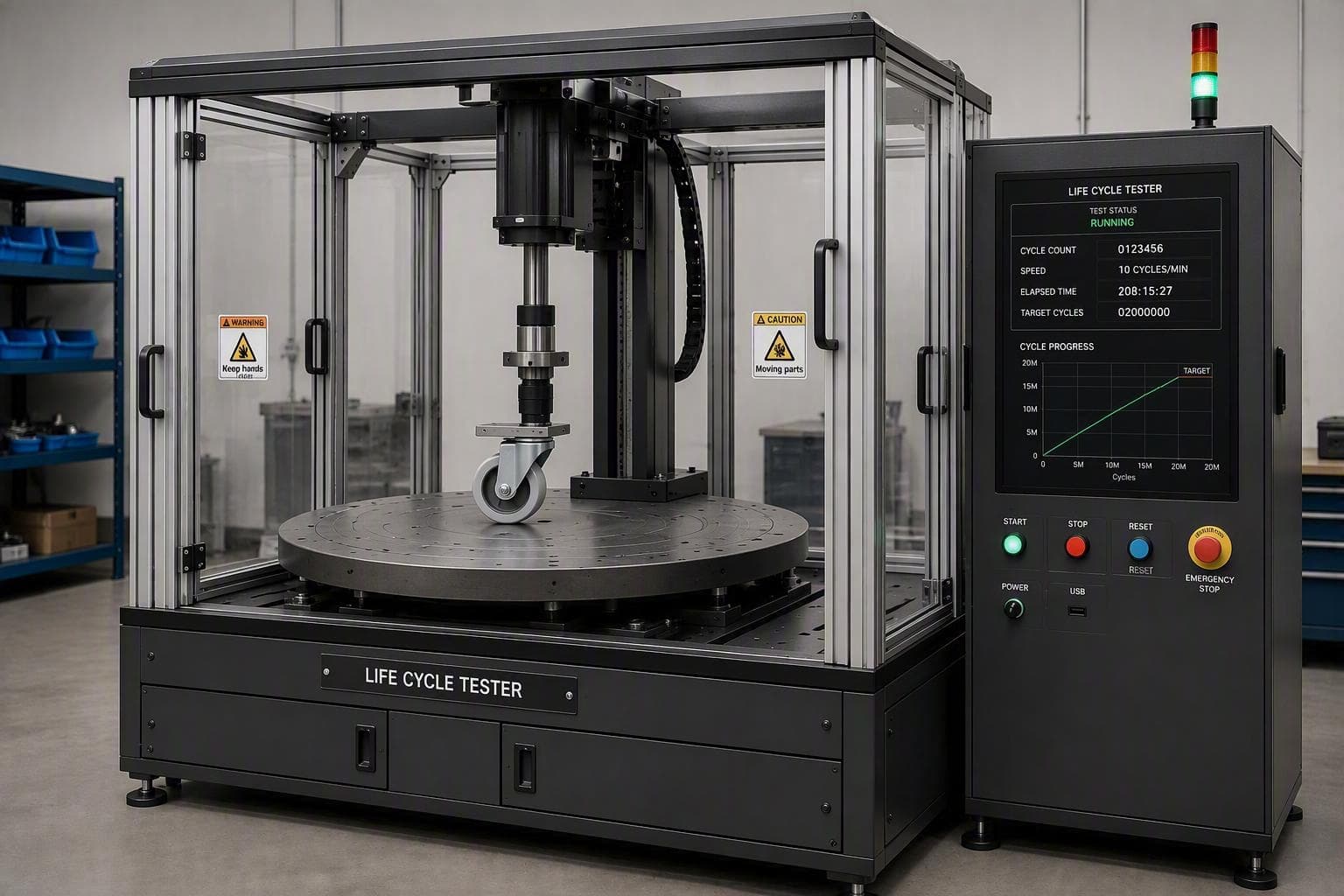
The ANSI ICWM‑2018 and ANSI ICWM‑2026 documents both define vocabulary, performance, and testing requirements for casters and wheels, but the 2026 version represents a significant update.The 2026 standard builds on the conceptual framework established in prior versions of the standard.The 2018 standard covers four primary categories: Furniture chair casters Industrial casters Institutional/medical casters Business machine & shopping cart castersThe 2026 version adds new categories of casters to reflect a wider range of real-world applications and specialized equipment, including: Bakery rack casters (casters used in high temperature environment) V-grooved wheels Separation of business machine vs. shopping cart casters, which had previously been lumped together in the standard.The 2026 version of the standard has been restructured such that test methods for the most common tests are grouped together at the beginning of the document. Then the acceptance criteria are listed for each category. Exceptions to this would be specialty test methods that are specific to only one category.The most notable changes in the 2026 standard are: Brake Holding Force acceptance criteria for tread compression brakes has increased from 7% of load capacity to 10% of load capacity. Performance expectations have increased for improved safety. Swivel play measurements / requirements are now listed as linear measurements, alongside angular measurements, to allow for flexibility in how results are reported. Vertical Impact test requirements are no longer defined for Industrial Casters or Institutional / Medical Casters. The reason for this is that vertical dynamic test provides a more realistic representation of how the casters will see impact in the field. Furniture is an exception as furniture is often flipped over onto the casters after the casters are installed. Static test requirement for Institutional Casters has changed from 4 times load capacity applied for 1 minute to 2 times load capacity applied for 1 hour. Static test requirement for Hospital Bed Casters has changed from 4 times load capacity applied for 1 minute to 3 times load capacity applied for 1 hour. Swivel lock and wheel brake efficiency test procedures have been separated in the 2026 standard to provide clearer direction for each test. Alternative test method provided for Swivel Lock efficiency.The new ICWM ANSI-2026 Casters & Wheels Performance and Test standard can be downloaded for free at www.mhi.org/icwm.
Click Here to Read More

Product certifications are a starting point, not the finish line. MHI’s Solutions Community explains NRTL, system-level risk, and the role of the AHJ.

Click Here to Read More