
Follow Us


Copyright MHI © 2026 | All Rights Reserved
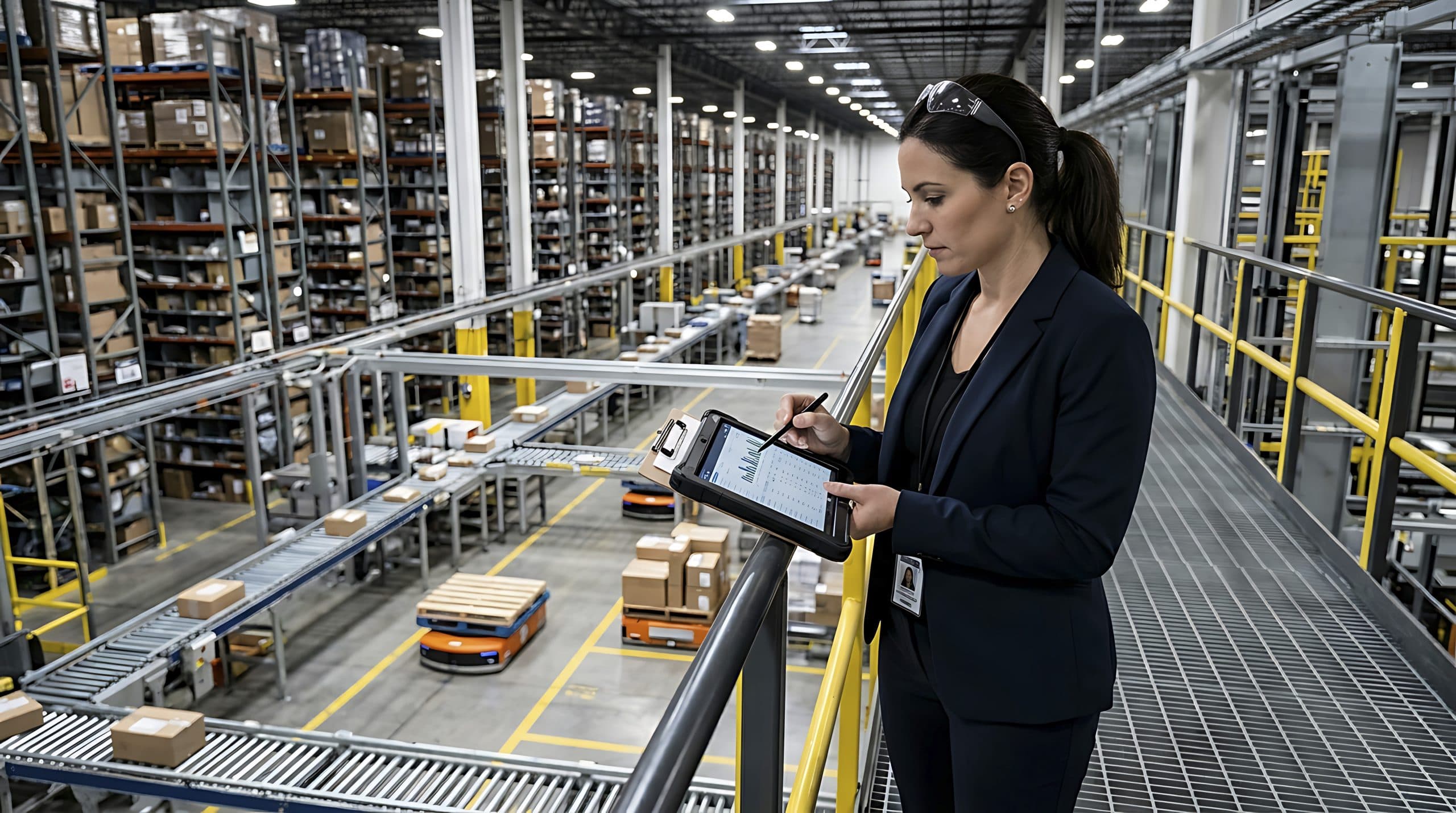
This blog is an overview of the presentation "Scaling Up: Automation and Work Platforms in Action" given live at MODEX 2026. HERE is a link to the audio of that presentation.Scaling Up: Building the Foundation for Smarter Warehouse AutomationAs warehouse operations continue to evolve, businesses are under pressure to improve productivity, maximize available space, and respond to changing customer demands. For many organizations, success depends on more than adding automation. It requires creating the infrastructure and facility design needed to support automation both today and in the future.The combination of automation, elevated work platforms, and strategic facility planning is helping companies increase storage density and operational efficiency. As robotic technology advances, organizations are taking a more holistic approach to design facilities that can adapt and grow alongside their operations.Think Beyond Square FootageFor years, warehouse capacity has been measured primarily by available floor space. Today, leading operations are focused on maximizing cubic volume.By utilizing vertical space through elevated platforms and multi-level work areas, facilities can create additional capacity for storage, picking, sorting, maintenance, and other critical functions. Whether retrofitting an existing building or designing a new operation, building upward can unlock significant efficiencies without requiring facility expansion.Start with Scalability in MindSuccessful automation projects are designed not only to meet today's needs but also to support future growth. Many organizations begin with targeted solutions that address immediate operational challenges and then expand those systems over time as demand increases.Planning for scalability from the outset can make it easier to add storage, increase throughput, or incorporate additional robotics without major disruption. It is also important to understand how automation will interact with the facility itself. Mobile and stationary systems each have unique design, safety, and structural requirements that should be evaluated early in the planning process.Automation Is Becoming More SophisticatedThe first wave of automation largely focused on reducing travel time by moving products closer to workers. Today’s technology is increasingly focused on reducing manual intervention at the point of work itself.Robotic picking technologies continue to advance, enabling greater accuracy, consistency, and productivity. At the same time, emerging technologies are expanding the capabilities of automation systems beyond simple transportation tasks, creating opportunities for more comprehensive automation throughout the fulfillment process.As these technologies continue to mature, businesses will have more opportunities to automate repetitive tasks while improving consistency and productivity.Infrastructure Matters More Than EverWhile automation systems often receive the most attention, underlying infrastructure plays an equally important role in project success.Mobile robotic systems place unique demands on floors, platforms, and building structures. Factors such as floor flatness, surface conditions, load capacity, and traffic patterns can directly affect performance and equipment longevity.For facilities considering automation, a thorough evaluation of existing infrastructure should be one of the first steps in the planning process. Understanding structural capabilities early can help avoid costly modifications later and ensure systems are designed for the environment in which they will operate.Safety Must Be Designed InAs automation deployment increases, safety remains a critical consideration.Today's robotic systems incorporate sophisticated software controls, obstacle detection technologies, and traffic management systems designed to safely navigate complex environments. Physical safeguards such as fencing, guarding, and designated operating zones help separate personnel from automated equipment when appropriate.The most effective safety strategies combine technology, facility design, and operational processes to create environments where automation and employees can work safely together.Environmental Conditions Cannot Be OverlookedWarehouse environments vary significantly, and automation systems must be designed accordingly. Temperature fluctuations, moisture, lighting conditions, floor materials, and electrostatic discharge (ESD) requirements can all influence system performance. Cold storage and freezer applications introduce additional challenges related to battery performance, condensation, and sensor reliability.Understanding these environmental factors early in the planning process helps ensure equipment selection in the facility design align with operational realities.Collaboration Drives Better OutcomesPerhaps the most important lesson for organizations pursuing automation is the value of involving the right stakeholders early.Successful projects often begin with collaboration among facility owners, automation providers, structural engineers, platform designers, and material handling experts. When infrastructure and building design are planned alongside material handling equipment requirements, organizations are better positioned to achieve long-term operational success.Automation continues to evolve at a rapid pace, creating new opportunities to improve efficiency, capacity, and productivity. As companies evaluate their next investment, those that take a holistic approach, considering technology, infrastructure, and future scalability together, will be best equipped to maximize the benefits of automation while preparing their facilities for the demands of tomorrow.Again, if you would like to listen the live presentation, here is the link: https://dfxhkgozl2wkt.cloudfront.net/mx2026/SMA_160_Apr15.mp4

Setting the Stage: Why 2026 Feels DifferentAccording to a recent study cited by a robotics-provider blog, “at least 76% of supply chainand logistics operations are experiencing notable workforce shortages,” with more thanhalf of warehouses reporting shortages. Additionally, a 2025 survey of warehouseoperators notes that “e-commerce demands, labor shortages and the need for spaceoptimization are driving demand for more warehouse automation.” Another articlesummarizing 2025 trends emphasizes how labor uncertainty, aging workforce, and highturnover make hiring/retention a persistent challenge for warehouses — pushing firmstoward automation & robotics adoption.There is clear, recent evidence that labor challenges and rising demand are fuelingautomation investments.Key Takeaways:• Persistent labor shortages that aren’t easing• Unpredictable demand patterns• E-commerce fulfillment still accelerating• Sustainability showing up in RFPs and purchasing criteria• A push toward flexibility rather than fixed infrastructureThe Automation Wave: What’s Actually Changing on the Floor.The global market for warehouse automation is estimated at USD 29.9 billion in 2025, withforecasts projecting ~USD 63.4 billion by 2030 (CAGR ~16.2%). Also, a closely relatedmarket — “material handling robotics” — is valued at USD 26.8 billion in 2025, with aprojected increase to USD 55.0 billion by 2032. A forecast for “AI robotics inwarehousing” reports a 2025 value of USD 15.3 billion and projects a huge expansion to~USD 100 billion by 2034 (CAGR ~23.2%). Industry sources describe a shift in 2025: whatonce was a “competitive advantage” is becoming a “critical necessity”. In a study byPMMI, 25% of warehouses are projected to have “some form of automation” by 2027 — upfrom 14% in 2017 and 18% at the end of 2021.The scale and growth rate of automation investments and the automation adoption — inconveyors, robotics, AMRs/AGVs, AS/RS, sortation systems, etc. — is accelerating sharply.Key takeaways:• AMRs/AGVs replacing long walking routes• Robotic pick stations and assisted picking• Conveyor upgrades and smarter sortation• Sensors, software, and data-driven flow decisionsThe Overlooked Piece: Mobility HardwareCasters may not headline budget meetings, but they shape everything from safety tothroughput. They determine how smoothly mobile workstations hand off to AMRs. Whethercarts track straight during autonomous towing. How vibration affects sensors, weld robots,or precision assembly. Whether floors wear prematurely under heavy dynamic loads. Inenvironments where robots and people coexist, even small mobility issues compound:Misalignment becomes a collision risk. Drift becomes a lost load. Vibration becomesa cycle-time penalty.It’s no exaggeration to say: automation works only as well as its mechanical interface withthe floor.Key Take aways:• Why mobile workstations, carts, fixtures, and tooling still need reliable casters• Where automation increases stress on wheels: directional shifts, dynamic loading,floor imperfections• How small mobility issues can derail a large automation investment (alignment,noise, vibration, drift, safety)Looking for the right caster solution for your application?ICWM connects you with the expertise, standards, and member companies to get it right.Explore more: https://www.mhi.org/icwm
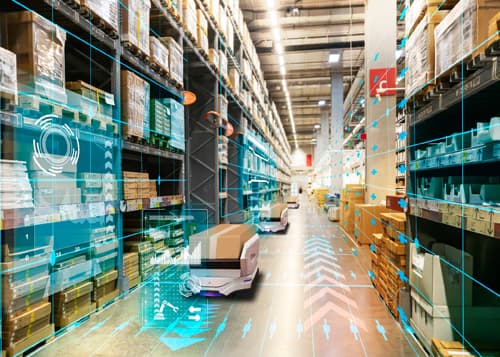
Central to the deployment of brownfield automation are the capabilities of the current WMS and its ability to deliver along two dimensions.

Two UC Berkeley professors identify four categories of issues that researchers must address for Blockchain to feasibly impact supply chains.