
Follow Us


Copyright MHI © 2026 | All Rights Reserved
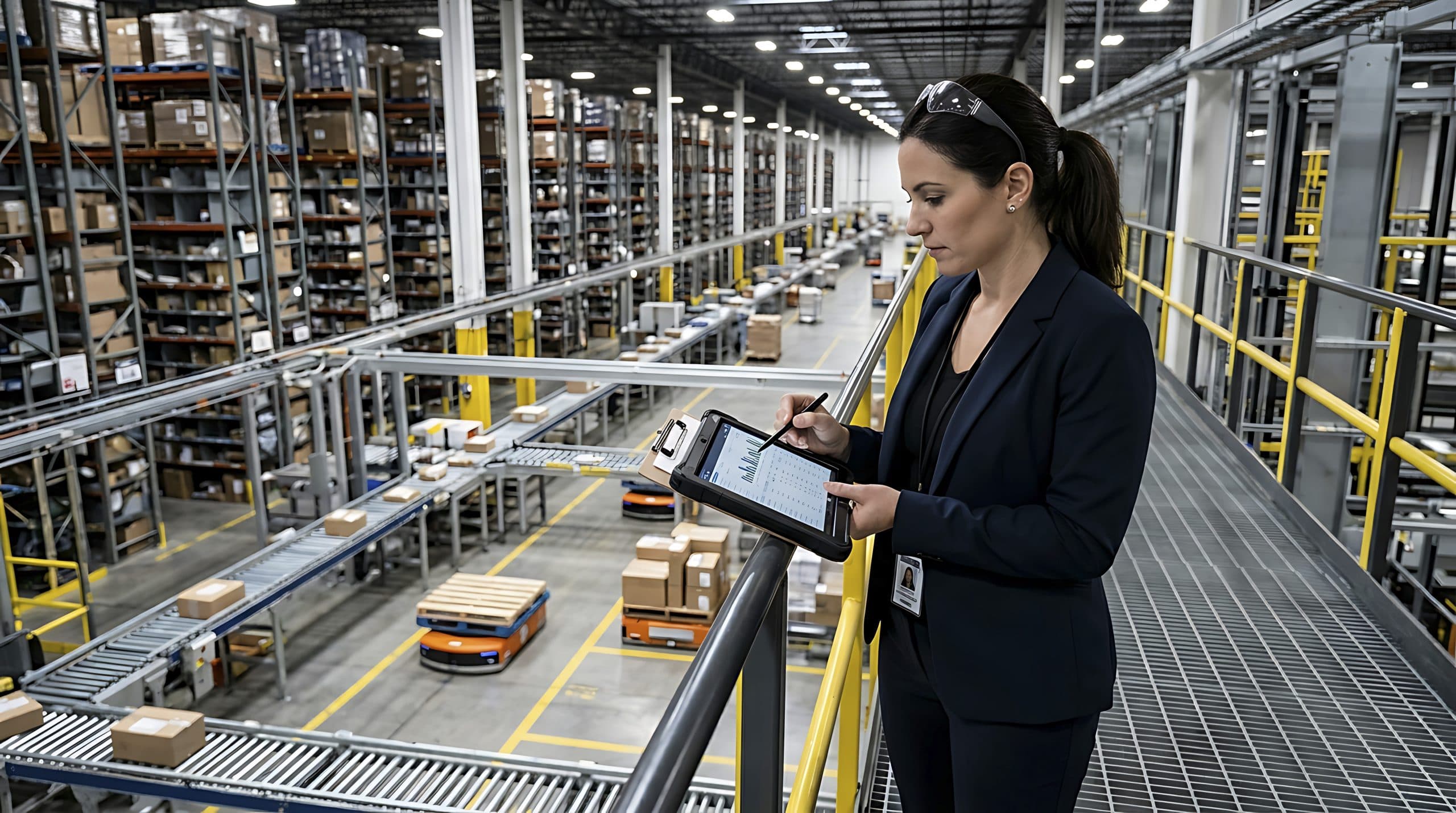
This blog is an overview of the presentation "Scaling Up: Automation and Work Platforms in Action" given live at MODEX 2026. HERE is a link to the audio of that presentation.Scaling Up: Building the Foundation for Smarter Warehouse AutomationAs warehouse operations continue to evolve, businesses are under pressure to improve productivity, maximize available space, and respond to changing customer demands. For many organizations, success depends on more than adding automation. It requires creating the infrastructure and facility design needed to support automation both today and in the future.The combination of automation, elevated work platforms, and strategic facility planning is helping companies increase storage density and operational efficiency. As robotic technology advances, organizations are taking a more holistic approach to design facilities that can adapt and grow alongside their operations.Think Beyond Square FootageFor years, warehouse capacity has been measured primarily by available floor space. Today, leading operations are focused on maximizing cubic volume.By utilizing vertical space through elevated platforms and multi-level work areas, facilities can create additional capacity for storage, picking, sorting, maintenance, and other critical functions. Whether retrofitting an existing building or designing a new operation, building upward can unlock significant efficiencies without requiring facility expansion.Start with Scalability in MindSuccessful automation projects are designed not only to meet today's needs but also to support future growth. Many organizations begin with targeted solutions that address immediate operational challenges and then expand those systems over time as demand increases.Planning for scalability from the outset can make it easier to add storage, increase throughput, or incorporate additional robotics without major disruption. It is also important to understand how automation will interact with the facility itself. Mobile and stationary systems each have unique design, safety, and structural requirements that should be evaluated early in the planning process.Automation Is Becoming More SophisticatedThe first wave of automation largely focused on reducing travel time by moving products closer to workers. Today’s technology is increasingly focused on reducing manual intervention at the point of work itself.Robotic picking technologies continue to advance, enabling greater accuracy, consistency, and productivity. At the same time, emerging technologies are expanding the capabilities of automation systems beyond simple transportation tasks, creating opportunities for more comprehensive automation throughout the fulfillment process.As these technologies continue to mature, businesses will have more opportunities to automate repetitive tasks while improving consistency and productivity.Infrastructure Matters More Than EverWhile automation systems often receive the most attention, underlying infrastructure plays an equally important role in project success.Mobile robotic systems place unique demands on floors, platforms, and building structures. Factors such as floor flatness, surface conditions, load capacity, and traffic patterns can directly affect performance and equipment longevity.For facilities considering automation, a thorough evaluation of existing infrastructure should be one of the first steps in the planning process. Understanding structural capabilities early can help avoid costly modifications later and ensure systems are designed for the environment in which they will operate.Safety Must Be Designed InAs automation deployment increases, safety remains a critical consideration.Today's robotic systems incorporate sophisticated software controls, obstacle detection technologies, and traffic management systems designed to safely navigate complex environments. Physical safeguards such as fencing, guarding, and designated operating zones help separate personnel from automated equipment when appropriate.The most effective safety strategies combine technology, facility design, and operational processes to create environments where automation and employees can work safely together.Environmental Conditions Cannot Be OverlookedWarehouse environments vary significantly, and automation systems must be designed accordingly. Temperature fluctuations, moisture, lighting conditions, floor materials, and electrostatic discharge (ESD) requirements can all influence system performance. Cold storage and freezer applications introduce additional challenges related to battery performance, condensation, and sensor reliability.Understanding these environmental factors early in the planning process helps ensure equipment selection in the facility design align with operational realities.Collaboration Drives Better OutcomesPerhaps the most important lesson for organizations pursuing automation is the value of involving the right stakeholders early.Successful projects often begin with collaboration among facility owners, automation providers, structural engineers, platform designers, and material handling experts. When infrastructure and building design are planned alongside material handling equipment requirements, organizations are better positioned to achieve long-term operational success.Automation continues to evolve at a rapid pace, creating new opportunities to improve efficiency, capacity, and productivity. As companies evaluate their next investment, those that take a holistic approach, considering technology, infrastructure, and future scalability together, will be best equipped to maximize the benefits of automation while preparing their facilities for the demands of tomorrow.Again, if you would like to listen the live presentation, here is the link: https://dfxhkgozl2wkt.cloudfront.net/mx2026/SMA_160_Apr15.mp4

When ICON Mechanical needed both a clean room and an elevated platform - they turned to Panel Built to engineer a mezzanine with ResinDek LD flooring panels.

When a large Florida parcel sortation center required dozens of elevated platforms to house sensitive conveyor and sortation technology, Steele Solutions and Elevated Steel supplied and installed more than 185,000 sq. ft. of platform structure—meeting a demanding deadline despite a phased build and shifting construction conditions.

To increase throughput and order fulfillment speed in a challenging labor market, Evergreen Enterprises implemented a fleet of autonomous mobile robots (AMRs) at theirRichmond, Virginia warehouse.The wholesale home and garden décor retailer, headquartered at the same location, had relied on 90 associates to push picking carts through static storage racks to manually pick orders across two shifts.But the operation found it difficult to scale up during seasonal peak periods and maintain order accuracy and inventory control.

To support organic growth and expansion via acquisition, a global retailer of sneakers and streetwear sought to increase throughput and optimize order fulfillment efficiency in its existing Philadelphia distribution center (DC). The operation, which supports both e-commerce and retail replenishment, has employee shifts nearly around the clock to keep up with demand. It also cross-docks shipments, when possible, to minimize handling. “First we determined that the existing building could sustain both their forecasted growth trajectory and their desired throughput,” he said. “To do that, however, we advised the installation of a 70,000-square-foot mezzanine above their existing 220,000-square-foot workspace, along with the implementation of a shelf-to-person autonomous mobile robot (AMR) system.”
The Storage Manufacturers Association (SMA) brings together leading manufacturers across the industrial storage and material handling industry to share expertise, develop standards, and advance best practices. Through collaboration, SMA members contribute to educational resources, safety guidelines, and industry innovation, helping facilities adapt to evolving demands like automation, robotics, and vertical storage solutions.

To improve efficiency, you need the right storage. Find the best solution for your facility with SMA and its members

Members of the Storage Manufacturers Association are the leading suppliers of industrial storage equipment. Their expertise can help keep workers safe and make the most of the space in a facility.

Price: $100.00.This standard applies to industrial steel bin shelving; bin shelving placed on mobile carriages; multi-level bin shelving systems such as pick modules, catwalks, and deck overs; and for bin shelving used in conjunction with an automated storage and retrieval system (AS/RS). The structural framing components for these systems are made of cold-formed or hot-rolled steel structural members.Bin shelving) is typically a hand-loaded, prefabricated, free-standing, building-like non-building structure that utilizes a designed framing system, which is generally located within an industrial or warehouse environment. Personnel working within the confines of the bin shelving structure are presumed to be properly trained, physically able, and appropriately attired to work in the intended working environment.This standard is intended to be applied to the design, testing, and utilization of industrial steel bin shelving systems. When a bin shelving system is designed for use in a seismically active area, the designer is cautioned to obtain more detailed information, amendments, and changes to adopted codes, including applicable design ground motions to use in the design, by contacting the local jurisdiction where the shelving units are to be installed.This standard applies to industrial steel bin shelving systems installed within a building and subjected to seismic (earthquake) loads. Loads from environmental exposure, such as snow, wind, or rain loads, are not addressed in this standard. This standard does not cover any design requirements that need to be addressed for supported equipment that would subject a shelving system to significant dynamic loading and/or harmonic vibration that has the potential to cause structural damage or metal fatigue. For environmental exposure or applications beyond the scope of this standard, an evaluation by a qualified design professional is required. This standard is a revision of ANSI MH28.1-2024 with the portal test removed.
Price: $75.00This standard applies to retail/consumer boltless steel shelving. The framing components for these systems are made of steel members. This standard does not apply to the following: industrial steel storage racks (addressed by ANSI MH16.1), industrial steel cantilevered racks (addressed by ANSI MH16.3), industrial boltless steel shelving (addressed by ANSI MH28.2), products greater than 96 in. (2.4 m) in height, boltless shelving structures not fabricated from steel, industrial steel bin shelving (addressed by ANSI MH28.1), or shelving systems built with slotted metal angles.Retail/consumer shelving) is a hand loaded, prefabricated, freestanding, building-like non-building structure that utilizes a designed framing system. It is primarily designed and intended to be used in residential or commercial applications (as opposed to applications requiring larger-scale industrial product storage in accordance with ANSI MH28.2) and generally located indoors within a home, shop, or garage environment not designed to withstand wind or earthquake loading.Retail/consumer steel boltless shelving systems are designed to be purchased by non professional consumers at retail stores and assembled without the need for technical guidance or training.This standard does not provide guidance for design requirements that need to be addressed for supported equipment that would subject a shelving system to significant dynamic loading or harmonic vibration that has the potential to cause damage or metal fatigue.
Price: $100.00This standard applies to industrial steel boltless shelving; boltless shelving placed on mobile carriages; multi-level boltless shelving systems such as pick modules, catwalks, and deck-overs; and for boltless shelving used in conjunction with an automated storage and retrieval system (AS/RS). The structural framing components for these systems are made of cold-formed or hot-rolled steel structural members.This standard does not apply to the following: industrial steel pallet racks (addressed by ANSI MH16.1), industrial cantilever racks (addressed by ANSI MH16.3), boltless shelving structures not fabricated from steel, industrial steel bin shelving, or shelving systems built with slotted metal angles.Boltless shelving is typically a hand-loaded, prefabricated, free-standing, building-like non-building structure that utilizes a designed framing system. It is generally located within an industrial or warehouse environment that is restricted from the general public. Personnel working within the confines of the boltless shelving structure are presumed to be properly trained, physically able, and appropriately attired for the intended working environment. This standard is intended to be applied to the design, testing and utilization of such structures.This standard applies to boltless shelving structures installed within a building and subjected to seismic (earthquake) loads. Loads from environmental exposure, such as snow, wind or rain loads, are not addressed in this standard. This standard does not cover any design requirements that need to be addressed for supported equipment that would subject a shelving system to significant dynamic loading and/or harmonic vibration that has the potential to cause structural damage or metal fatigue. For environmental exposure or applications beyond the scope of this standard, an evaluation by a qualified design professional is required.
Price: $100.00This standard applies to industrial steel work platforms. An industrial steel work platform is typically a prefabricated free-standing non-building structure similar to a building with an elevated surface that utilizes a pre-designed framing system and is located within an industrial or similarly restricted environment. Flooring may include other structural or non-structural elements such as, but not limited to, concrete, steel, and engineered wood-products.This standard is intended to be applied to the design, testing and utilization of such structures. Industrial steel work platforms are hereinafter referred to as just “work platforms” or “platforms”. This standard does not apply to platforms whose structural framing components are not made from steel.This standard is written based on the work platform being restricted from the general public and that those working on the work platform are properly trained, appropriately dressed, and physically able to work on such platforms in an industrial or warehouse environment. For applications beyond the scope of this standard, consult a qualified design professional.This standard is written to address requirements for the preponderance of work platform installations and is not intended to limit the extent of possible designs nor the auxiliary materials that may be used in conjunction with a boltless shelving installation. Special designs, e.g., systems installed outdoors subject to wind, snow and rain, or the use of material not specifically cover in the standard require the approval of a qualified design professional.

Seismic (earthquake) design requirements within a building code are enacted to protect property and life in buildings in case of earthquakes. Seismic design requirements were created and developed as a response to major earthquakes and the resulting devastation.
Unit of measure typically associated with the uniformly distributed live and dead design loads on an elevated platform or the wind, snow, and rain loads applied to outdoor structures.
Elevated standard walkways limited to ‘foot’ traffic.
Vertical member within a shelving unit that supports the shelf beams, shelves, or elevated floors.

This guidance document represents user considerations associated with industrial work platforms. It was developed by the Storage Manufacturers Association (SMA) and is intended to provide useful information and guidance for owners, users, designers, purchasers, or specifiers of material handling equipment or systems. It is advisory only and should only be regarded as a simple tool that its intended audience may or may not choose to follow, adopt, modify, or reject. The following information does not constitute a comprehensive safety program, cannot guard against pitfalls in operating, selecting, and purchasing such a system, and should not be relied upon as such. Such a program should be developed, and an independent adviser should be consulted in doing so.
Inspection Report for Bin Shelving
Inspection Report for Boltless Shelving
Inspection Report for Work Platforms