
Follow Us


Copyright MHI © 2026 | All Rights Reserved
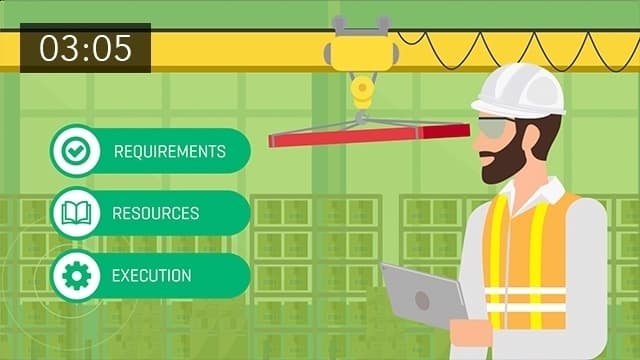
Because hoists perform such high-stakes work, regular inspections are crucial to maintain a safe workplace. Learn how often you should schedule inspections and what they should entail.
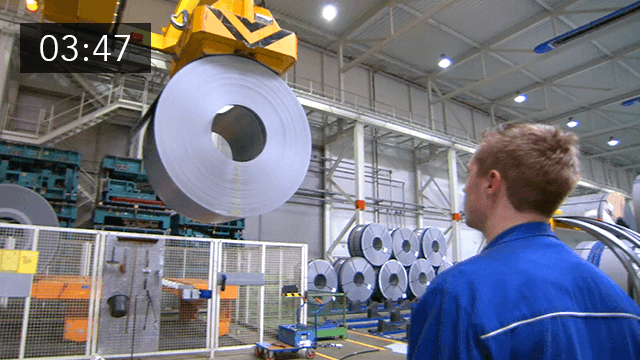
Knowing and understanding the duty service classification of your hoist is incredibly important. HMI has recently published The Compendium of Basic Information and Standards for Hoists, listing international standards, and the Comparison of Hoist Duty Service Classifications, comparing duty service calculations of the different standards, so you can compare them and choose the right hoist for your application. Download the Compendium and Comparison at MHI.org/HMI today.
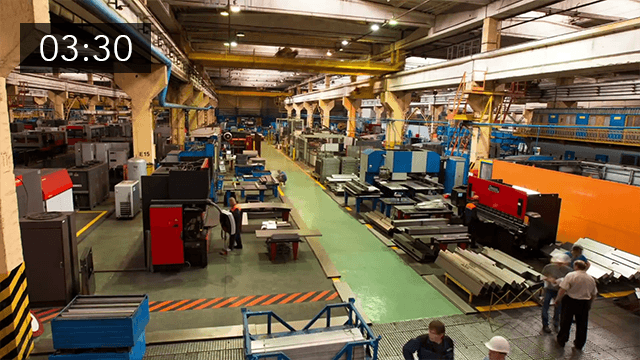
Operating and maintaining hoists correctly is necessary to ensure optimum performance, protect the material being moved and prevent injury to workers. MHI’s Hoist Manufacturers Institute (HMI) has recently updated two documents to help hoist owners, users, and maintenance staff with the key aspects of proper hoist operation and maintenance.
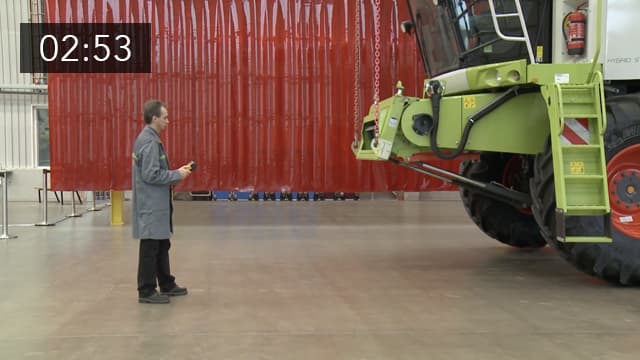
Overhead Lifting Solutions are a simple way to keep your employees safe while increasing productivity in your operation.
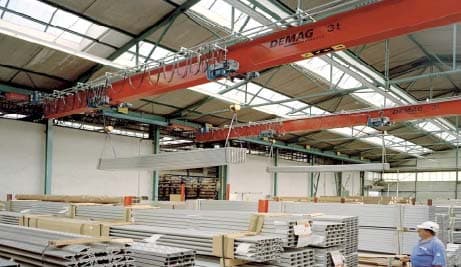
Handling of long bulky materials has often been a challenge when the hoists and trolleys do not run at the exact same speeds. Typically when two independent hoists are operated in parallel, the differences in starting and stopping times of the hoists causes the hoist lift or trolley travel to not be synchronized.
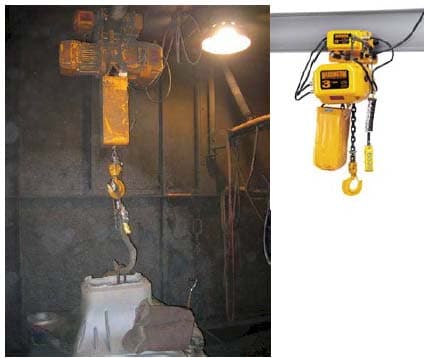
A foundry in Indiana was fighting a losing battle with their aging fleet of air hoists. Maintenance costs and downtime were increasing, and replacement parts were becoming hard to get. While their perception that the severity of the application pointed to the air hoist, the heavy duty electric chain hoist held appeal due to reliability, fewer parts, and ease of operation. They decided to try the electric chain hoist by installing it in their most demanding application. The electric chain hoist performed well in this test, and the foundry was convinced that modern heavy duty electric chain hoists can be an appropriate choice for demanding applications like theirs.
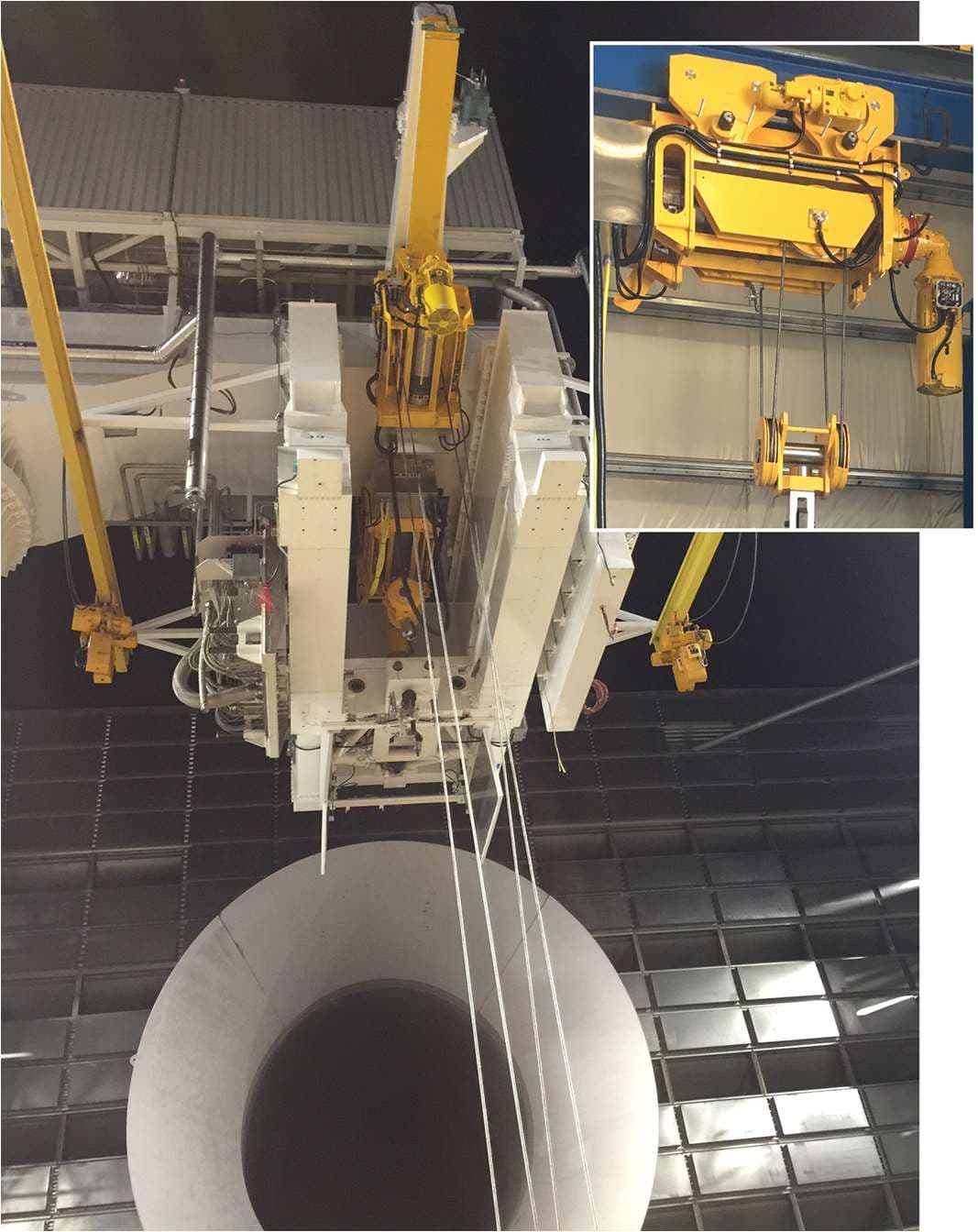
EMH was contacted by Standard Aero, an international aircraft-engineering firm to help develop a unique Jet Engine Test Stand for a GE cold weather test facility. The hoist application had to be capable of precision operation in minus 40° centigrade temperatures. Two EMH Hoists were run in tandem and tested to 125% of their 50-ton capacity, 25-ton duty on each hoist. With intense cold, every facet of the hoist application had to be custom-engineered and required a factory 125% load test as well and witnessed by GE engineering.
The project required a 3 ton single girder, top running crane with two 3 ton wire rope hoists that measured and restricted the hoist’s combined total capacity to 3 ton. In one application, the hoists would be operated independently with a capacity of 3 ton per hoist. In the other application, the hoists would be used in tandem with a combined total capacity of 3 ton.

This HMI web page has been developed by member companies of the Hoist Manufacturers Institute (“HMI”), a trade association of Hoist Manufacturers, to familiarize potential hoist purchasers and users with the many different types of material handling hoists, hoist terminology, and hoist standards, as applicable in the United States, and in various countries and regions of the world.
COMPARISON OF HOIST DUTY SERVICE CLASSIFICATIONS, AS DESCRIBED IN UNTED STATES AND EUROPEAN WIRE ROPE HOIST SPECIFICATIONS – Hoist Manufacturers may often not be aware of exact hoist applications, and further the nature of the liability laws in
(SPANISH) - The Hoist Manufacturers Institute (HMI), and association affiliated with Material Handling Industry, has produced guidelines for the operation of various types of hoists. Many of the warnings and operating practices outlined in each
This 54-page booklet lists qualifications required to be a hoist operator, as well as "shall and shall nots." Safety is stressed by describing the best way to operate a hoist. It also explains why a hoist should be operated safely. The safety
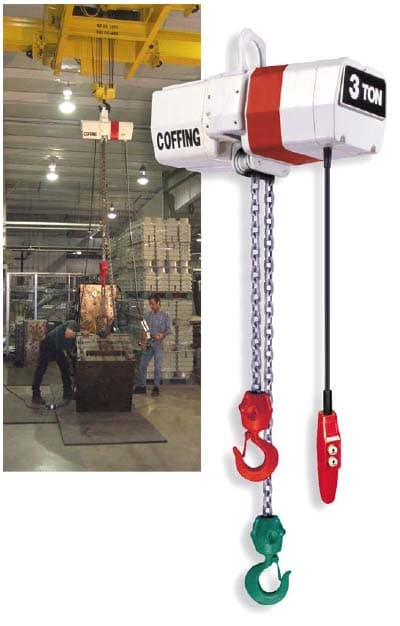
The Coffing EC (Electric Chain Hoist) Turnover Model was specifically engineered to meet the needs of machining operations, fabricators, manufactured housing and any other application that requires complete rotation of large and heavy items.
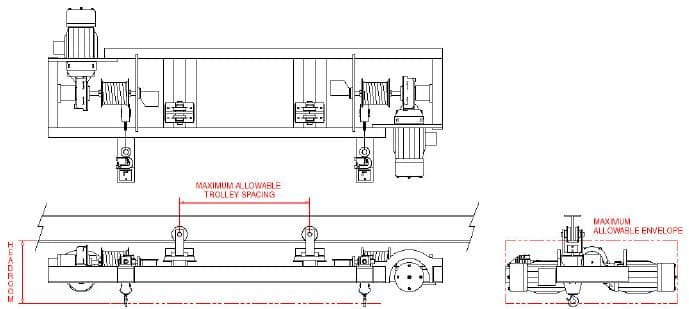
The customer required a hoist that can remove and replace the air conditioner unite from the top of the railcar. The unit must be removed at an angle, requiring independent hoist movement. One end of the unit is raised, moved forward slightly, then leveled and completely removed from the car. This was accomplished by providing two independently controlled hoists in a common frame. One radio control unit controls two hoists with selector switch for either hoist, or combined hoist operation.
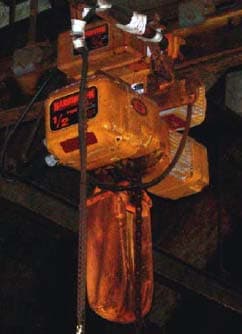
A Pennsylvania metal castings foundry was using an electric hoist over a hot sulfuric acid tank. The harsh environment was too much for the hoist in this application. Daily maintenance and repairs were needed just to keep the hoist operational. A heavy duty electric chain hoist was installed which comes standard with a fan cooled 60 minute duty rated motor and a completely sealed body, and it held up to the rigors of this tough environment.
Safety Sheet No. 13: General Safety Guidance for Lever HoistsFatalities or injuries can occur if lever hoists are not inspected and properly used. Fatalities or injuries may occur when workers use a lever hoist(a) in a way for which it was not intended,(b) that is damaged or malfunctioning, and(c) to lift or pull more than the hoist’s rated capacity.

The Hoist Manufacturers Institute (HMI) members are the Industry’s leading suppliers of hoisting equipment including hand chain hoists, ratchet lever hoists, trolleys, air chain hoist, air wire rope hoists, electric chain hoists, and electric wire manufacturing and distribution sector.
A hoist suspended from a trolley. A hoist can be connected to a trolley by hook or clevis, or a hoist can be integral with the trolley.
A hoist that utilizes wire rope as the lifting medium. Often powered electrically or pneumatically. This lifting device is made up of a rope storage drum, motor(s), gear box and braking system and is suspended from a monorail or bridge beam(s) by means of a trolley. May also be mounted in a staionary manner. Manual wire rope hoist are generally referred to as "pullers" and operate utilizing a ratchet and pawl tensioning technology.
A motor driven hoist whose power is derived from pneumatically powered motors. These hoist are often used in areas where electrical sparks are undesirable due to the possibility of explosion of fumes or materials.

Cattron’s new purpose-built radio remote control solution pairs Tyro Musca 2S transmitters with an AC-powered receiver to deliver plug-and-play two-motion, two-speed operation for small overhead crane and lifting applications.Warren, Ohio — Cattron, a global leader in radio remote control, engine and generator control panels, and cloud-based monitoring and control solutions, has introduced the Tyro 2x2, a specialized radio remote control package engineered for hoist and jib applications. The 2x2 expands the Tyro product portfolio with a purpose-built, ready-to-deploy solution targeting radio remote control for small overhead cranes and hoists, jib cranes, general lifting equipment and monorail systems.The Tyro 2x2 is designed for two-motion, two-speed control. Cattron offers four standard configurations to match specific operational requirements: the 2x2 for full two-motion, two-speed control, the 2x1 for two-motion, one-speed control, the 1x2 for one-motion, two-speed control and the 1x1 for one-motion, one-speed control. Each configuration ships as a complete package, including two Musca 2S handheld transmitters and a compact, low-profile receiver.Cattron has decades of experience providing radio remote control and safety systems for material handling and lifting applications, including overhead cranes, hoists and industrial automation environments. The Tyro 2x2 is a natural extension of that expertise into a streamlined package for smaller lifting operations.“The Tyro 2x2 represents exactly the kind of compact, rugged solution for smaller lifting applications, like jib cranes and monorail systems, our customers have been asking for,” said Cattron VP of Engineering and Product Management Brian Fette. “OEMs and distributors in the crane and lifting market now have a complete, standardized package backed by Cattron’s global engineering expertise in radio remote control.”A key differentiator for the Tyro 2x2 is its receiver architecture. Cattron offers DC-powered versions of its proven Tyro products, which have been trusted in demanding applications globally for more than two decades. The 2x2 builds on that same architecture but introduces an AC-driven receiver with potential-free dry contact relays. This distinction is critical for crane and hoist applications, where AC power systems and dry contact connections are standard requirements. The design eliminates the need for additional interface hardware, simplifying installation for OEMs and end users.The included Musca 2S transmitters feature compact, ergonomic housings made of impact-resistant nylon rated to IP67 for protection against dust, moisture and debris. The housings also provide chemical and oil resistance along with superior mechanical strength, making them well suited for harsh indoor and outdoor environments. Operators benefit from tactile button-feel with backlit membrane buttons, display LEDs and audible feedback with each button press, enhancing usability in low-light conditions and noisy work areas.With a straightforward system setup, the Tyro 2x2 can be up and running in as little as 15 minutes. The Tyro 2x2 uses wireless device pairing for plug-and-play deployment, reducing commissioning time and allowing operators to quickly pair transmitters with the receiver. Adaptive Frequency Protocols provide secure and reliable RF performance in environments where signal interference is a concern.“The industry needs reliable two-speed control in a package that is easy to deploy and built to perform in rugged environments,” said Rebecca Weber, product manager for Cattron’s industrial solutions. “With four standard configurations and a 15-minute setup, the Tyro 2x2 makes professional-grade hoist control accessible to operations that previously had to compromise on capability or complexity.”The Tyro 2x2 joins a growing portfolio of Tyro 2S products that Cattron has been expanding across North American markets. The Tyro 2S line, proven in European applications for more than 20 years, includes handheld transmitters ranging from the simple Musca 2S to the feature-rich Cetus 2S with up to 14 switches, as well as bellybox options like the Fornax 2S for forestry and small industrial operations. Receivers across the Tyro portfolio are offered in IP68-rated enclosures and utilize frequency hopping for dependable wireless communication. The Tyro 2x2 also has a UL 94 flammability rating.Contact a Cattron representative to learn more here: cattron.com/contact/.About CattronCattron is a global leader in radio remote control, engine and generator control panels, and cloud-based monitoring solutions. Our trusted brands, including Remtron, DynaGen, CANplus and Tyro, along with our global expertise, allow us to provide a diverse and comprehensive range of control solutions worldwide. When you choose Cattron, you’ll experience unprecedented efficiency, productivity, and safety benefits. Whether you’re in agriculture, material handling, mining, mobile equipment, or industrial automation, we have advanced control solutions that meet the needs of modern businesses. Cattron has manufacturing locations in Warren, Ohio, and Liberec, Czech Republic, a team of over 300 employees, 11 global offices, and decades of expertise, making Cattron a dependable choice for businesses looking to optimize their operations. To learn more, visit cattron.com

How OMi Crane Systems works with NORD DRIVESYSTEMS to keep manufacturing moving. For OMi Cranes and its customers alike, having a reliable drive system supplier isn’t just about convenience, it’s about keeping material moving efficiently and without fail.Whether it’s moving a coil of sheet steel to a stamping line or setting a massive cast iron forging onto the bed of a CNC boring mill, manufacturers depend on cranes, trolleys, and hoists to lift and transport heavy objects. This is the job of OMi Crane Systems, a company that’s been designing, building, and servicing industrial lifting systems since 1969.Founded in Dallas, Texas, the manufacturer has long since moved to nearby Royse City, where it now boasts a 76,000-square-foot manufacturing facility, more than 100 skilled employees, and a support network that includes three full-service branches in Houston, Dallas, and Alabama, along with satellite service teams operating out of Florida and Ohio.OMi sells many of its cranes to companies in its home state, but as Vice President of Operations Brandon Rue proudly points out, the manufacturer has customers in New York, Washington, Ohio, and many places in between. “We ship all over the country,” he says.Unlike companies focused on ports or marine work, OMi specializes in indoor overhead cranes—mainly electric overhead traveling cranes that operate inside steel warehouses, coil handling plants, and metal fabrication facilities. Its products aren't mass-produced, however. “Everything we make is engineered to order,” Rue explains. “That’s because every facility is different, and every customer calls for different lifting capacities, travel speeds, duty cycles, and so on. That said, probably 95% of the gearmotors on our heavyduty OEM components come from NORD DRIVESYSTEMS.”Tightly FocusedIt’s a relationship that spans more than 25 years. At first, OMi began using NORD gearboxes and motors on a fairly selective basis, but the partnership deepened around 2011 when OMi started building its own hoists. That move called for bigger gearboxes and more horsepower—and it made ready-made drive solutions even more critical. NORD provides a complete, preassembled unit that fits neatly into OMi's production flow.“We didn’t start using NORD almost exclusively until we started offering a complete hoist that we build inhouse," Rue says. “A lot of suppliers in this industry will make a gearbox and then put a motor on it, and sometimes vice-versa, but not only does that slow everything down, it also makes it harder to get parts. We didn't want to go that route, so we decided to standardize on NORD gearmotors—motor, brake, and gearbox—roughly 15 years ago. Since then, we’ve found that using pre-engineered drive units directly from the catalog makes it easy to customize to our customers’ needs, which is where we differentiate ourselves from the competition.”At its core, OMi specializes in the design and manufacturing of electric overhead traveling cranes. Unlike many suppliers that offer off-the-shelf systems, OMi takes a customized approach, tailoring every crane to the exact specifications of the building and the application it serves. "Yes, there are similarities between jobs and customers, but every crane fits a specific building layout and a specific application, so the ability to optimize each one is hugely important."Most of OMi’s cranes are designed for indoor environments such as manufacturing plants and coil handling facilities. While the company can also produce outdoor gantry cranes, its primary focus remains on precision indoor lifting, with steel processing and warehousing centers representing its largest market share.The demands of these industries are unique. Steel coils, for example, can weigh tens of thousands of pounds, and facilities often run 24/7 operations where a stalled crane can halt production. Many of OMi's customers require cranes that not only lift heavy loads but also perform a high number of cycles each day without overheating or wearing down prematurely. That makes the engineering behind each crane and its components critical to long-term reliability.One of the standard and most requested options on an OMi crane is the company’s “built-up hoist and trolley” system. As Rue explains, these assemblies are often the most customized and technically demanding parts of the crane. “The hoist does all the work, which is why we’ll often use one of the bigger NORD units, such as the SK 10 with a hundred horsepower motor.”Customization ConundrumThis broad horsepower range—from half-horsepower travel motors to the 100-horsepower hoist drive just mentioned—gives OMi the ability to spec out each crane's lifting capacity exactly to the application. Yet speed is also crucial. In high-throughput environments like coil warehousing, even minor differences can significantly impact production, which is why it’s not uncommon for customers to request lifting speeds tailored to the flow of their assembly lines or staging areas, where even seconds shaved off a cycle can add up to meaningful gains over time.“We cater the hoist to our customers’ needs, "Rue says. " For instance, a couple of feet a minute on a hoist, when spread out over several days or a week, makes a big difference in the number of picks they can make. So, if they want the hoist to go 21 feet per minute instead of 19 feet per minute, we make it go 21.”As any manufacturer knows, delivering this level of customization day after day can be expensive. Piecing together motors and gearboxes from different vendors wasn’t an option for a company focused on delivering made-to-order systems at scale. Eliminating assembly steps inside OMi’s factory also reduces risk during final crane assembly, since every matched set arrives from NORD already configured for integration.“To remain competitive, we need to build a crane as quickly and efficiently as we can,” Rue says. “Ease of manufacturing played a big role in our decision to partner with NORD.”Using standardized components also helped to streamline OMi’s engineering process. The company’s design team can size and select drives from NORD’s catalog without relying heavily on external technical support, and they routinely use myNORD online customer tools to quote units, download 3D models, and generate drawings directly compatible with OMi’s internal CAD libraries. “We size it, we pull the drawings, and we drop it into our models,” Rue explains. “It’s simple and it saves a lot of back and forth.”Prove It!Several recent projects show the scale of their partnership. One job in Bowling Green, Kentucky, required eight cranes and 56 NORD units, with motor ratings from three to 100 horsepower. Another in nearby Brandenburg involved 16 cranes and 110 NORD gear motors across six bays, while a third—this one supporting an aluminum processor—used five cranes and 50 NORD units.Each facility came with its unique challenges. In Bowling Green, for example, OMi built the cranes for a completely automated coil handling system where cranes communicate with the facility’s ERP software to manage inventory movements without human input. In Brandenburg, the facility required high-speed coil stacking capabilities and extremely high service levels able to withstand the company’s continuous operation. And the aluminum processor project, though smaller, demanded precision movement with fine load control to protect delicate material during handling.In every case, OMi designed each crane to fit the customer's plant layout, throughput needs, and uptime goals. "If a customer loses a motor or gearbox, NORD can usually get us a replacement very quickly, sometimes within a day or two,” Rue says. The service side has been just as strong. “With some vendors, we might have to call several times before we can get somebody on the line,” he adds. “With NORD, we don’t have that problem. Even when our primary contact is unavailable, we quickly get routed to someone who can help, avoiding costly downtime.”OMi has never had to use NORD’s 911 emergency breakdown hotline despite running a high volume of the company's products over many years. Instead, their engineers work independently, sizing components, pulling drawings, and submitting orders directly through myNORD, NORD’s online customer portal, without having to stop and make phone calls to sales or technical support.If a crane goes down, production can grind to a halt, Rue concludes. For OMi Cranes and its customers alike, having a reliable drive system supplier isn’t just about convenience—it’s about keeping material moving efficiently and without fail. “We’ve enjoyed very steady growth over the years. I attribute most of this to our employees—our engineering team, the sales and quoting people, and our team on the production floor. That said, NORD deserves at least some of the credit. They’ve been great to work with and have an equally solid product line. We’re quite pleased with the partnership.”Learn more at www.nord.comAbout NORD DRIVESYSTEMS® GroupWith more than 4,900 employees, NORD DRIVESYSTEMS has been developing, producing, and selling drive technology for over 50 years, and it is a global leader among full-service providers in the industry. In addition to standard drives, NORD delivers application-specific designs and solutions for special requirements, such as energy-saving drives or explosion-protected systems. NORD has subsidiaries and sales partners in 80 countries worldwide. The dense sales and service network guarantees optimal availability, enabling short delivery times, and customer-oriented service. NORD produces a very diverse range of drives for torques from 88 lb-in to more than 2.5 million lb-in, provides motors in the power range of 0.16 – 1,341 hp, and manufactures frequency inverters with the required power electronics of up to 200 hp. Inverter solutions are available for conventional control cabinet installations as well as for decentralized, fully-integrated drive units. Visit nord.com.ContactNORD Gear Corp – United StatesMember of the NORD DRIVESYSTEMS GroupArielle SPOTTS608-850-1444Arielle.Spotts@nord.com

Winona, Minnesota (July 24, 2024)— The hoist clamp presents a quick, easy, and safe way to hang any of the company’s electric chain or manual hoists, under 0.5-ton capacity, to its pipe- and wall-mounted arms with the required hardware. The user is able to mount the hoist clamp anywhere along the mounting arm at full rated capacity of 1,000 lbs. The clamps are sold separately if users already have a mounting arm, but they can be sourced with the pipe- (model OBH230) or wall-mounted (OBH230-WALL) arms. The OBH230 was originally developed for the construction industry, mainly on jobsites with scaffolding; it is sized for scaffolding pipe diameter. The OBH230-WALL, meanwhile, has wider application uses. Richard Miller, sales manager at OZ Lifting, said: “Our mounting arm is very popular, and we have received feedback on options to mount a hoist with a traditional top hook. This led to the development of the hoist clamp, so once again it is an example of product innovation being driven by the point of use. “It opens the door on a variety of applications,” he continued. “Most users prefer to use a complete solution from a manufacturer, versus trying to piece the equipment together with a sling, chain, rope, etc. They get the benefit of a solution that has been load tested and approved at source. We provide the customer the option to order as they choose; we often build to suit and can accommodate the different styles and configurations that are available.” The mounting arm — tested to a minimum safety factor of 3:1 — is essentially a mini jib crane and can be installed in either ‘upright’ or ‘reversed’ orientation, depending on the needs of the customer and application. When the mounting arm is in the upright position, the hoist clamp may be attached to the outermost horizontal pipe; when the arm is in the reversed position, the clamp may be attached anywhere along the horizontal pipe. End use applications will be varied and widespread; the mounting arm is already utilized in many industries and environments. Miller reiterated its suitability in the construction and manufacturing sectors but pointed to growing market share in many other vertical markets. The OZ Lifting hoist clamp features steel construction and a long-lasting powder coat finish for added durability. It is in stock and ready for distribution to the manufacturer’s extensive dealer network.
Smoother control, greater precision, and enhanced productivity for demanding industrial applicationsFishers, NY — February 26, 2026 — As Variable Frequency Drives (VFD) continue to set the performance standard across the industrial lifting market, Gorbel® announces the launch of its own VFD Electric Chain Hoist. This hoist provides a powerful lifting experience and the long-term reliability Gorbel® is known for.Designed to offer users smoother control and greater precision in demanding industrial environments, the GS VFD Hoist features field-adjustable acceleration and deceleration. It’s available in ½‑ton, 1‑ton, and 2‑ton capacities, with 230V and 460V power options. Built-in thermal monitoring and enhanced braking also contribute to overall system safety and efficiency.From manufacturing floors and assembly lines to warehouses or construction environments, the Gorbel® GS VFD Electric Chain Hoist adapts to a wide range of applications. Its durable design, quiet operation and reduced wear and tear make it a smart long-term investment for customers seeking a reliable, high precision lifting solution.ContactSarah WeiseContent Creation Specialistgorbel.comsarwei@gorbel.com

(ENGLISH) - The Hoist Manufacturers Institute (HMI), and association affiliated with Material Handling Industry, has produced guidelines for the operation of various types of hoists. Many of the warnings and operating practices outlined in each
(SPANISH) - The Hoist Manufacturers Institute (HMI), and association affiliated with Material Handling Industry, has produced guidelines for the operation of various types of hoists. Many of the warnings and operating practices outlined in each
(ENGLISH) - The Hoist Manufacturers Institute (HMI), and association affiliated with Material Handling Industry, has produced guidelines for the operation of various types of hoists. Many of the warnings and operating practices outlined in each
(ENGLISH) - The Hoist Manufacturers Institute (HMI), and association affiliated with Material Handling Industry, has produced guidelines for the operation of various types of hoists. Many of the warnings and operating practices outlined in each
Click Here to Read More
Article from MHI Solutions Magazine The hoist equipment that falls under the umbrella of the Hoist Manufacturers Institute...
Click Here to Read More
Click Here to Read More

In this episode, we talk to three members of the Overhead Alliance. Josh Arwood, president of CMAA, Jerry Eischens, president of MMA, and Mark Arthur, president of HMI. They tell us the benefits of overhead material handling and what you need to consider when deciding which equipment to choose. We also talk about what to expect from the online safety conference taking place in September of this year.
Price: $50.00This standard applies to underhung cranes whose end trucks operate on the lower flange of a patented-track runway section; and to carriers (trolleys) operating on single-track patented-track monorail systems, including all curves, switches, transfer devices, lift and drop sections, and associated equipment. Systems used for transporting personnel require special considerations and are not included in this standard. This standard does not apply to enclosed-track runway sections, enclosed-track monorail systems, structural-shape runway section, or structural-shape monorail systems. Refer to ANSI MH27.2 2025, Enclosed Rack Underhung Cranes and Monorail Systems for enclosed-track runway sections and enclosed-track monorail systems.Hoist(s) or carrier(s) may be supplied by the crane manufacturer, crane distributor, crane installer, or by the user. In either case, the applicable portions of ASME/ANSI B30.16, Overhead Hoists (Underhung); ASME B30.11, Monorails and Underhung Cranes and appropriate ASME HST Performance Standards apply to the hoist(s) and carrier(s). If the hoist(s) or carrier(s) are supplied by the user, the crane builder shall be provided with certified dimensional drawings with all required data including wiring diagrams, carrier collector locations and weights.This standard includes considerations for cranes and monorail equipment only. It does not include considerations or specifications for the design of the building, the design of supporting structure, electrical power supply, or erection.This standard applies to systems operating in normal ambient temperatures and atmospheric conditions; any other conditions require special consideration.
Price: $50.00This standard applies to underhung cranes whose end trucks operate on the internal flange of a runway using enclosed track section; and to trolleys (carriers) operating on single-track monorail systems, including all curves, switches, transfer devices, lift and drop sections, and associated equipment. Systems used for transporting personnel require special considerations and are not included in these specifications. This standard does not apply to underhung cranes whose end trucks operate on the lower flange of a patented-track runway section. Refer to ANSI MH27.1-2025, Patented Track Underhung Cranes and Monorail Systems for patented-track runway sections and patented-track monorail systems.Hoist(s) or carrier(s) may be supplied by the crane manufacturer, crane distributor, crane installer, or by the user. In either case, the applicable portions of ASME/ANSI B30.16, Overhead Hoists (Underhung); ASME B30.17, Cranes and Monorails (With Underhung Trolley or Bridge) and appropriate ASME HST Performance Standards apply to the hoist(s) or carrier(s). If the hoist(s) or carrier(s) are supplied by the user, the crane builder shall be provided with certified dimensional drawings with all required data including wiring diagrams, carrier collector locations and weights.This standard includes considerations for cranes and monorail equipment only. It does not include considerations or specifications for the design of the building, the design of supporting structure, electrical power supply, or erection.This standard applies to systems operating in normal ambient temperatures and atmospheric conditions; any other conditions require special consideration.
Price: $25.00This standard provides the minimum requirements and guidelines for cable-less controls of electric overhead traveling cranes. A cable-less control device as referenced in this standard uses radio frequency signals to control the movements and actions of said cranes for applications such as material handling. This standard is referenced in CMAA Specification #70, Specifications for Top Running & Gantry Type Multiple Girder Electric Overhead Traveling Cranes, and CMAA Specification #74, Specifications for Top Running & Under Running Single Girder Electric Traveling Cranes Utilizing Under Running Trolley Hoist. This standard provides information and references specific to electric overhead traveling (EOT) cranes.