
Follow Us


Copyright MHI © 2026 | All Rights Reserved
MODEX 2024 will feature the first-ever theater dedicated to solutions and trends for last mile logistics...
Click Here to Read More
Embark on a revealing journey through the intricacies of last-mile logistics in the latest episode of "Jobs of Tomorrow" Season 2, The Final Stretch...
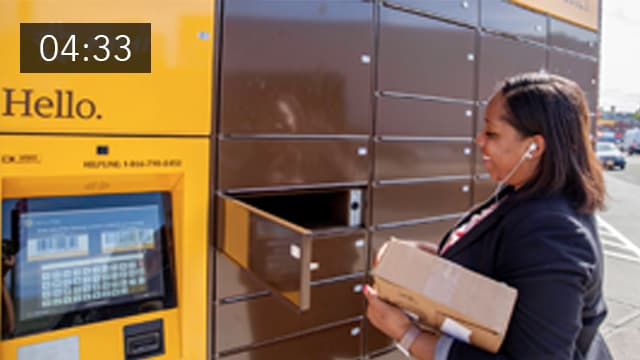
Drones, robots and electric-powered vehicles are just a few of the technologies being deployed to cut emissions and reduce delivery costs.
As urban populations increase and e-commerce continues to gain popularity, supply chains are contending with the challenge of making deliveries in dense urban areas. Taking advantage of smart cities’ data collection capabilities is just the first step on the long road to developing comprehensive smart city logistics. The 2017 MHI Annual Industry Report, in collaboration with Deloitte, reflects the views of 1,100 manufacturing and supply chain leaders on this important topic. To stay on top of the accelerating pace of change, MHI is embarking on a series of video updates on topics covered in the 2017 report; focusing on projections from leading firms and real-world case studies of the benefits these trends and technologies are having on supply chains and global commerce.

This is a paid advertisement. Future-proof your supply chain to ensure resilience. Through digitization and automation, you can achieve an end-to-end connected supply chain with full visibility, inventory and routing accuracy, increased product velocity and throughput, as well as improved sustainability measures.
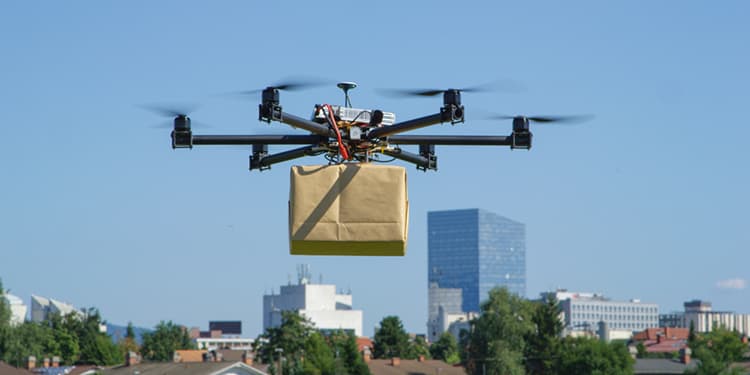
The rise of e-commerce and growing customer expectations has led to more and more logistics companies making residential deliveries. The last mile of delivery is often the most inefficient portion of global logistics and companies are looking to drones to solve this problem.

Explore the future of sustainable packaging with on-demand, right-sized solutions that are transforming packaging processes. This automated model minimizes waste, reduces costs, and enhances product protection, all while making supply chains more adaptable and eco-friendly.

ATLANTA (Sept. 5, 2023) – FORTNA, a leading automation and software company for the full logistics value chain, has announced the development of the FORTNA Last Mile Solution Center. By leveraging a team of industry experts, the Last Mile Solution Center will support parcel and distribution businesses in automating last mile operations to improve processes, increase productivity and reduce costs. Backed by over 15 years of experience in last mile automation and an installed base of more than 450 automated systems, the FORTNA Last Mile Solution Center is committed to maximizing last mile networks and operations with proven modular and bi-directional conveyors and sorters. The FORTNA Last Mile Solution Center introduces modularity and standardization of last mile automation to help organizations meet an operation’s needs for scalability, flexibility and simplified maintenance. Additional benefits include a portfolio of solutions designed to fit any site-specific requirements in the network, future-proof operations and provide built-in ability to keep pace with business growth. Downstream optimization is crucial to increasing throughput and driving cost reduction in a system. A recent statistic from the United Nations estimates that by 2030, the population living in big cities will increase by 55%, making last mile delivery critical for logistic companies. Last mile logistic centers are becoming even more crucial to the effectiveness of the entire distribution network. By optimizing downstream capabilities, companies can improve overall efficiency by reducing cycle times, optimizing delivery processes and tracking and visibility of parcels by using intelligent parcel data. This ensures a fast and reliable delivery experience for end consumers. “FORTNA is an experienced partner to our customers with a comprehensive solution portfolio and deep knowledge and understanding of their needs,” says Antonio Amadasi, FORTNA Vice President, Last Mile Solution Center. The Last Mile Solution Center brings additional value to our mission and further helps to optimize downstream operations and reach positive business outcomes. The team will also address any further and dedicated product improvement in order to perfectly fulfill our customers’ needs”. The FORTNA Last Mile Solution Center will partner with parcel and distribution companies globally by offering complete network solutions, including operational design and implementation, material handling automated equipment, robotics and a comprehensive suite of lifecycle services. About FORTNA: FORTNA partners with the world’s leading brands to transform omnichannel and parcel distribution operations. Known world-wide for enabling companies to keep pace with digital disruption and growth objectives, we design and deliver solutions, powered by intelligent software, to optimize fast, accurate and cost-effective order fulfillment and last mile delivery. Our people, innovative approach and proprietary algorithms and tools ensure optimal operations design and material and information flow. We deliver exceptional value every day to our customers with comprehensive services and products including network strategy, distribution center operational design and implementation, material handling automated equipment, robotics and a comprehensive suite of lifecycle services. Visit www.fortna.com/.
MHI’s Board of Governors and Roundtable Advisory Committee recently released their top business trends impacting the supply chain industry. In an age marked by persistent disruptions, swift digitization, and escalating consumer expectations, traditional approaches to supply chain management may fall significantly short. From leveraging the potential of data and AI to constructing agile and resilient networks, these 11 trends will impact operational performance for years to come. Supply Chain Resiliency As disruption becomes the norm, supply chains must anticipate, prepare for, and adapt to risk, uncertainty, disruption, and changing customer demands. Supply chain resiliency will require simplification and near shoring, and a variety of new capabilities and digital technologies including software, automation, robotics, AI, IoT, and advanced analytics. Additionally, a skilled workforce is essential as human workers collaborate and work alongside automation and digital technologies. A diversified and collaborative supplier base is also essential to build the visibility and redundancies necessary to quickly adapt to disruption. Geopolitical Risks and Reshoring Ongoing geopolitical tensions such as the Middle East and Russia-Ukraine conflicts will persist in causing disruptions to supply chains. Consequently, an increasing number of organizations will adopt streamlined networks through practices like nearshoring and friend-shoring. Today’s political landscape can be complex and polarizing, and business leaders should carefully approach the topics when interacting with customers and employees in addition to monitoring impacts on product sourcing, delivery times, and shipping costs. Supply Chain Workforce Developing and maintaining a desirable workplace culture continues to be important to supply chain leaders while navigating remote work, workplace flexibility, and constant change in the workplace environment. The workforce shortage has made hiring, retaining, and managing supply chain talent a key priority. The shift in demographics, aging workforce, worker wealth creation, remote work opportunities, perception issues, near shoring, and other drivers of this shortage are driving the importance of succession planning at all levels of the organization to minimize negative impacts to customer relationships and financial results. Organizations must put their human workers at the center of their supply chain operations and any new technology implementation. Investments in people through new talent pools, training and development on the latest technologies will be essential and will create a culture of innovation for future success. Sustainability Sustainability is beyond the inflection point and large multi-nationals, Europe, and California are leading the demand for compliance from suppliers and could implement non-compliance fines and penalties in the future. Major organizations have set Net Zero goals and are asking their suppliers to help them in these efforts. This, along with mounting environmental expectations from consumers, employees, investors, governments, and regulators is prompting a growing emphasis on sustainability. This necessitates collaboration with suppliers and partners, the adoption of new technologies, employee education, Scope 1, 2, and 3 GHG measurement and target setting, identifying areas for improvement, and reporting. As the focus is turning toward compliance, companies need to have sustainability plans in place. Transparency and Visibility The lack of transparency across the tiers of a supply chain is a significant challenge for organizations, especially in meeting visibility and regulatory standards, and in managing supply chain risks. Gaining visibility beyond Tier 1 empowers organizations to look across the entire ecosystem to build deeper insights into root causes of disruption and identify risks further down the chain. This also advances ESG goals and customer concerns regarding traceability and transparency. Pace of Automation & Robotics Adoption The convergence of workforce shortages, reshoring trends, efficiency improvements , and AI advancements have driven the adoption of automation and robotics and put it as a focus of the C-suite agendas. Robotics adoption is also creating opportunities for upskilling technical talent and fueling the advancement of collaborative robots (cobots) in the workplace. Supply chain leaders can no longer afford to overlook the potential of these solutions to enhance operational productivity, reduce costs, and foster innovation. Advanced Analytics An ongoing challenge for supply chains is managing data effectively. Every day, numerous data records are generated from various systems throughout a company’s supply chain, thanks to the widespread use of digital technologies, sensors, IoT devices, and advanced tracking systems. This abundance of data has contributed to the emergence of isolated data silos within organizations, resulting in disconnected datasets and unactionable data. Without actionable data, organizations lack the comprehensive view of their operations that is necessary to quickly respond to disruptions, mitigate risk, and improve performance. Artificial Intelligence and Simulation Generative AI (GenAI) is capable of fundamentally transforming supply chains. Applications driven by GenAI can handle significantly larger datasets compared to earlier machine learning models, enabling the analysis of intricately complex variables. Additionally, GenAI can autonomously learn and adapt to the specific nuances of a company's supply chain ecosystem, continuously refining and enhancing its analytical capabilities and performance. Organizations should learn how AI can be properly implemented to improve their operations. Paired with advancements in AI, Digital Twins produce evolving profiles of an asset or process and capture insights on performance across the facility lifecycle (process design, operations, and maintenance). The use of digital twins is becoming more prevalent and a necessary customer expectation to optimize processes mitigate costs, scenario planning, and increase throughput modeling. Protecting intellectual property is important with Digital Twin modeling and can result in better collaboration between customers and suppliers Cybersecurity The alarming increase in cybercrime is leading to more data breaches, delays and shortages, reputational damage, compliance issues, safety risks, and financial loss. Cybercrime is now being perpetrated by very sophisticated criminal organizations. Cybercriminals can target any entry or access point in the supply chain, driving the need for cybersecurity to be a concern for organizations and supply chains of all sizes. Organizations must safeguard their operations by staying current on best practices while investing in cybersecurity solutions and training. Impact of E-commerce on Transportation and Last Mile Logistics With the convenience and popularity of online ordering, consumers of all ages continue to fuel the growth of e-commerce, especially in the categories of grocery, healthcare, and pharmaceutical. The resulting impact on distribution centers, fulfillment facilities, and equipment, labor, technology, final mile, reverse logistics and the environment is driving the adoption of automation, robotics, and digital technologies to meet the need for speed and accuracy for e-commerce deliveries and reverse logistics. Optimizing new developments in last mile logistics solutions offer variable delivery and pickup options for e-commerce orders. Economy Economic and inflationary pressures on goods and services are impacting the supply chain, increasing pressure on margins, impacting product costs, timeline of PO to delivery, reimagining contracts, and negotiation practices. Leaders will need more macro data with deeper layers to see how the economy is impacting their businesses, by creating forecasting and outlook reports for strategic decisions. Expertise to provide forecasting tools and techniques will be in demand. To learn more about MHI Leadership, visit mhi.org/leadership. To learn more about the trends impacting supply chains, make plans to attend MODEX, March 11-14 in Atlanta, GA. Complimentary registration is available at modexshow.com. About MHI MHI is an international trade association that has represented the material handling, logistics and supply chain industry since 1945. MHI’s over 970 members include material handling and logistics equipment and systems manufacturers, integrators, consultants, publishers and third-party logistics providers. MHI offers education, networking and solution sourcing for their members, their members’ customers and the industry as a whole through programming and events. The association sponsors the ProMat and MODEX exhibitions to showcase the products and services of its member companies and to educate manufacturing and supply chain professionals. The Warehousing Education and Research Council (WERC) is a division of MHI and provides education and research to the warehousing, distribution, and logistics community About MODEX MODEX 2024 will be held March 11-14 in Atlanta’s Georgia World Congress Center. Over 1,200 exhibitors will showcase their solutions on MODEX’s show floor totaling over 579,000 square feet of manufacturing and supply chain solutions. MODEX exhibits will represent all segments of the material handling and supply chain logistics industry, from traditional, manual equipment to computerized, automated systems, e-comm fulfillment and last mile logistics. MODEX 2024 will also feature a comprehensive educational conference including keynotes and show floor educational seminars led by industry experts and leading authorities. For more information on exhibiting or attending MODEX, visit www.modexshow.com.

MODEX, the largest event for manufacturing and supply chain professionals in 2026, concluded its most successful edition to date, breaking records for attendance, exhibition, and global participation.The 2026 event, sponsored by MHI, welcomed 50,000 registered visitors from every U.S. state and 132 countries, alongside 1,057 exhibitors covering 630,000 net square feet and representing all segments of the material handling, logistics and transportation industry, from traditional, manual equipment to digital, automated systems, robotics, AI-connected supply chain orchestration technologies and last-mile logistics.MODEX attendees represented manufacturing and supply chain decision‑makers from the world’s largest enterprises including the Fortune 1000, the top 100 retailers and the top 100 consumer goods firms. The milestone turnout at MODEX 2026 underscores the growing importance of supply chain agility, innovation, and collaboration amidst the growing uncertainty in today’s global economy.“This year’s show exceeded every expectation,” said John Paxton, CEO of MHI. “From groundbreaking product launches to standing‑room‑only educational sessions, the energy on the show floor reflected an industry that is rapidly evolving—and eager to connect, collaborate, and lead.”A Hub for Innovation and InsightThe event featured 189 educational sessions including four keynote presentations from industry executives and thought leaders, and hands‑on demonstrations showcasing emerging technologies such as AI‑driven planning, warehouse automation, real‑time visibility platforms, and sustainable logistics solutions.Attendees praised the show’s ability to blend strategic insight with practical, real‑world applications.“The value of this event is unmatched,” said Daniel McKinnon, Chief Exhibitions Officer of MHI. “Attendees left with actionable ideas, new partners, and a clear view of what’s next for the supply chain industry.”Driving Business ImpactIn addition to thought leadership, MODEX delivered measurable business results. Exhibitors reported strong lead generation, high‑quality conversations with supply chain decision‑makers from the Fortune 500 and top retailers and consumer goods firms, as well as expanded international exposure, making the event a critical growth platform for equipment and technology providers.The show also featured an Industry Night event with comedian Jim Gaffigan. That event featured the presentation of several awards including:The 2026 MHI Innovation Awards Best IT Innovation – ProGlove Best New Innovation – Dexory Best Robotics Innovation – Anyware Robotics Inc Best Sustainability Innovation – Flux PowerMHI also announced the recipient of the 2026 MHI StartUp Award during MHI Industry Night. The StartUp Award honors an emerging company selected from participants in the MODEX 2026 StartUp Pavilion, an area of the show floor dedicated to showcasing breakthrough supply chain technologies from early-stage innovators. This year’s StartUp Award winner is Fork Mule.Looking AheadBuilding on this year’s momentum, MHI announced that MODEX will return to Atlanta’s Georgia World Congress Center on April 3-5, 2028, and launch a new MODEX West event to be held October 18-20, 2028, at the Las Vegas Convention Center with plans to expand programming, global partnerships, and interactive experiences. Information on both 2028 events will be launched on modexshow.com in the coming months.ProMat 2027 will be held in Chicago’s McCormick Place from April 19-21, 2027. Information on that event can be found at promatshow.com.For more information on MODEX, including the upcoming MODEX Digital Entry online event content, visit modexshow.com.About MODEX MODEX 2026 was held April 13-16, 2026, in Atlanta’s Georgia World Congress Center. Over 1,000 exhibitors will showcase their solutions on MODEX’s show floor totaling over 630,000 square feet of manufacturing and supply chain solutions. MODEX exhibits represented all segments of the material handling and supply chain logistics industry, from traditional manual equipment to computerized, automated systems, e-comm fulfillment, AI and last-mile logistics. MODEX 2026 will also feature a comprehensive educational conference including keynotes and show floor educational seminars led by industry experts and leading authorities.About MHI MHI is an international trade association that has represented the material handling, logistics and supply chain industry since 1945. MHI’s over 1,100 members include material handling and logistics equipment and systems manufacturers, integrators, consultants, workforce solution providers, publishers and third-party logistics providers. MHI offers education, networking and solution sourcing for members, members’ customers, and the industry as a whole through programming and events.The association produces the ProMat and MODEX expositions that showcase the products and services of its member companies to educate manufacturing and supply chain professionals. The Warehousing Education and Research Council (WERC) is a division of MHI and provides education and research to the warehousing, distribution, and logistics community.

Coming to Atlanta’s Georgia World Congress Center from April 13-16, MODEX 2026 will bring together the people, technology, and ideas shaping the future of supply chain operations. This highly anticipated event features more than 1,100 exhibits, over 200 educational seminars, and four inspiring keynote speakers.A key component of the show is the educational opportunities, which are designed to deliver practical takeaways and clear insights into the technologies and strategies impacting supply chains from every angle now and in the years ahead.AI and Leading Industry TrendsMODEX will include more than 60 seminars focused on Artificial Intelligence, better known as AI, along with other leading trends that are redefining supply chain operations. Topics will cover machine learning, autonomous systems, and real applications of AI that support new approaches in visibility, planning, and optimization. Together these seminars offer a clear look at the technologies and shifts shaping our industry today.MODEX 2026 Education TracksEducational seminars for MODEX 2026 will be offered across ten tracks: Automation and Robotics Data Capture, Analytics and Information Management Distribution & Warehousing Ecommerce Fulfillment and Last Mile Logistics Emerging Supply Chain Technology Manufacturing Planning and Sourcing Risk Mitigation and Resilience Planning Sustainability and Alternative Energy Transportation and Logistics Workforce and LaborMODEX 2026 provides the knowledge and resources needed to help supply chains advance and evolve.To learn about all the educational opportunities available at MODEX 2026, visit modexshow.com/attendees/education.For more information on attending MODEX, visit modexshow.com.About MHIMHI is an international trade association that has represented the material handling, logistics and supply chain industry since 1945. MHI’s over 1,000 members include material handling and logistics equipment and systems manufacturers, integrators, consultants, workforce solution providers, publishers and third-party logistics providers. MHI offers education, networking and solution sourcing for their members, the members’ customers, and the industry as a whole through programming and events. The association produces the ProMat and MODEX expositions that showcase the products and services of its member companies to educate manufacturing and supply chain professionals. The Warehousing Education and Research Council (WERC) is a division of MHI and provides education and research to the warehousing, distribution, and logistics community.About MODEXMODEX 2026 will be held April 13-16, 2026 in Atlanta’s Georgia World Congress Center. Over 1,100 exhibitors will showcase their solutions on MODEX’s show floor totaling over 625,000 square feet of manufacturing and supply chain solutions. MODEX exhibits will represent all segments of the material handling and supply chain logistics industry, from traditional manual equipment to computerized, automated systems, e-comm fulfillment, AI and last mile logistics. MODEX 2026 will also feature a comprehensive educational conference including keynotes and show floor educational seminars led by industry experts and leading authorities.