
Follow Us


Copyright MHI © 2026 | All Rights Reserved

MHI’s Protective Guarding Manufacturers Association has launched the ProGMA Checklist, a comprehensive guide to the myriad of protective guarding equipment that can be used in any warehouse, distribution center, and industrial facility. Safety and facility managers across North America’s industrial sectors have welcomed the checklist that can be printed or viewed on a tablet. The checklist is designed to be used in a ‘walkthrough’ scenario, where a purchasing decision maker can view the protective guarding equipment already in place and identify where they may need more in future. It has already emerged as a tool for risk assessments. Safety is always a key consideration in material handling facilities, and applications often change within the facility. When applications or operations change, it often means there is a change in need for protective guarding. The protective guarding checklist is an easy way to match need with the type of guarding and ProGMA member supplier. As ProGMA repeatedly says, safety is an issue that every single facility has in common, and they all have some type of protective guarding. However, this equipment sector encompasses many different solutions, from safety gates for pallet drop areas to bollards that protect structures and netting that prevents items from falling off shelves. There are many more applications in between too. The checklist follows the earlier release of ProGMA’s search tool, which also addresses the abundance of protective guarding solutions that are available in the market and supports end users looking for the right products for their varying facilities. Most industrial facilities use multiple pieces of protective guarding as employee safety is of utmost importance. The key is to identify the hazards and the solutions for those dangers, and then follow that with purchase and eventual installation. The checklist and search tool dovetail in that they both identify protective guarding options and the ProGMA members that provide that type of equipment. The checklist can be used as one walks through a facility; the technology tool helps to also identify the guarding that is needed in a certain area, such as a rack system, or for a specific risk, like fall protection. Someone may use the checklist and then turn to the technology tool to find a manufacturer. As a walkthrough is being conducted, it may be discovered that newly purchased automated guided vehicles (AGVs) are striking pallet racks on a regular basis, which can ultimately damage the rack structure. The checklist provides a list of guarding options that can be used to better secure the rack system. And, in line with using the search tool as a complement, they may then either click the link to kerbing / bumpers or use the search tool to find the ProGMA members that manufacture them. The checklist features main headings, beneath which are subheads and sub product categories. All categories were largely taken from the protective guarding search tool and the types of guarding that ProGMA members offer. Membership decided to place the categories into more general areas within the facility to make it easy to determine, for example, all the areas in which bollards or safety gates could be used. The document ‘flows’ as someone would walk through and around the building; there is a lot of protective guarding that is required to protect structures and personnel outside. Every product ProGMA members manufacture is somewhere on the list; each item links back to pictures of that piece of protective guarding and the list of members that offer that type of product. As the protective guarding industry evolves, so will the list. It may also be updated as new members join the ProGMA. View the Protective Guarding Manufacturers Association ProGMA checklist here. About ProGMA The Protective Guarding Manufacturers Association (ProGMA) is an Industry Group of MHI. Members are the industry’s leading suppliers of fixed protective guarding products designed to protect personnel, equipment, and inventory in industrial facilities. Member companies meet regularly to review, discuss, and revise the standards for design and performance of protective guarding products used in the material handling industry. ProGMA member companies are committed to the development, maintenance, and publishing of industry standard specifications for these systems. Visit the website at mhi.org/progma. About MHI MHI is an international trade association that has represented the material handling, logistics and supply chain industry since 1945. MHI’s over 900 members include material handling and logistics equipment and systems manufacturers, integrators, consultants, publishers and third-party logistics providers. MHI offers education, networking and solution sourcing for their members, the members’ customers and the industry as a whole through programming and events. The association sponsors the ProMat and MODEX expos to showcase the products and services of its member companies and to educate manufacturing and supply chain professionals. The Warehouse Education Research Council (WERC) is a division of MHI and provides education and research to the warehouse, distribution and logistics community.

The Protective Guarding Manufacturers Association (ProGMA), a product group within trade association MHI, has launched the first in a series of educational videos about the importance of protective guarding products in the material handling industry. The short but informative video is titled, “Essential Safety Barriers for Automated / Robotic Workcells”.ProGMA has 19 member companies that are the industry’s leading suppliers of fixed protective guarding products designed to protect personnel, equipment, and inventory in industrial facilities. The group promotes the benefits, advantages, and use of protective barrier and guarding equipment in the workplace. It is also an advocate for general safety and health of people who work with or in the vicinity of mechanical equipment and material storage.Eddie Murphy, a representative of ProGMA and president of member company Spaceguard Products Inc., said: “We are also a provider and promoter of education about member companies’ safety solutions, and it was with that mission in mind that the series of videos was conceptualized.” This first ProGMA video is primarily targeting safety and facilities managers throughout the supply chain who might overlook, or otherwise be unsure of, the requirements around the specific storage space or material handling equipment in their facility.“However, secondary to that, we hope the videos will also have a role to play in academia, as engineering and other students look to reinforce their learning and understanding about the bigger safety picture, and where protective guarding should be considered for use in the workplace,” added Murphy.According to the U.S. Bureau of Labor Statistics (BLS), there are more than 50,000 injuries in the U.S. annually due to personnel being struck by objects (parts, materials, and machinery). It is a sad reality that amputation is a common occurrence following injury associated with this type of accident. Not only is that a life-altering situation but also it is the most expensive worker’s compensation claim, averaging $73,000 per instance.Safer by designServing as a vehicle for ProGMA’s newly conceived ‘Safer by Design’ tagline, there will be eight videos in the series, one for each area covered by a previous ProGMA presentation titled, “Protect Your People…AND Your Wallet: Safety Guarding Solutions for the Industrial Facility”, which was delivered to audiences at MHI-sponsored trade shows MODEX 2014 and 2016 either side of its alternating fair, ProMat 2015.David Brentz, chairman of ProGMA and vice president of member company Industrial Netting, said: “Each video is designed to illustrate the technologies and solutions offered by one or more ProGMA member company. As we put the concept into the marketplace, trade media and target audiences should expect to hear various commentators and thought leaders that specialize in each of these product areas.”Murphy continued: “The goal was to keep each video between 60 and 90 seconds to keep the viewer engaged, but still provide ample content in that time. Research shows that video is an increasingly popular way of consuming content online, yet it’s also the case that material handling professionals are very busy and need quality information in a digestible format.”ProGMA employed the services of Suite Imagery LLC, of Wisconsin, to produce the videos, having initiated the project in 2016 before finalizing scripts and animations in February this year. Each video gives a brief overview of the inherent danger associated with a particular application. In “Essential Safety Barriers for Automated / Robotic Workcells,” for example, the voiceover says, “…potential hazards from a machine or accidental contact with moving equipment must be eliminated or controlled.” It goes on to explore the safety benefits of wire mesh partitions, welding curtains, and light curtains.Murphy concluded: “It is extremely important to have guarding designed for the facility and application. The standards give guidelines, but oftentimes there are additional considerations specific to the facility or application that need to be considered. For example, MH 28.3 calls out railing and kick plates required on an elevated work platform, but if there are additional concerns such as potential projectiles or smaller falling objects, then the application may require additional guarding along the railing to eliminate those hazards.”The video can be viewed here: www.mhi.org/progma/videosAbout ProGMAThe Protective Guarding Manufacturers Association (ProGMA) members are the industry’s leading suppliers of fixed protective guarding products designed to protect personnel, equipment, and inventory in industrial facilities. Member companies meet regularly to review, discuss, and revise the standards for design and performance of protective guarding products used in the material handling industry. ProGMA member companies are committed to the development, maintenance, and publishing of industry standard specifications for these systems. Visit the website at http://www.mhi.org/progma.About MHIMHI is an international trade association that has represented the material handling, logistics and supply chain industry since 1945. MHI members include material handling and logistics equipment and systems manufacturers, integrators, consultants, publishers and third-party logistics providers. MHI offers education, networking and solution sourcing for their members, their customers and the industry as a whole through programming and events. The association sponsors the ProMat and MODEX expos to showcase the products and services of its member companies and to educate manufacturing and supply chain professionals.ContactAnupam Berry Boseabose@mhi.org704-676-1190
The Protective Guarding Manufacturers Association (ProGMA), an MHI Industry Group, is proud to announce the launch of its new logo, officially selected during the 2025 MHI Spring Meeting. This refreshed visual identity marks a bold step forward in the organization’s evolution and its continued mission to promote safety, security, and guarding for people, products, and facilities.ProGMA members are the industry’s leading suppliers of fixed protective guarding products—solutions designed to protect personnel, equipment, and inventory in industrial environments. The new logo reflects the strength, reliability, and forward-thinking approach that define ProGMA’s leadership in the material handling industry.“This new logo is more than a design—it’s a reflection of our mission and vision,” said Ken Parrott - Chair for the ProGMA Industry Group. “It symbolizes our role as the authoritative resource for best practices, standards, and applications of protective barrier and guarding solutions.”ProGMA’s mission is to promote safety, security, and guarding for people, products, and facilities by educating the industry on protective barrier and guarding solutions through standards and best practices. Its vision is to be the go-to resource for the latest in protective technologies and applications for industrial facilities.The updated logo will be rolled out across all ProGMA platforms and materials in the coming weeks.For more information about MHI Industry Groups, please visit mhi.org/industrygroups. To learn more about ProGMA, please visit mhi.org/progma or contact Doug Marrelli at dmarrelli@mhi.org.About ProGMAThe Protective Guarding Manufacturers Association (ProGMA) members are the industry’s leading suppliers of fixed protective guarding products designed to protect personnel, equipment, and inventory in industrial facilities. Member companies meet regularly to review, discuss, and revise the standards for design and performance of protective guarding products used in the material handling industry. ProGMA member companies are committed to the development, maintenance, and publishing of industry standard specifications for these systems.About MHIMHI is an international trade association that has represented the material handling, logistics and supply chain industry since 1945. MHI’s over 1,000 members include material handling and logistics equipment and systems manufacturers, integrators, consultants, publishers and third-party logistics providers. MHI offers education, networking and solution sourcing for their members, the members’ customers and the industry as a whole through programming and events. The association sponsors the ProMat and MODEX expos to showcase the products and services of its member companies and to educate manufacturing and supply chain professionals. The Warehousing Education and Research Council (WERC) is a division of MHI and provides education and research to the warehousing, distribution, and logistics community.

MHI (The Association That Makes Supply Chains Work), a leading trade association representing over 1,000 member companies in the material handling and supply chain industry, confirms that ProGMA (Protective Guarding Manufacturers Association) is an official Industry Group operating under the MHI umbrella.MHI Industry Groups are specialized communities formed to advance specific technologies and solutions within the supply chain sector. These groups are governed by MHI-appointed managing executives and member volunteers, and are not independent entities. ProGMA has long been part of MHI’s internal structure and functions as one of these collaborative groups.As part of MHI’s digital strategy, all Industry Groups are represented through showcase pages under MHI’s main LinkedIn presence. This approach ensures consistent branding and unified representation across the organization. ProGMA joins other MHI Industry Groups in this structure, including: MHI Institute of Caster and Wheel Manufacturers TRG (The Robotics Group) of MHI CSS (Conveyor & Sortation Systems) Industry Group of MHI MAG (Mobile Automation Group) Industry Group of MHI MHI Storage Manufacturers Association RMI Rack Safety SLAM Industry Group of MHI (Scan | Label | Apply | Manifest)This alignment reinforces ProGMA’s role within MHI and supports a cohesive digital presence that reflects the collaborative nature of all MHI Industry Groups.To further explore the affiliation between MHI and ProGMA, please refer to the following official MHI resources: ProGMA Debuts New Logo Reinforcing Industry Leadership (MHI.org) Sorting Through Protective Guarding Solutions with Expert Help (MHI Solutions Magazine) Who is ProGMA? (MHI Video)For more information about MHI, visit mhi.org.To learn more about MHI Industry Groups, visit mhi.org/industrygroups.To learn more about ProGMA, visit mhi.org/progma.About ProGMAThe Protective Guarding Manufacturers Association (ProGMA) members are the industry’s leading suppliers of fixed protective guarding products designed to protect personnel, equipment, and inventory in industrial facilities. Member companies meet regularly to review, discuss, and revise the standards for design and performance of protective guarding products used in the material handling industry. ProGMA member companies are committed to the development, maintenance, and publishing of industry standard specifications for these systems.About MHIMHI is an international trade association that has represented the material handling, logistics and supply chain industry since 1945. MHI’s over 1,000 members include material handling and logistics equipment and systems manufacturers, integrators, consultants, workforce solution providers, publishers and third-party logistics providers. MHI offers education, networking and solution sourcing for their members, the members’ customers, and the industry as a whole through programming and events. The association produces the ProMat and MODEX expositions that showcase the products and services of its member companies and to educate manufacturing and supply chain professionals. The Warehousing Education and Research Council (WERC) is a division of MHI and provides education and research to the warehousing, distribution, and logistics community.
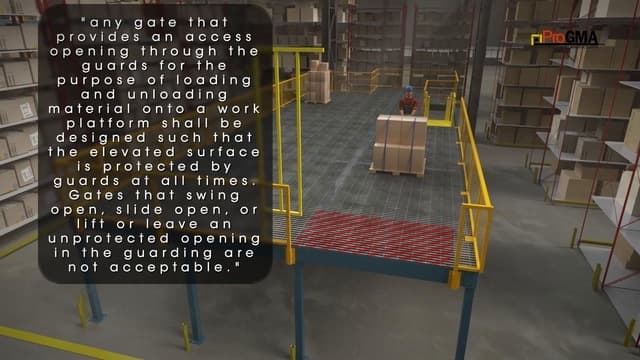
The Protective Guarding Manufacturers Association (ProGMA) provides examples of how to protect property and personnel with protective guarding on elevated work platforms and pick modules.
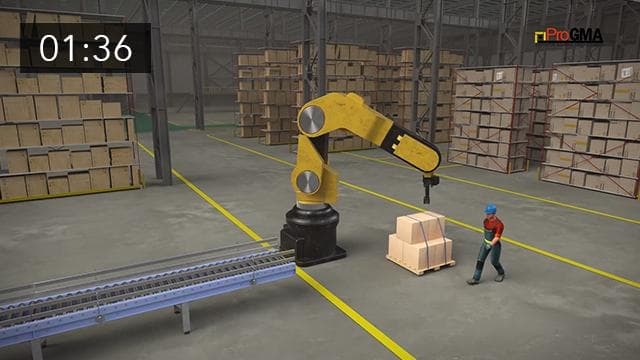
The Protective Guarding Manufacturers Association provides examples and best practices for protective guarding solutions to protect personnel from hazards associated with robotics or automation applications.
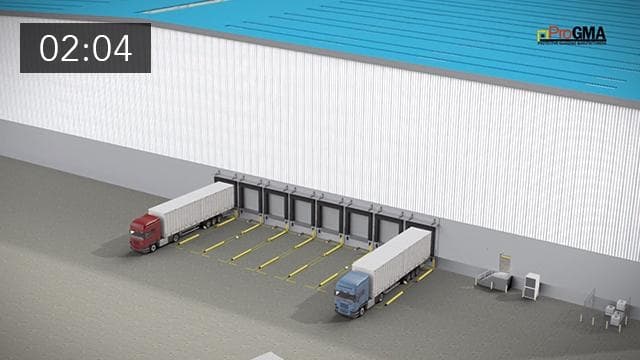
The Protective Guarding Manufacturers Association (ProGMA) explains applications and best practices for protective guards in loading docks to protect product and personnel from vehicles and material handling equipment.
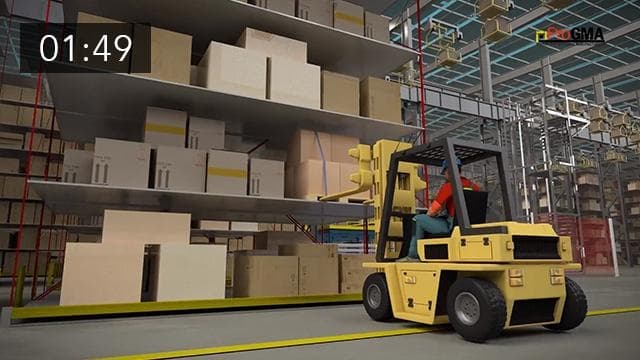
The Protective Guarding Manufacturers Association (ProGMA) explains use considerations of protective guarding applications for overhead conveyor systems.
The Protective Guarding Manufacturers Association (ProGMA) has published a blog to supplement its latest video on safety at pick modules. The video can be viewed at mhi.org/progma/videos.Here at ProGMA, we have produced a series of educational videos on protective guarding equipment in the material handling industry. ProGMA members provide fixed protective guarding products to protect personnel, equipment, and inventory in industrial facilities. A variety of such items are designed for installation at pick modules, which are multi-level structures typically constructed out of pallet rack that allow multiple pallets of product to be stored, broken down, picked, and packaged into specific orders for shipping.Our video is targeted at end users, system integrators, material handling warehouse design consultants / engineers, distributors, and safety professionals in manufacturing and distribution centers in the material handling industry, as well as students studying the sector. Many household and industrial goods we interact with every day were once stored or passed through a pick module. At the distribution centers of companies like CVS Pharmacy and Rite Aid Corporation, for example, goods are stored before being repackaged and shipped to individual stores.As the 2:23min-long video says at the outset, pick modules can have several elevated levels of materials that are handled by both automation and personnel. Although everything in the material handling industry is becoming more automated, separation of full stored cases into smaller, individual shipments is still being completed manually. The size of pick modules has been increasing over the years; in the past, you may have seen a floor plus one level system, then a floor plus two levels, and now it is not uncommon to see three or even four elevated levels. This increases potential hazards.As the video continues, it is of paramount importance that proper guarding is used from the ground up to protect structures, the product they hold and, most importantly, the people working within and around them. Rack upright columns can be difficult to replace and costly to repair because often the area has to be closed off, product has to be removed, and multiple sections need to be disassembled. These components are all dependent upon one another, so if one part fails, the entire system can fail.The video highlights three “easy and affordable” solutions: Free-standing pallet rack column protectors Post cushions Bumper guardsHowever, ProGMA members offer a variety of products for ground-level protection including guardrails, bumper guards, column protectors, bollards, rack guards, and product containment enclosures (i.e., wire mesh or netting); and for upper-level protection, such as side and back product containment enclosures (wire mesh or netting) to prevent products from falling below.What does ANSI say?The video continues, and quotes American National Standards Institute (ANSI) 6.4.3, which states that “…any gate that provides an access opening through the guards for the purpose of loading and unloading material onto a work platform shall be designed such that the elevated surface is protected by guards at all times. Gates that swing open, slide open, or lift or leave an unprotected opening in the guarding are not acceptable.”However, it is important to note that there are many mezzanines that were installed before the ANSI standards were created that used more conventional gates, such as removable, sliding, or swinging systems—and that is the same for pick modules. Systems can be retrofitted to achieve conformity with current standardization. There is no grandfather clause for ANSI (or OSHA) so all systems whether new or old should follow their guidelines. Note that many of the protective guarding products found in the video and on the ProGMA site are easily retrofittable to these older systems.As the video stresses, only dual-gate systems should be used. The same gates used on a pick module are also the preferred method for securing all elevated pallet drop areas whether they are in pick modules, on mezzanines, or on elevated work platforms such as storage or production / blending areas. The ANSI standards that recommended the use of dual-gate systems were written specifically for elevated work platforms and since a pick module is a type of elevated work platform that should be applied.The video demonstrates how a dual-gate system uses two counterbalanced and interconnected gates that are configured so when the first gate at the ledge is open, the second gate behind the pallet is closed. Fixed guarding on the sides—often the frame of the pallet rack in a pick module—prevents access into the side of the areas. This allows material to be loaded into the area while keeping employees a safe distance from the ledge and the material. When the rear / operator gate is opened, the ledge gate automatically closes, maintaining a barrier at the ledge while the pallet is accessed and picked. This creates what ProGMA calls a controlled-access area so there is always a barrier between the worker and the ledge.For information, ProGMA members that manufacture such solutions include Mezzanine Safeti-Gates Inc., Wildeck, and Heartland Engineered Products. Although companies still provide swing gates for pallet drop areas where a single pallet is loaded and staged, they are not an acceptable solution according to ANSI and could potentially create a situation where they are in violation of OSHA code.A self-closing swing gate, also featured in the video, should only be used when integrated with pallet flow lanes where multiple pallets are loaded into the system. The pallet flow lanes are pitched so the pallet rolls into the storage area. This allows the gate to immediately close once the pallet is loaded. By comparison, when used for a single pallet position without flow rails, the staged pallet would hold the swinging gate open, preventing it from closing.For securing multiple deep pallet flow lanes, a dual-gate system is the preferred safety method because not only does it make sure a barrier is in place all times for fall protection, but it also keeps people out of the pallet flow lanes when pallets are being loaded. The two types of incidents we see in these areas are falls from the ledges and pallets being pushed into the legs of employees who have entered the lane. Only the dual-gate system keeps people out of the lanes when the lane is being loaded. The self-closing swing gate, however, does secure the ledge for fall protection.Hand in gloveOftentimes, a safety aspect can be used to increase productivity. For example, the self-closing swinging gate on pallet flow lanes will allow pallets to be quickly loaded into the system. Any time the lift truck operator wants to load a pallet into the area, they just push the pallet through the swinging gates. The dual-gate system has the potential of the gates being in the incorrect position for loading, meaning that the ledge gate is closed when the lift truck is trying to replenish pallets into the area. So they can go to load but a barrier is in place preventing them from doing so.A user can power operate these gates for remote operation but often this isn’t feasible due to the number of areas. Manual operation can actually create a safer and faster environment. The position of the gates in a dual-gate system can be used as a signal between the picker up on the platform and the lift truck operator below. In other words, when the ledge gate is closed that means the picker is picking from the pallets or the area doesn’t need to be replenished.When the picker has finished in that bay or when they notice the pallets need to be replenished in that bay, they just manually close the gate near them, which opens up the ledge gate. Now the lift truck operator can look up and see which areas are safe and ready to be replenished. This is an example of a safety system helping communications among the different workers.In conclusion, it’s evident that, despite automation, people remain at the center of activity in and around pick modules. ProGMA and its members are a one-stop-shop for leading safety solutions, whether it be for preventing hazards associated with falling boxes, product, or workers; or structural protection of the system itself from impact. As the video serves to reiterate, even in automated systems there are still people moving around the facility, either on ground level or on the elevated levels. Even if people are not used for the picking of material, there are areas where empty pallets or totes are removed that need to be guarded.The product-centric video doesn’t feature specific brands, but free-standing pallet rack column protectors, post cushions, and bumper guards are available from ProGMA members including Adrian’s Safety Solutions, A-Safe USA, Bluff Manufacturing, Boplan, DamoTech, Folding Guard, Husky Rack & Wire, Heartland Engineered Products, Jesco, McCue, Slowstop Guarding, SpaceGuard Products, Steel King, Troax, VisiPlas, Wildeck, and WireCrafters.Costs range from inexpensive, light-duty products to more expensive, heavy-duty solutions. Importantly, talking with the manufacturer about the application will help source the right product/s for the facility. No two pick modules or applications are completely alike and that’s what the member companies of the ProGMA are here to help with.The ProGMA website—mhi.org/progma—features details of 22 member companies and hundreds of solutions to help companies with older systems find protective guarding solutions to update / upgrade their pick module system.See the latest video and others in the series at mhi.org/progma/videosShould you be using a ProGMA member to enhance the safety and productivity of your pick modules?About ProGMAThe Protective Guarding Manufacturers Association (ProGMA) members are the industry’s leading suppliers of fixed protective guarding products designed to protect personnel, equipment, and inventory in industrial facilities. Member companies meet regularly to review, discuss, and revise the standards for design and performance of protective guarding products used in the material handling industry. ProGMA member companies are committed to the development, maintenance, and publishing of industry standard specifications for these systems. Visit the website at mhi.org/progma.About MHIMHI is an international trade association that has represented the material handling, logistics and supply chain industry since 1945. MHI members include material handling and logistics equipment and systems manufacturers, integrators, consultants, publishers and third-party logistics providers. MHI offers education, networking and solution sourcing for their members, their customers and the industry as a whole through programming and events. The association sponsors the ProMat and MODEX expos to showcase the products and services of its member companies and to educate manufacturing and supply chain professionals.Contact for editorial enquiries: Ashley Skidmore, askidmore@mhi.org or 704-676-1190
To complement a new educational video, thought leaders representing the Protective Guarding Manufacturers Association (ProGMA), an MHI product group, discuss the importance of protecting personnel, equipment, and inventory in industrial facilities.ProGMA has recently launched the second in a series of videos about the importance of protective guarding products in the material handling industry. The video titled “Proper Safeguarding for Elevated Work Platforms” followed the inaugural, educational video titled, “Essential Safety Barriers for Automated / Robotic Workcells”. (http://www.mhi.org/progma/videos)Here, representatives of member companies expand on the themes explored within the latest video in the group’s first blog.Before we start, says Arlin Keck, corporate research and development engineer at Steel King (a manufacturer of pallet racks, mezzanines and guardrails), it’s important to clarify what we mean by “mezzanine” in this context. “The technical term for what my company and other members make is work platforms. Mezzanine was an old term for these systems; however, the word mezzanine had to be dropped because mezzanine, as defined in the building codes, refers to a specified type of floor within a building structure and carries with it added requirements for fire safety, egress, parking, and so on,” Keck explains.A typical work platform is design to support the site-specific load that will be placed on the floor, be it palletized loads, pallet jacks, foot traffic, work equipment, filing cabinets, racking or shelving units, to name just a few possibilities.Keck says that the main purpose of an elevated work platform is to add additional floor space into a building or room by taking advantage of surplus ceiling clearance that may exist in a warehouse or manufacturing facility. Aaron Conway, president at Mezzanine Safeti-Gates Inc. (a manufacturer of safety gates to secure the ledges of pallet drop areas on mezzanines and rack picking systems), says, “A company that has utilized all of its ground space can build upward. An elevated platform allows one to use the space for workflow or to store product.”As Hue Schlegel, director of marketing at Wildeck Inc. (a manufacturer of mezzanines and work platforms), puts it, “Move up, not out.” He adds, “Depending on the available height in a building, platforms can be one, two, or three levels high, with the most common height being 10 ft. top-of-deck and supporting a floor load of 125 lbs. per square foot. Their length and width are only limited by facility size.” Importantly, he explains, they cannot occupy more than two thirds of a fire-rated area within a building.Keck says work platforms are also used to create catwalks between separated platforms, and to serve as sortation and conveyance areas for mechanized systems. Conway agrees, adding, “Companies that supply elevated work platforms can fabricate them in virtually any configuration. They can be designed to accommodate specific workflow operations or to fit with existing structures in the building.”Industrial buildings are getting bigger and elevated work platforms are scaling up with them. Say, 50 years ago, facilities were much smaller and ceilings lower so there were fewer requirements for elevated platforms. Further, the equipment to load at such heights didn’t exist. Now, the capability of equipment is greater and taller structures are being utilized as a result. Within them, work and storage takes place on multiple levels.These multi-level work platforms present a danger of personnel and objects falling from height.As the latest video warns, the pallet drop area of elevated work platforms can lead to accidents if the ledge is open without adequate guarding. Falls to lower levels cost employers $5 billion annually in compensation claims in the U.S. alone. OSHA reports that it costs on average 16 lost working days per injured employee.Conway says, “Falling from an elevated level, whether it be people or products, is a serious danger and both should be addressed proactively, securing the situation before an incident occurs.” Schlegel adds, “The worst case, of course, is death; while the best scenario is that a worker survives a fall from the typical mezzanine height of 10 ft. sustaining only broken bones, fractures, and other injuries from hitting the concrete floor below. It is a serious matter not to be taken lightly.”Traditional railing or guarding systems are effective at preventing falls from height as long as they include a kick plate that is installed in conjunction with ANSI MH 28.3-2009. Adding netting or expanded metal and safety products to traditional railing systems provides added protection by capturing small objects that might otherwise fall into the work area below.OSHA Standard 1926.502, meanwhile, requires paneling or screening where tools, equipment, or materials are piled higher than the top edge of a toe-board or kick plate. ProGMA members also manufacture both netting and wire mesh panels that comply with that standard.However, David Brentz, chairman of ProGMA and vice president of member company Industrial Netting (a manufacturer of plastic netting), says, “That’s only a minimum requirement; added protection is financially prudent. The cost to install netting or wire screens around the perimeter of an elevated work platform pales in comparison to the cost of a single lost time accident. ProGMA members offer several simple, cost effective solutions to protect employees below loose objects that may fall or be kicked off work platforms.”Conway says, “In the past, properly guarding a pallet drop area or installing netting or wire was something that would be retrofitted, either after an incident occurred or after someone pointed out the issue. Designing proper safety guarding for the structure at the time of purchase makes for a much better fit; when retrofitting, there is often insufficient room for proper guarding and concessions have to be made. But, it is important to note that even if proper guarding wasn’t designed with the structure, it still should be installed. There are companies in the ProGMA that can customize solutions to fit these areas.”He continues, “Don’t confuse luck with judgment. If I visit a facility that was built, say, 20 years ago, I’m sure to find open pallet drop areas or insufficient guardrails. Just because these areas have been around for a while isn’t a reason not to properly secure them. I’ve heard the line, ‘Well, we’ve been doing it this way for 20 years and nobody has gotten hurt’. To that I say, ‘You’ve been lucky!’”Schlegel says, “The biggest safety risk is when a forklift access gate on mezzanine is left open creating a fall hazard for someone off-loading a pallet at the upper level. There are many products, provided by ProGMA members, that prevent the gate from being left open or that keep the operator at a safe distance, which should always be installed.”ANSI says, “Any gate that provides an access opening through the guards for the purpose of loading and unloading material onto a work platform shall be designed such that the elevated surface is protected by guards at all times. Gates that swing open, slide open, or lift up, leaving an unprotected opening in the guarding are not acceptable.”Dual gate systems such as a rolling gate ensure that the operator is separated from the ledge as well as the load. A pivoting gate ensures the operator is never exposed to the ledge and does not require him or her to walk near an open ledge to operate the gate.Unfortunately, sometimes it can take an incident and a facility to be shut down during an investigation for companies to understand the serious financial consequences of a workplace injury. There are many other companies that understand the risks and proactively secure their work areas. These diligent companies end up ahead in the long run:1. They typically get better solutions because they had the time to design them correctly;2. They get a better price because they can take their time and research the solutions;3. Safety solutions are in place before they need them.Conway concludes, “The large majority of people don’t want to get hurt and are not acting recklessly on the job. Typically, they are performing a repetitive operation, and in their process miss a step or push something too far and someone gets hurt. Proper guarding should be in place to prevent injury if this happens.”About ProGMAThe Protective Guarding Manufacturers Association (ProGMA) members are the industry’s leading suppliers of fixed protective guarding products designed to protect personnel, equipment, and inventory in industrial facilities. Member companies meet regularly to review, discuss, and revise the standards for design and performance of protective guarding products used in the material handling industry. ProGMA member companies are committed to the development, maintenance, and publishing of industry standard specifications for these systems. Visit the website at http://www.mhi.org/ProGMAAbout MHIMHI is an international trade association that has represented the material handling, logistics and supply chain industry since 1945. MHI members include material handling and logistics equipment and systems manufacturers, integrators, consultants, publishers and third-party logistics providers. MHI offers education, networking and solution sourcing for their members, their customers and the industry as a whole through programming and events. The association sponsors the ProMat and MODEX expos to showcase the products and services of its member companies and to educate manufacturing and supply chain professionals. http://www.mhi.orgContactAnupam Berry Boseabose@mhi.org704-676-1190

Protective Guarding Manufacturing Association member companies meet regularly to review, discuss, and revise the standards for design and performance of protective guarding products used in the material handling industry. ProGMA member companies are committed to the development, maintenance, and publishing of industry standard specifications for these systems.
Guard rail with posts and rails erected to prevent individuals from coming in contact with hazards.
Click Here to Read More

Click Here to Read More
Click Here to Read More
Click Here to Read More
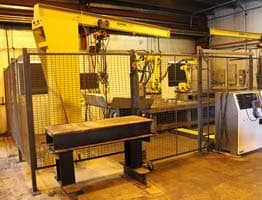
Integration of mechanical and electrical protective guarding solutions to improve employee and work environment safety.
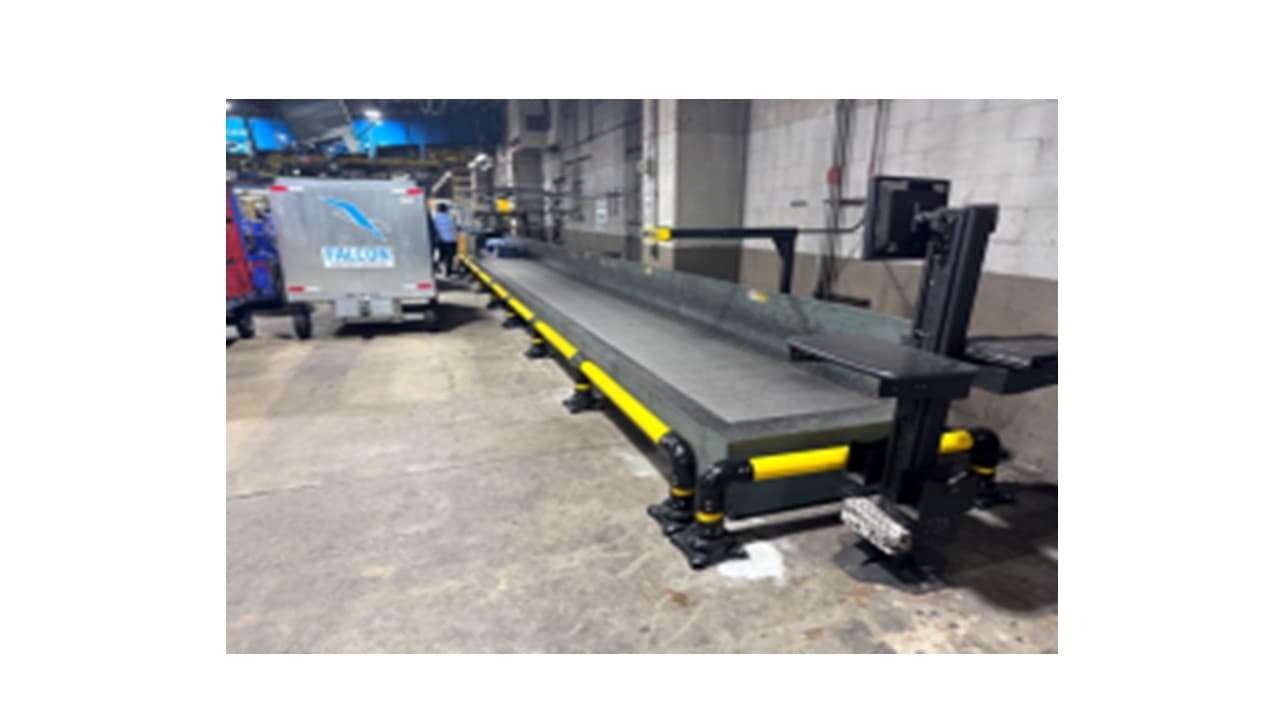
ProGMA A Case StudyCustomer: Airport Baggage AreaProtectionSituationThe luggage handling areas in Orlando International Airport’s Terminals A and B were originally protected by outdated,rigid guarding that had significantly deteriorated over time. This legacy system not only failed to prevent damage but alsocontributed to cracking and breaking of the surrounding 4” thick concrete on the second-floor structure.Conveyors, electrical panels, and critical infrastructure components were left vulnerable to frequent impacts, increasingmaintenance costs and safety concerns. Additionally, ineffective guarding posed risks to equipment, facility integrity, andworker safety in this high-traffic operational environment.SolutionTo address these challenges, airport officials partnered with a certified installer to replace the old system with SlowStop®rebounding guarding products from Impact Recovery. The new solution included:• 15” tall 4” single IronFlex rails to protect conveyor systems at their operating height• 42” tall 4” double IronFlex rails installed around electrical panels for elevated protection• Strategically placed 5” rebounding steel bollards to reinforce key locations and mitigate high-risk impact zonesIn total, the project involved the installation of 1,621 feet of railing in Terminal A and 1,857 feet in Terminal B. The installerstated, “Installation was straightforward and easy. Once we got a pattern down, it really moved fast. We actually finishedthe job two weeks ahead of schedule.” With the new SlowStop® system in place, the airport achieved a dramaticimprovement in facility protection and safety. The rebounding technology minimized concrete damage by absorbing anddissipating impact forces, while also delivering long-term durability and performance. The conveyor equipment supplierpraised the upgrade and expressed strong support for the enhanced safety measures. The comprehensive protectionsystem now ensures critical infrastructure is better defended reducing maintenance needs and increasing operationaluptime. Terminals A and B are now fully equipped with a modern, reliable, and efficient guarding system positioningOrlando International Airport for safer baggage operations for years to come.“Installation was straightforward and easy.Once we got a pattern down, it really moved fast.”
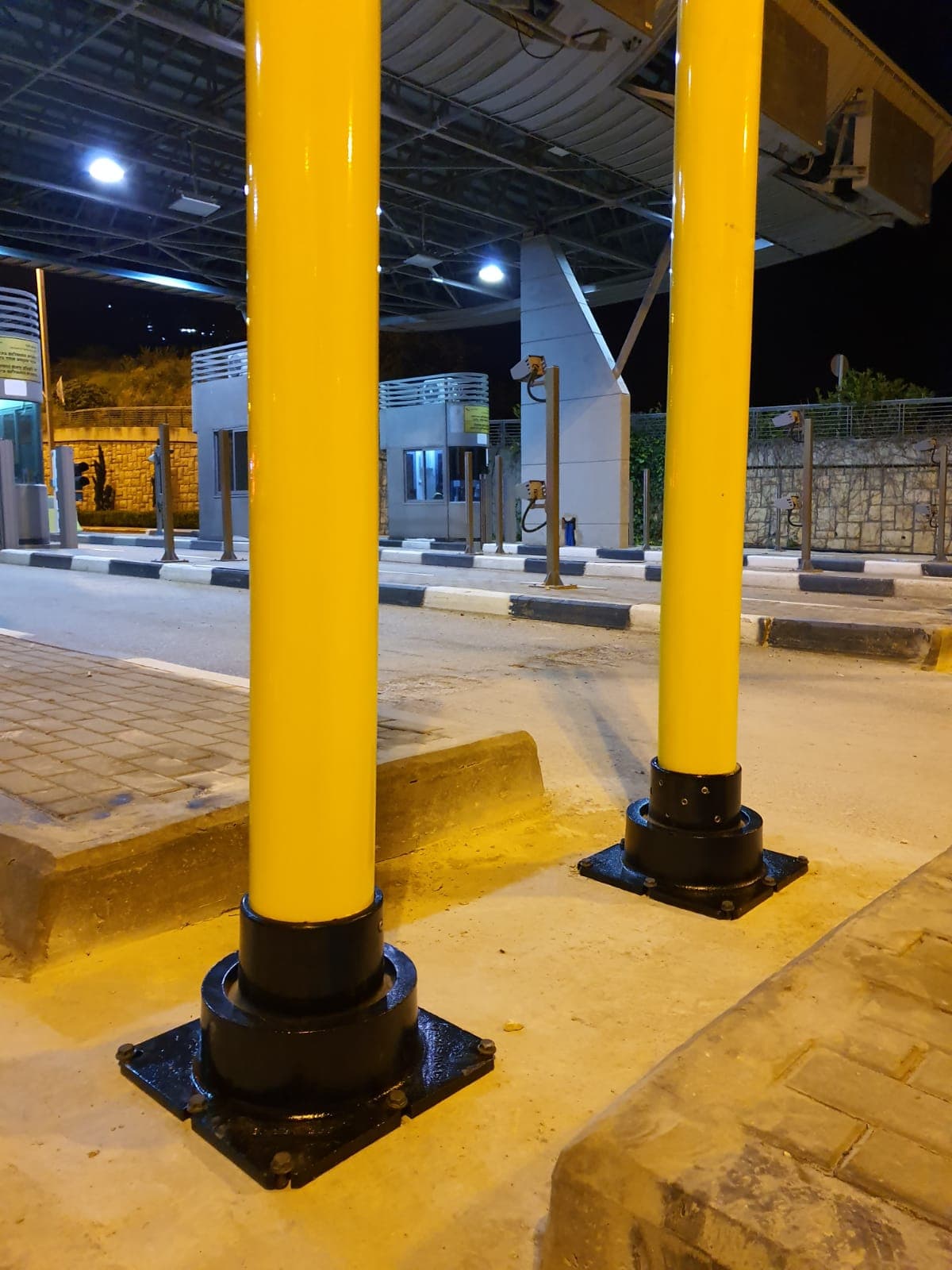
At a toll station protecting both the toll as well as the operator can be a difficult task. Finding a product to keep any over-sized vehicles from trying to pass through the narrow lanes was proving to be a challenge. SlowStop installed Type 3 (6”) SlowStop Bollards in 3M height. After 3 months of testing it was determined that SlowStop was the superior product for this installation and they requested 40 more of the bollards to complete the toll station.
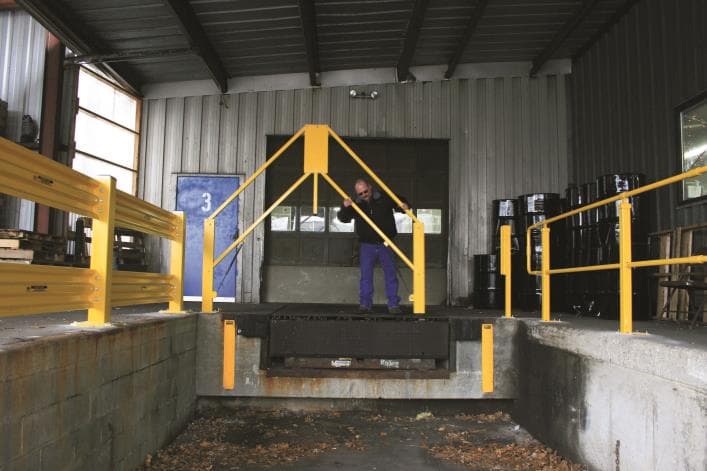
When Ronald Vincze, Quality Manager at Wisconsin-based Precision Gears, Inc., surveyed his facility with an eye on safety, one area that caught his attention was the unprotected ledges on the loading dock in the shipping and receiving area. Vincze saw several videos of Wildeck’s guarding products on YouTube and contacted the company. Wildeck’s EdgeGard™ Straight Dock Gate would help protect employees and personnel around the wide truck pits and loading dock bays. Wildeck’s EdgeGard™ Folding Dock Gate would provide a layer of protection between the entrance to the building and the loading dock area. Wildeck’s Wilgard® Guard Rails would provide a strong physical and visual barrier.

The world is full of so much information that sometimes we don’t know where to look for answers. Fortunately, if you happen to be in material handling MHI has resources you can tap into. In this episode we talk to two members of the ProGMA Industry group about the wide array of tools and information they have about protective guarding equipment.

In January 2017, a series of rules and regulations promulgated by the U.S. Occupational Safety and Health Administration (OSHA) pertaining to walking-working surfaces and fall protection standards were enacted. The rule affects a wide range of workers, including warehouse workers. Specific to warehouse workers, new rules pertaining to loading dock equipment were enacted. The new rule specific to loading dock equipment is outlined in 29 CFR 1910,26, “Dockboards.” The new rules impose new requirements on employers who operate loading docks to either equip dockboards with run-off guards or to demonstrate that there is no hazard of transfer vehicles from running off the dockboard edge. This document summarizes how an employer could apply American National Standards pertaining to loading dock equipment to demonstrate that hazards pertaining to run-off are adequately addressed.