
Follow Us


Copyright MHI © 2026 | All Rights Reserved

Hutto joins the board of one of the nation's largest state trucking associations as Texas becomes Truck Parking Club's biggest market, with over 700 locations and nearly 14,000 truck and trailer parking spacesCHATTANOOGA, TN, August 13, 2026 -- Truck Parking Club, one of the nation's largest marketplace for instantly reservable truck and trailer parking and storage, today announced that Chief Relationship Officer Brent Hutto has been selected for the Board of Directors of the Texas Trucking Association (TXTA). Hutto also serves as Chair of TXTA's Truck Parking Committee.Founded in 1932, TXTA is the unified voice of the trucking industry in Texas, representing hundreds of member companies from small family fleets to Fortune 500 carriers. Its Board of Directors oversees the management of the association's business, approves its annual operating budget, and is charged with ensuring TXTA acts on behalf of both the public and the trucking industry.Hutto joined Truck Parking Club in 2025 after more than two decades in freight technology and media, including his tenure as Chief Relationship Officer at Truckstop and earlier leadership roles at Randall Reilly."Every parking conversation in this industry eventually becomes a conversation about Texas," said Hutto. "The freight is here, the drivers are here, and the shortage is here. The Truck Parking Committee's work is a testament to TXTA's commitment to solving it. Serving on the board widens that work to the full set of issues facing trucking in Texas. That is a real responsibility to the carriers and drivers who count on this association, and I do not take it lightly.""TXTA is proud to welcome Brent Hutto to the Board of Directors and looks forward to the perspective and leadership he will bring to our association. Brent's expertise in addressing one of our industry's most pressing challenges—safe and accessible truck parking—will be a tremendous asset as we continue advancing the interests of Texas trucking," said TXTA President & CEO John D. Esparza."TXTA is one of the largest and most influential state trucking associations in the country, and we are proud that Brent has the opportunity to serve on its board," said Evan Shelley, Co-Founder and CEO of Truck Parking Club. "Texas is our largest market, and the parking shortage is felt there as acutely as anywhere. Brent has spent two decades earning the trust of fleets in this state. There is nobody better positioned to advocate for the interests of trucking as well as keep parking on the agenda."Texas is Truck Parking Club's largest market, with over 700 Property Member locations and nearly 14,000 spaces. Nationally, the company now has more than 6,200 locations in 50 states and is targeting 10,000 by the end of 2026.About Truck Parking Club Truck Parking Club is a network of instantly reservable hourly, daily, weekly and monthly truck and trailer parking locations throughout the US. Truck Parking Club helps connect truckers to truck parking locations throughout the US via truckparkingclub.com and our mobile app. Our network is made up of property owners that have locations adequate for truck parking to list on the platform: this includes warehouses, trucking companies, truck repair shops, tow truck companies, storage companies, CDL schools, trailer leasing companies, real estate investors, truck stops, truck parking operators and more!About Texas Trucking Association The Texas Trucking Association (TXTA) is dedicated to enhancing the effectiveness of its members by advocating for sound public policies, providing excellence in education, training, and information, and promoting a safe, dependable, and cost-effective motor transportation system to better serve the people of Texas. To learn more, visit www.texastrucking.com. ContactReed Loustalotreed@truckparkingclub.com
Legacy Steel Joins Storage Manufacturers Association (SMA) as a New MemberThe Storage Manufacturers Association (SMA) Industry Group of MHI is pleased to announce the approval of Legacy Steel’s application to join SMA at the 2026 Spring Meeting held May 18-20 in Jacksonville, FL.MHI member companies have the opportunity to join any of MHI’s Industry Groups or the Solutions Community. Industry Groups share information and conduct research to stay at the forefront of their industry. Typical Industry Group activities include industry statistics collection, standards development, technical publications, public relations, promotion of safety, and member and user education. The Solutions Community brings MHI members together with equipment and systems users to collaborate and address common challenges and opportunities in manufacturing and supply chain in a safe harbor environment.For more information about MHI Industry Groups, please visit mhi.org/industrygroups. To learn more about SMA, please visit mhi.org/sma or contact Anna Teter at ateter@mhi.org.SMA – Storage Manufacturers AssociationMembers of the Storage Manufacturers Association (SMA) are the industry’s leading suppliers of industrial storage equipment. They supply storage solutions worldwide and in virtually every major manufacturing and distribution sector. Member companies aim to deliver value for the work platform and shelving industry by providing education, market intelligence, and standards that promote safe and efficient designs and meet regularly to review, discuss and revise the standards for design, performance and proper operation of steel industrial/storage equipment.About MHIMHI is an international trade association that has represented the material handling, logistics and supply chain industry since 1945. MHI’s over 1,000 members include material handling and logistics equipment and systems manufacturers, integrators, consultants, publishers and third-party logistics providers. MHI offers education, networking and solution sourcing for their members, the members’ customers, and the industry as a whole through programming and events. The association sponsors the ProMat and MODEX expos to showcase the products and services of its member companies and to educate manufacturing and supply chain professionals. The Warehousing Education and Research Council (WERC) is a division of MHI and provides education and research to the warehousing, distribution, and logistics community.
The Storage Manufacturers Association (SMA) Industry Group of MHI is pleased to announce the approval of Structural Support System’s application to join SMA at the 2026 Spring Meeting held May 18-20 in Jacksonville, FL.MHI member companies have the opportunity to join any of MHI’s Industry Groups or the Solutions Community. Industry Groups share information and conduct research to stay at the forefront of their industry. Typical Industry Group activities include industry statistics collection, standards development, technical publications, public relations, promotion of safety, and member and user education. The Solutions Community brings MHI members together with equipment and systems users to collaborate and address common challenges and opportunities in manufacturing and supply chain in a safe harbor environment.For more information about MHI Industry Groups, please visit mhi.org/industrygroups. To learn more about SMA, please visit mhi.org/sma or contact Anna Teter at ateter@mhi.org.SMA – Storage Manufacturers AssociationMembers of the Storage Manufacturers Association (SMA) are the industry’s leading suppliers of industrial storage equipment. They supply storage solutions worldwide and in virtually every major manufacturing and distribution sector. Member companies aim to deliver value for the work platform and shelving industry by providing education, market intelligence, and standards that promote safe and efficient designs and meet regularly to review, discuss and revise the standards for design, performance and proper operation of steel industrial/storage equipment.About MHIMHI is an international trade association that has represented the material handling, logistics and supply chain industry since 1945. MHI’s over 1,000 members include material handling and logistics equipment and systems manufacturers, integrators, consultants, publishers and third-party logistics providers. MHI offers education, networking and solution sourcing for their members, the members’ customers, and the industry as a whole through programming and events. The association sponsors the ProMat and MODEX expos to showcase the products and services of its member companies and to educate manufacturing and supply chain professionals. The Warehousing Education and Research Council (WERC) is a division of MHI and provides education and research to the warehousing, distribution, and logistics community.

Kayla Gregory, Paige Johnson, Kelsey Van Scyoc recognized for leadership in their fields and contributions in the supply chainCOLUMBUS, Ind. (November 25, 2024) – Toyota Material Handling, a North American leader in material handling products and solutions, has announced Kayla Gregory, Paige Johnson and Kelsey Van Scyoc are recipients of the 2024 Women in Supply Chain Award. The award, given annually by Food Logistics and Supply & Demand Chain Executive, honors female supply chain leaders and executives whose accomplishments, mentorship, and actions set a positive example for women at all levels of the supply chain network.“Toyota is proud to develop industry leaders within the material handling and supply chain sectors,” said Bill Finerty, President and CEO of Toyota Material Handling. “We are immensely proud of these women for the work they have accomplished within their careers, the impact they have made at TMH, and for their mentorship that sets an incredible path for additional associates to learn from them.”Gregory, Toyota’s Quality Assurance Manager, is known for her effective leadership and commitment to advancing quality and team development. Her initiatives, including “The Other Team” event, enhances cross-departmental collaboration and efficiency. Gregory’s strategic leadership produced a production relaunch in 2022. Typically, a project launch would take two years, but by building strong collaboration on the team Gregory supported, they were able to launch in six months. Her excellence has been recognized through initiatives such as the Toyota Core Values Award and the Learning & Development Partnership Award, highlighting her commitment to delivering top-quality products and services.Johnson, Toyota Material Handling’s Health, Safety and Sustainability Engineer, has been pivotal in driving Toyota’s sustainability and ESG goals and promoting corporate environmental stewardship, earning Toyota the Indiana Governor’s Award for Environmental Excellence. Paige has also led numerous workplace health and safety improvements, leading to a Governor’s Workplace Safety Award. Her strategic vision includes embedding sustainability into Toyota's culture and facilitating collaboration across the supply chain to achieve collective ESG goals, making her a standout leader in the industry.Van Scyoc, Procurement Manager at TMH, rose from an intern in Toyota’s Production Control and Logistics department to a full-time associate where she successfully led the "Plan for Every Part" strategy, improving packaging, logistics and supply chain processes. Now, as Procurement Manager, she oversees a team that delivers strong results in cost reduction, supplier selection and development, and procurement strategies. Van Scyoc’s excellence in the supply chain industry was recognized as one of Conexus Indiana’s 30 Under 30.Food Logistics and Supply & Demand Chain Executive received nearly 350 submissions for this year’s award, which set the publication’s record for any of its award categories. Of that number, 81 were submitted by male counterparts, and 39 women were self-nominated.Learn more about Toyota’s impact on the supply chain industry at ToyotaForklift.com, and explore other career opportunities here.About Toyota Material Handling Toyota Material Handling offers material handling products and solutions, including forklifts, reach trucks, order pickers, pallet jacks, container handlers, automated guided vehicles, and tow tractors, along with aerial work platforms, fleet management services, and advanced automation engineering and design. Toyota’s commitment to quality, reliability and customer satisfaction, the hallmark of the Toyota Production System, extends throughout more than 230 locations across North America. With access to an industry-leading lineup of material handling products, Toyota dealers are uniquely positioned to help solve wide-ranging challenges in warehousing and distribution. Built for every application, Toyota can provide the most complete set of solutions for material handling, automation, energy, advanced logistics, and warehouse optimization. For more information or to learn more, visit ToyotaForklift.com.About Food Logistics and Supply & Demand Chain ExecutiveFood Logistics reaches more than 26,000 supply chain executives in the global food and beverage industries, including executives in the food sector (growers, producers, manufacturers, wholesalers and grocers) and the logistics section (transportation, warehousing, distribution, software and technology) who share a mutual interest in the operations and business aspects of the global cold food supply chain. Supply & Demand Chain Executive is the only supply chain publication covering the entire global supply chain, focusing on trucking, warehousing, packaging, procurement, risk management, professional development and more. Food Logistics and Supply & Demand Chain Executive also operate SCN Summit and Women in Supply Chain Forum. Go to www.FoodLogistics.com and www.SDCExec.ContactJustin AlbersToyota Material Handling812-350-9739Justin.Albers@toyotatmh.com
Click Here to Read More
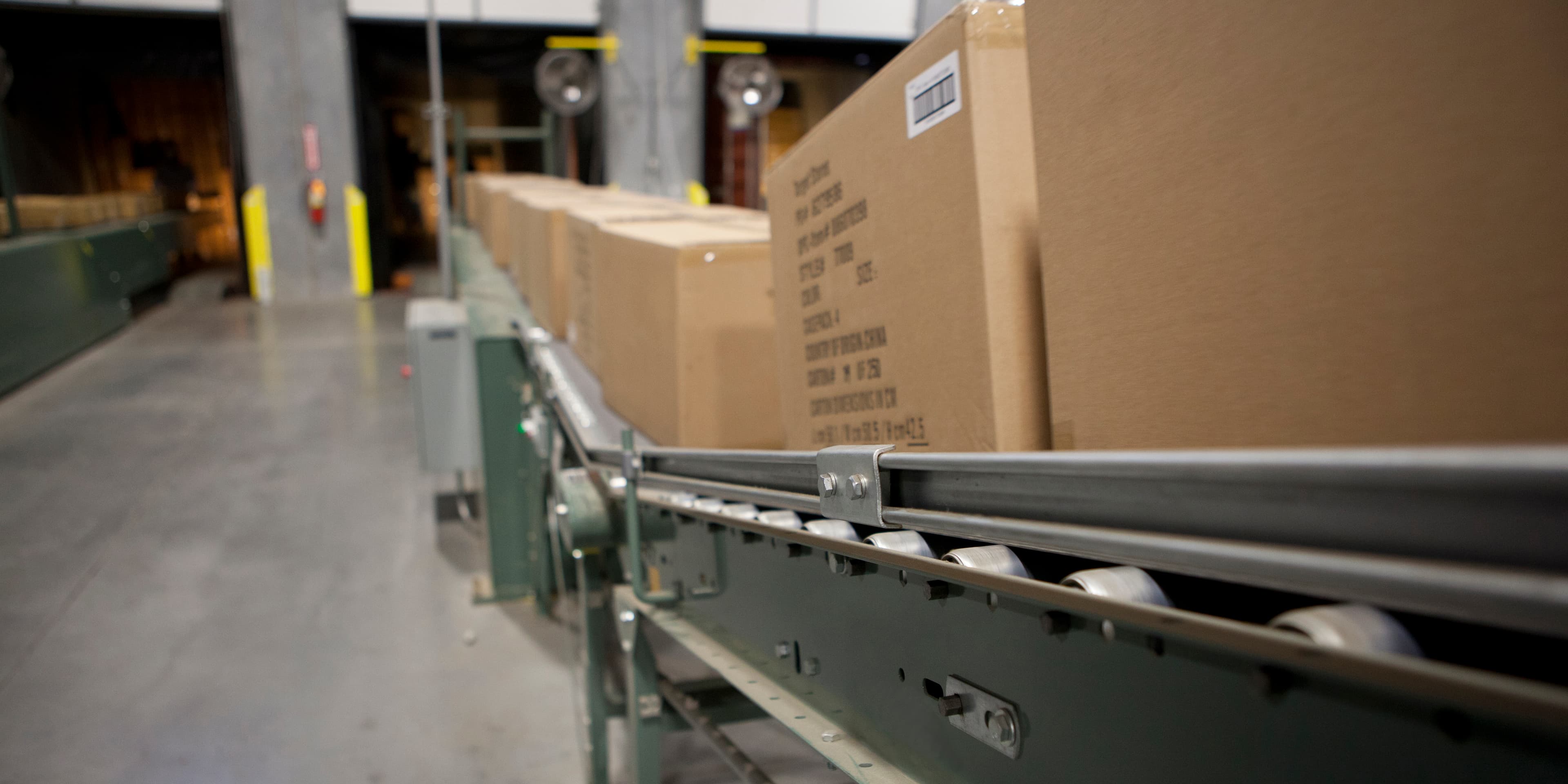
Recently published document overviews the different possible applications for conveyors and sortation systems within warehouses and DCs.
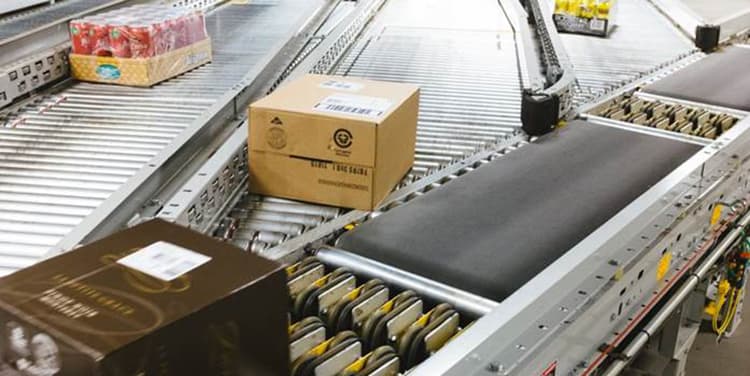
Before switching from bulk to singulated parcel flow, consider these process, volume, facility, and handling aspects to maximize ROI.
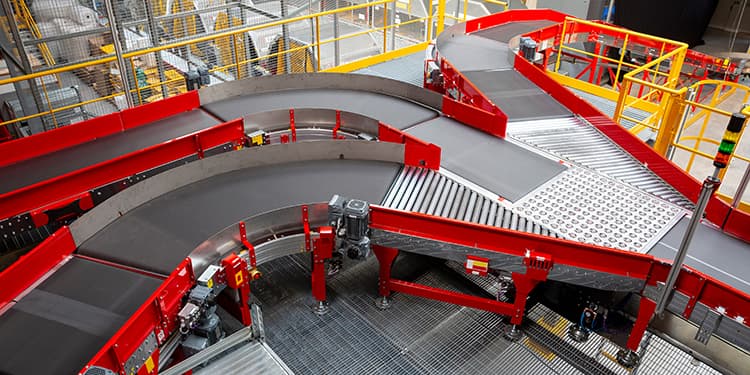
Industry insiders share the different factors to include when calculating the total cost of ownership for new sorter and conveyor installations.
Protective Guarding Manufacturing Association member companies meet regularly to review, discuss, and revise the standards for design and performance of protective guarding products used in the material handling industry. ProGMA member companies are committed to the development, maintenance, and publishing of industry standard specifications for these systems.
Founded in 1933, The Monorail Manufacturers Association, Inc. (MMA) is an independent incorporated trade association affiliated with the Material Handling Industry. MMA Members produce the preponderance of patented and enclosed track underhung cranes and monorail systems.
Electrification and Controls Manufacturers Association (ECMA) members are the Industry’s leading suppliers of electrification and controlling devices. They supply solutions worldwide and in virtually every major manufacturing and distribution sector.
CMAA is the Crane Manufacturers Association of America, Inc., an independent trade association affiliated with the Material Handling Industry. CMAA traces its roots to the Electric Overhead Crane Institute, known as EOCI, which was founded in 1927 by leading crane manufacturers of that time to promote the standardization of cranes as well as uniform quality and performance. The voluntary association was incorporated as the Crane Manufacturers Association of America, Inc. in 1955. Member Companies, representing the industry leaders in the overhead crane industry, serve the United States market from operations based in the United States, Canada, and Mexico.
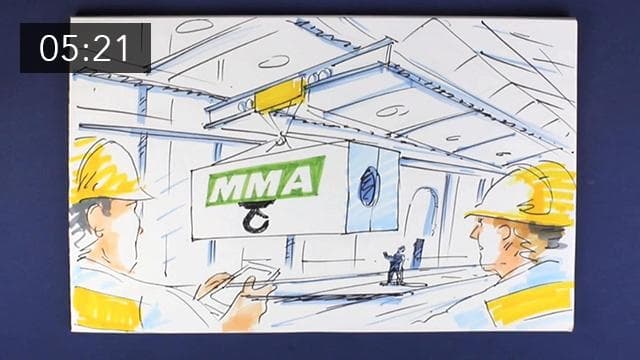
Introduction to the Monorail Manufacturers Association of America
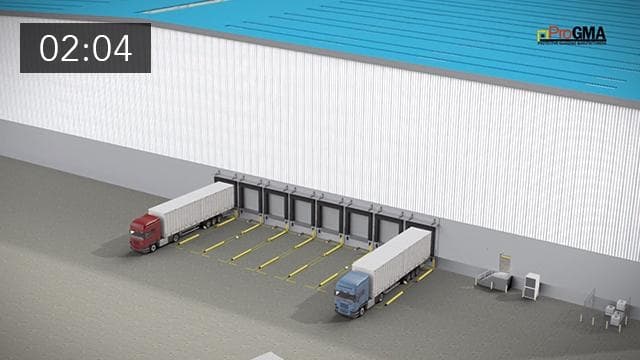
The Protective Guarding Manufacturers Association (ProGMA) explains applications and best practices for protective guards in loading docks to protect product and personnel from vehicles and material handling equipment.

Geek+, an RBR Top 50 Robotics company and leading provider of warehousing and logistics solutions will showcase its latest advanced robotic systems at Modex 2020. Visitors can expect a live demo of Geek+’s products at stand #6696, where Geek+ Picking, Moving, Sorting, Forklift and the Robot Shuttle System will be featured.
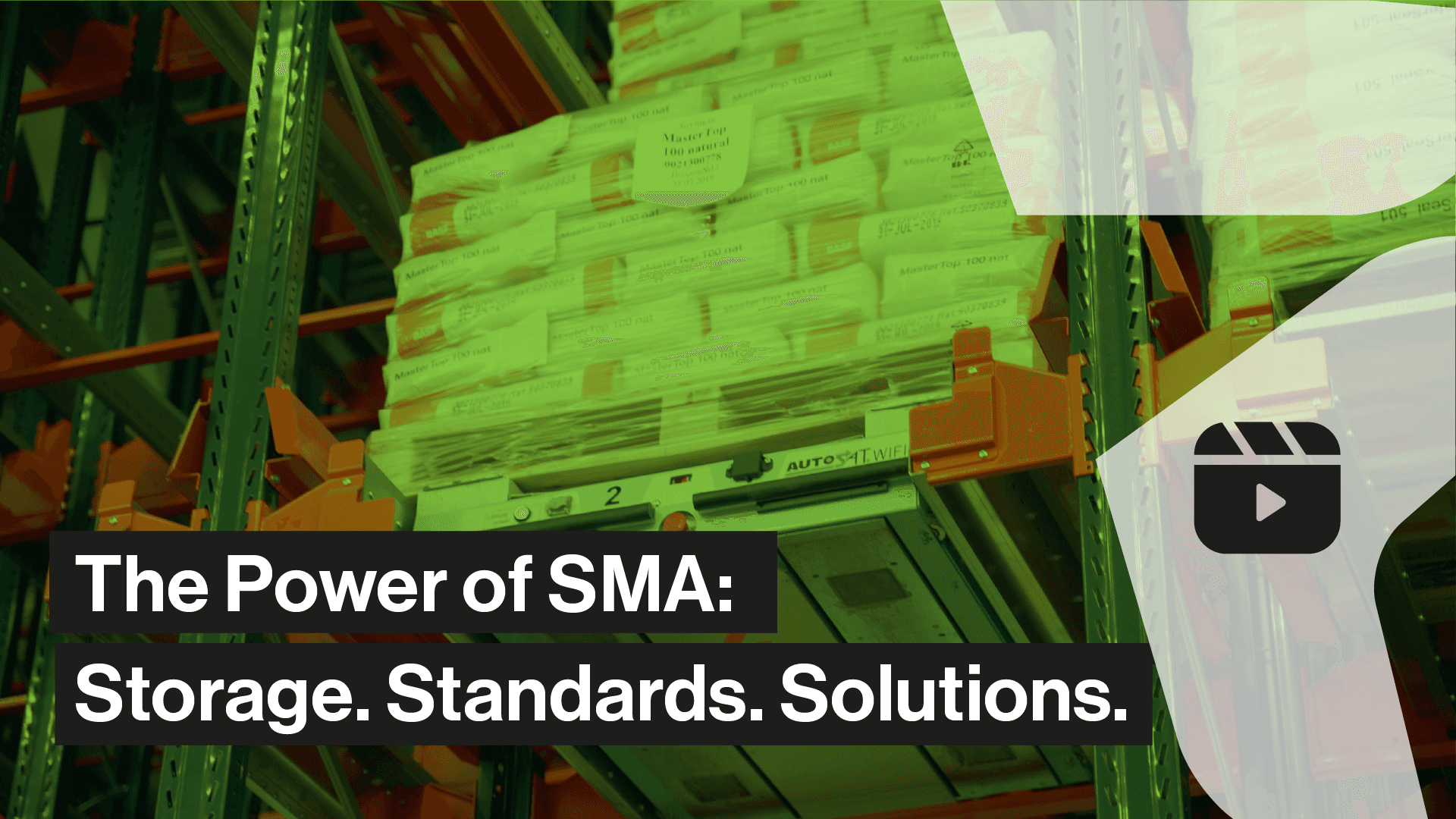
The Storage Manufacturers Association (SMA) brings together leading manufacturers across the industrial storage and material handling industry to share expertise, develop standards, and advance best practices. Through collaboration, SMA members contribute to educational resources, safety guidelines, and industry innovation, helping facilities adapt to evolving demands like automation, robotics, and vertical storage solutions.
Price: $50.00The purpose of this standard is to serve as the guide for designers, manufacturers, sellers, installers, owners, users, and governing bodies of steel mesh containment panels used in pallet rack and vertical storage system applications and to achieve the following objectives:to provide guidelines for the design and testing of steel mesh containment panels used in pallet rack and vertical storage system applications;to promote the understanding of the respective responsibilities of manufacturers, sellers, installers, owners, users, and governing bodies associated with steel mesh containment panels used in pallet rack and vertical storage system applications; andto provide a uniform means of testing steel mesh containment panels used in pallet rack and vertical storage system applications.This standard provides performance and testing requirements for vertically-mounted steel mesh containment panels used in pallet rack and vertical storage system applications to contain and minimize the potential for falling items, protecting personnel, product, and property.
Price: $150.00This standard specifies minimum requirements for the structural design, testing, and utilization of industrial steel storage racks. It applies to industrial steel storage racks, movable-shelf racks, rack-supported systems, and storage racks associated with automated storage and retrieval systems (ASRSs; also known as “stacker racks”), constructed of cold formed and/or hot-rolled steel structural members. Such rack types also include push-back rack, pallet flow rack, case-flow rack, pick modules, and rack-supported platforms. This standard is also intended to be applied to the design of the storage rack portion of any rack structure that provides support to the exterior walls and roof, except as noted. It does not apply to other types of racks, such as drive-in or drive through racks, cantilever racks (see ANSI MH16.3 for guidance on cantilever racks), portable racks, or racks made of material other than steel.ANSI MH16.1-2023 replaces ANSI MH16.1-2021, which was a revision of ANSI MH16.1-2012(R2019). It updates seismic provisions to align with ASCE/SEI 7-2022, including use of software to obtain seismic data and new methods to obtain the seismic response coefficients. It also includes revisions to the cantilever testing provisions and to the cyclic beam-to-column testing provisions in this section, so that either test can be used to determine beam design spring constants.A summary of the major revisions between the 2021 and 2012 revisions include the following:Reorganization of the document to align with guidance in ISO/IEC Directives, Part 2, specifically moving requirements previously in Section 1 elsewhere in the document, adding Normative References to Section 2 (previously Section 10, “References to the Text”), and adding Terms and Definitions to Section 3 (previously “Nomenclature” in the Foreword);A requirement for post-installation inspection conducted by the owner;New stability design requirements similar to the requirements in ANSI/AISI S100 or ANSI/AISC 360 replace the effective length method for stability design outlined in previous editions;Seismic provisions (7.4) were revised to align with ASCE/SEI 7-2016, including revision of redundancy factors for multiple rows and revision of the Fa and Fv coefficients for the D-Default site class;New design procedure for perforated columns that includes a new definition of net section using reduced strips to represent the hole lines. Torsional properties are now to be calculated using rounded corners and a distortional buckling check is required for those sections subject to distortional buckling. The equation for the Q effect on the column strength has changed;New section on pallet support design;New section on frame tie and cross-aisle tie design; New provisions for base plate and anchor design where the seismic overstrength consideration is required;Interpretation of the cyclic tests for connectors has been added; The base fixity test and frame bracing test have been added;The portal test and the upright frame test in the 2012 revision were removed from the 2021 revision.
Price: $60.00This standard serves designers, manufacturers, sellers, installers, owners, users, and governing bodies of dock leveling devices to achieve the following objectives: to provide guidelines for the design and testing of dock leveling devices; to promote the understanding of the respective responsibilities of manufacturers, sellers, installers, designers, owners, users, and governing bodies associated with dock leveling devices; and to provide a uniform means of comparison for dock leveling devices.
Price: $100.00This standard provides guidance for designers, manufacturers, sellers, installers, users, and governing bodies associated with power-operated vertical carousels and vertical lift modules.A vertical carousel is an enclosed system equipped with a series of shelves that work on a Ferris wheel concept, rotating around a track to deliver stored items to personnel through one or more ergonomically designed pick windows. A vertical lift module is an enclosed system that consists of one or two columns of tray storage with an inserter/extractor. For vertical lift modules with two columns of trays, the inserter/extractor is located between the tray storage. The vertical lift module inserter/extractor automatically locates and retrieves stored strays from the unit to deliver stored items to personnel through one or more ergonomically designed pick windows.Both vertical carousels and vertical lift modules are designed to utilize floor-to-ceiling height in a facility to optimize storage density. Shelves or carriers in vertical carousels and vertical lift modules are configurable to maximize storage density in a minimal footprint.The scope of this standard is to eliminate or minimize the hazards which can arise during installation, start up, operation, maintenance, testing, and dismantling of power-operated vertical carousels and vertical lift modules.ANSI MH24.2-2023 replaces ANSI MH24.2-2018. It provides expanded guidance for installations in high seismic locations and reformatting to better align with other national and international standards.
Compact, heavy-duty axis with two carriages optimizes space requirements and cycle times of dynamic handling applications Linear axis can accommodate two masses weighing up to 385 kg each Can be individually configured as a single axis or as a part of a multi-axis system Suited for applications with high drive torques and short cycle timesBosch Rexroth is expanding its CKR series of compact modules with an innovative dual belt axis for dynamic handling with a total load capacity of up to 770 kg. The new CKR-280 heavy-duty axis combines the functions of two linear axes into one linear system. Two, independently driven carriages in a single frame enable dynamic applications with high drive torques and short cycle times. The compact, dual-handling system reduces valuable installation space and increases productivity, while saving time and costs for engineering, assembly and commissioning. The new solution can be utilized as a single axis or combined with other linear axes into a multi-axis system, with the option also to include a drive package.Whether in battery production, intralogistics or machine tool automation, many industries are increasingly seeking compact handling solutions that can move large payloads with high dynamics. With the new dual belt version of the CKR compact module series in size 280, Bosch Rexroth offers a space-optimized, heavy-duty axis that can handle two payloads up to 385 kg each and drive torques up to 250 Nm.To enable fast and easy engineering, the compact modules can be configured online in lengths up to 5.50 m. Bosch Rexroth can also deliver longer travel ranges on request. High accelerations of up to 5g and a maximum speed of 5 m/s provide the optimal conditions for short cycle times with high precision and a repeatability of +/- 0.05 mm. Depending on the requirements, a variety of travel profiles can be implemented independently.After its market launch, the CKR-280 heavy-duty axis will also be integrated into the e-tool chain as a new size for single-axis and multi-axis systems.For more information on Bosch Rexroth’s complete line of compact module solutions, please visit boschrexroth-us.com.About Bosch RexrothAs one of the world’s leading suppliers of drive and control technologies, Bosch Rexroth ensures efficient, powerful and safe movement in machines and systems of any size. The company bundles global application experience in the market segments of Mobile and Industrial Applications as well as Factory Automation. With its intelligent components, customized system solutions, engineering and services, Bosch Rexroth is creating the necessary environment for fully connected applications. Bosch Rexroth offers its customers hydraulics, electric drive and control technology, gear technology and linear motion and assembly technology, including software and interfaces to the Internet of Things. With locations in over 80 countries, around 32,600 associates generated sales revenue of 6.5 billion euros in 2024.To learn more, please visit the local country sites:USA: www.boschrexroth-us.comCANADA: www.boschrexroth.caMEXICO: www.boschrexroth.mxThe Bosch Group is a leading global supplier of technology and services. It employs roughly 417,900 associates worldwide (as of December 31, 2024). According to preliminary figures, the company generated sales of 90.5 billion euros in 2024. Its operations are divided into four business sectors: Mobility, Industrial Technology, Consumer Goods, and Energy and Building Technology. With its business activities, the company aims to use technology to help shape universal trends such as automation, electrification, digitalization, connectivity, and an orientation to sustainability. In this context, Bosch’s broad diversification across regions and industries strengthens its innovativeness and robustness. Bosch uses its proven expertise in sensor technology, software, and services to offer customers cross-domain solutions from a single source. It also applies its expertise in connectivity and artificial intelligence in order to develop and manufacture user-friendly, sustainable products. With technology that is “Invented for life,” Bosch wants to help improve quality of life and conserve natural resources. The Bosch Group comprises Robert Bosch GmbH and its roughly 470 subsidiary and regional companies in over 60 countries. Including sales and service partners, Bosch’s global manufacturing, engineering, and sales network covers nearly every country in the world. Bosch’s innovative strength is key to the company’s further development. At 136 locations across the globe, Bosch employs some 86,900 associates in research and development, of which nearly 48,000 are software engineers.Additional information is available online at www.bosch.com, www.iot.bosch.com, www.bosch-press.com.Contact Bosch Rexroth CorporationEden Estabrook(704) 942-4227Eden.estabrook@boschrexroth-us.com

MAVs deliver a lot of benefits, including higher efficiency, productivity, safety, and flexibility. To provide safe, efficient, and cost-effective movement of materials. To supplement or replace manually-operated material handling vehicles, such as forklifts, tuggers, and order pickers. For greater flexibility in material transport compared to fixed solutions, such as conveyors. In response to shortages in labor, allowing reassignment of employees to areas where they can add more value. To eliminate associate travel time during picking and order fulfillment.

The Protective Guarding Manufacturers Association (ProGMA) has published a blog to supplement its latest video on safety at pick modules. The video can be viewed at mhi.org/progma/videos.Here at ProGMA, we have produced a series of educational videos on protective guarding equipment in the material handling industry. ProGMA members provide fixed protective guarding products to protect personnel, equipment, and inventory in industrial facilities. A variety of such items are designed for installation at pick modules, which are multi-level structures typically constructed out of pallet rack that allow multiple pallets of product to be stored, broken down, picked, and packaged into specific orders for shipping.Our video is targeted at end users, system integrators, material handling warehouse design consultants / engineers, distributors, and safety professionals in manufacturing and distribution centers in the material handling industry, as well as students studying the sector. Many household and industrial goods we interact with every day were once stored or passed through a pick module. At the distribution centers of companies like CVS Pharmacy and Rite Aid Corporation, for example, goods are stored before being repackaged and shipped to individual stores.As the 2:23min-long video says at the outset, pick modules can have several elevated levels of materials that are handled by both automation and personnel. Although everything in the material handling industry is becoming more automated, separation of full stored cases into smaller, individual shipments is still being completed manually. The size of pick modules has been increasing over the years; in the past, you may have seen a floor plus one level system, then a floor plus two levels, and now it is not uncommon to see three or even four elevated levels. This increases potential hazards.As the video continues, it is of paramount importance that proper guarding is used from the ground up to protect structures, the product they hold and, most importantly, the people working within and around them. Rack upright columns can be difficult to replace and costly to repair because often the area has to be closed off, product has to be removed, and multiple sections need to be disassembled. These components are all dependent upon one another, so if one part fails, the entire system can fail.The video highlights three “easy and affordable” solutions: Free-standing pallet rack column protectors Post cushions Bumper guardsHowever, ProGMA members offer a variety of products for ground-level protection including guardrails, bumper guards, column protectors, bollards, rack guards, and product containment enclosures (i.e., wire mesh or netting); and for upper-level protection, such as side and back product containment enclosures (wire mesh or netting) to prevent products from falling below.What does ANSI say?The video continues, and quotes American National Standards Institute (ANSI) 6.4.3, which states that “…any gate that provides an access opening through the guards for the purpose of loading and unloading material onto a work platform shall be designed such that the elevated surface is protected by guards at all times. Gates that swing open, slide open, or lift or leave an unprotected opening in the guarding are not acceptable.”However, it is important to note that there are many mezzanines that were installed before the ANSI standards were created that used more conventional gates, such as removable, sliding, or swinging systems—and that is the same for pick modules. Systems can be retrofitted to achieve conformity with current standardization. There is no grandfather clause for ANSI (or OSHA) so all systems whether new or old should follow their guidelines. Note that many of the protective guarding products found in the video and on the ProGMA site are easily retrofittable to these older systems.As the video stresses, only dual-gate systems should be used. The same gates used on a pick module are also the preferred method for securing all elevated pallet drop areas whether they are in pick modules, on mezzanines, or on elevated work platforms such as storage or production / blending areas. The ANSI standards that recommended the use of dual-gate systems were written specifically for elevated work platforms and since a pick module is a type of elevated work platform that should be applied.The video demonstrates how a dual-gate system uses two counterbalanced and interconnected gates that are configured so when the first gate at the ledge is open, the second gate behind the pallet is closed. Fixed guarding on the sides—often the frame of the pallet rack in a pick module—prevents access into the side of the areas. This allows material to be loaded into the area while keeping employees a safe distance from the ledge and the material. When the rear / operator gate is opened, the ledge gate automatically closes, maintaining a barrier at the ledge while the pallet is accessed and picked. This creates what ProGMA calls a controlled-access area so there is always a barrier between the worker and the ledge.For information, ProGMA members that manufacture such solutions include Mezzanine Safeti-Gates Inc., Wildeck, and Heartland Engineered Products. Although companies still provide swing gates for pallet drop areas where a single pallet is loaded and staged, they are not an acceptable solution according to ANSI and could potentially create a situation where they are in violation of OSHA code.A self-closing swing gate, also featured in the video, should only be used when integrated with pallet flow lanes where multiple pallets are loaded into the system. The pallet flow lanes are pitched so the pallet rolls into the storage area. This allows the gate to immediately close once the pallet is loaded. By comparison, when used for a single pallet position without flow rails, the staged pallet would hold the swinging gate open, preventing it from closing.For securing multiple deep pallet flow lanes, a dual-gate system is the preferred safety method because not only does it make sure a barrier is in place all times for fall protection, but it also keeps people out of the pallet flow lanes when pallets are being loaded. The two types of incidents we see in these areas are falls from the ledges and pallets being pushed into the legs of employees who have entered the lane. Only the dual-gate system keeps people out of the lanes when the lane is being loaded. The self-closing swing gate, however, does secure the ledge for fall protection.Hand in gloveOftentimes, a safety aspect can be used to increase productivity. For example, the self-closing swinging gate on pallet flow lanes will allow pallets to be quickly loaded into the system. Any time the lift truck operator wants to load a pallet into the area, they just push the pallet through the swinging gates. The dual-gate system has the potential of the gates being in the incorrect position for loading, meaning that the ledge gate is closed when the lift truck is trying to replenish pallets into the area. So they can go to load but a barrier is in place preventing them from doing so.A user can power operate these gates for remote operation but often this isn’t feasible due to the number of areas. Manual operation can actually create a safer and faster environment. The position of the gates in a dual-gate system can be used as a signal between the picker up on the platform and the lift truck operator below. In other words, when the ledge gate is closed that means the picker is picking from the pallets or the area doesn’t need to be replenished.When the picker has finished in that bay or when they notice the pallets need to be replenished in that bay, they just manually close the gate near them, which opens up the ledge gate. Now the lift truck operator can look up and see which areas are safe and ready to be replenished. This is an example of a safety system helping communications among the different workers.In conclusion, it’s evident that, despite automation, people remain at the center of activity in and around pick modules. ProGMA and its members are a one-stop-shop for leading safety solutions, whether it be for preventing hazards associated with falling boxes, product, or workers; or structural protection of the system itself from impact. As the video serves to reiterate, even in automated systems there are still people moving around the facility, either on ground level or on the elevated levels. Even if people are not used for the picking of material, there are areas where empty pallets or totes are removed that need to be guarded.The product-centric video doesn’t feature specific brands, but free-standing pallet rack column protectors, post cushions, and bumper guards are available from ProGMA members including Adrian’s Safety Solutions, A-Safe USA, Bluff Manufacturing, Boplan, DamoTech, Folding Guard, Husky Rack & Wire, Heartland Engineered Products, Jesco, McCue, Slowstop Guarding, SpaceGuard Products, Steel King, Troax, VisiPlas, Wildeck, and WireCrafters.Costs range from inexpensive, light-duty products to more expensive, heavy-duty solutions. Importantly, talking with the manufacturer about the application will help source the right product/s for the facility. No two pick modules or applications are completely alike and that’s what the member companies of the ProGMA are here to help with.The ProGMA website—mhi.org/progma—features details of 22 member companies and hundreds of solutions to help companies with older systems find protective guarding solutions to update / upgrade their pick module system.See the latest video and others in the series at mhi.org/progma/videosShould you be using a ProGMA member to enhance the safety and productivity of your pick modules?About ProGMAThe Protective Guarding Manufacturers Association (ProGMA) members are the industry’s leading suppliers of fixed protective guarding products designed to protect personnel, equipment, and inventory in industrial facilities. Member companies meet regularly to review, discuss, and revise the standards for design and performance of protective guarding products used in the material handling industry. ProGMA member companies are committed to the development, maintenance, and publishing of industry standard specifications for these systems. Visit the website at mhi.org/progma.About MHIMHI is an international trade association that has represented the material handling, logistics and supply chain industry since 1945. MHI members include material handling and logistics equipment and systems manufacturers, integrators, consultants, publishers and third-party logistics providers. MHI offers education, networking and solution sourcing for their members, their customers and the industry as a whole through programming and events. The association sponsors the ProMat and MODEX expos to showcase the products and services of its member companies and to educate manufacturing and supply chain professionals.Contact for editorial enquiries: Ashley Skidmore, askidmore@mhi.org or 704-676-1190
Studies have shown a high risk of musculoskeletal injuries associated with manual material handling (MMH) tasks. This paper reviews the existing literature on different material-handling assistive devices that could potentially be used to reduce exposure to musculoskeletal disorder risk factors.
CMAA 78 has been published to recognize overhead traveling crane service and the service of associated hoisting equipment as an "industry" worthy of having guidelines and standards for providing high-quality, professional services performed by safety-minded, manufacturer-trained and certified technicians. With the introduction of Specification 78, CMAA intends to set higher performance standards and raise customer expectations related to the service of overhead traveling cranes and associated hoisting equipment.Secure PDF This standard is distributed as an encrypted PDF with a license for up to 2 separate devices. You will receive one email for registering a device and another email with the standard attached. You will need administrative privileges in order to install the FileOpen plug-in for Adobe Acrobat/Reader. Administrative privileges may also be necessary to disable protected mode in Adobe Acrobat/Reader when printing to network printers. FileOpen Plug-In FAQ http://plugin.fileopen.com/faq.aspx FileOpen Troubleshooting FAQ http://www.fileopen.com/products/troubleshooting-faq
CMAA 78 has been developed to recognize overhead traveling crane service and the service of associated hoisting equipment as an "industry" worthy of having guidelines and standards for providing high-quality, professional services performed by safety-minded, manufacturer-trained and certified technicians. With the introduction of Specification 78, CMAA intends to set higher performance standards and raise customer expectations related to the service of overhead traveling cranes and associated hoisting equipment.

This checklist, published by the Crane Manufacturers Association of America, Inc., aids owners of overhead cranes when conducting periodic maintenance inspections. While the proper installation, operation, testing, and maintenance of cranes are a continuing responsibility of their owner/user in accordance with current approved standards, this checklist provides a minimal list of components to be inspected regularly. Price is per pack of 50 checklists.
This HMI web page has been developed by member companies of the Hoist Manufacturers Institute (“HMI”), a trade association of Hoist Manufacturers, to familiarize potential hoist purchasers and users with the many different types of material handling hoists, hoist terminology, and hoist standards, as applicable in the United States, and in various countries and regions of the world.
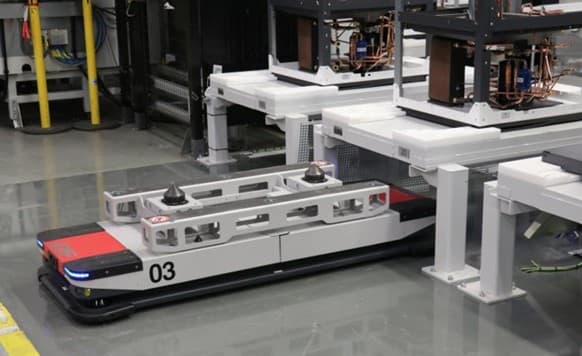
DS Automotion is a global technology leader in mobile roboticsfor in-plant logistics and assembly applications. The companyhas over 40 years of experience in the development andproduction of mobile robots and the associated fleetmanagement systems, which are used as AGV (automatedguided vehicle) and AMR (autonomous mobile robot) solutions,among others.
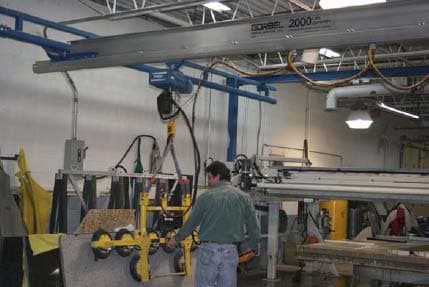
Regal Granite & Marble owner was aware of the risks associated with handling the heavy, fragile material, and wanted to minimize the risk. Without a crane system it would take numerous people to lift and move the slabs around the facility causing safety and productivity issues. Solution: A Freestanding Gorbel work station crane with a 2000 pound capacity aluminum bridge to cover the work cell and service both machines.
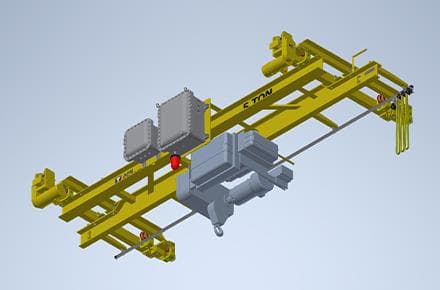
Cedar Falls, Iowa-based distributor has installed a 5-ton capacity explosion proof patented track crane for lifting bulk container bags in a hazardous area at a facility in Nebraska. Other notable features of the crane, which operates to Monorail Manufacturers Association (MMA) Class C duty cycle, includes end trucks with eight (8) 4.5-in. diameter wheels, steel wheel drives and a 6 ft. 0 in. wheelbase.
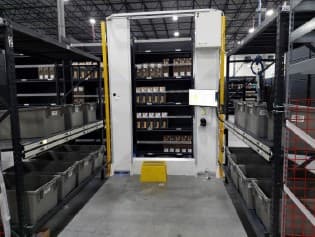
The Project ChallengeWith the increased demand in ecommerce and need for facility optimization at their new 1 million sq. ft. distribution hub, Ariat searched for ways to automate their warehouse throughput, productivity, and reduce physical strain for associates.Our SolutionGeek+ worked together with its strategic partner, Körber Supply Chain Solutions, to deploy 88 shelf-to-person picking robots and 2,000 racks in Ariat's new distribution hub. After their initial order, Ariat expanded the solution with an additional 30 picking robots. Since then, Ariat has experienced a significant increase in picking efficiency and warehouse productivity.

Emmy Lou Burchette of Burchette & Associates Inc., a strategic marketing and business consulting firm, discusses MHI’s new report, “Transformation Age: Shaping your Future"