
Follow Us


Copyright MHI © 2026 | All Rights Reserved

Racking is incredibly versatile and can often be reconfigured and/or relocated to suit the needs of an evolving facility - however, it’s important to proceed with caution.

Rack safety is critical regardless of your geographical location. However, depending on the seismicity of your region and site, safe implementation could be dependent on a completely different set of standards.
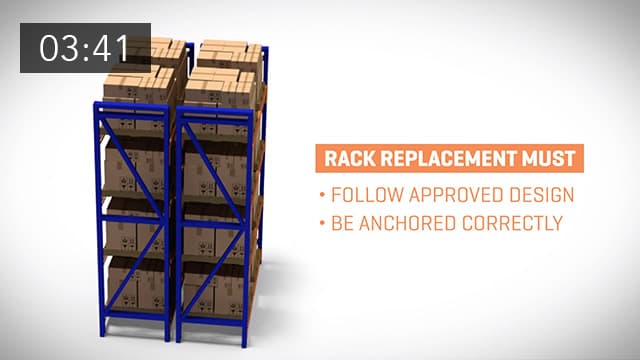
When rack system repairs or replacements are necessary, conducting them promptly and thoroughly will maintain a safe working environment.
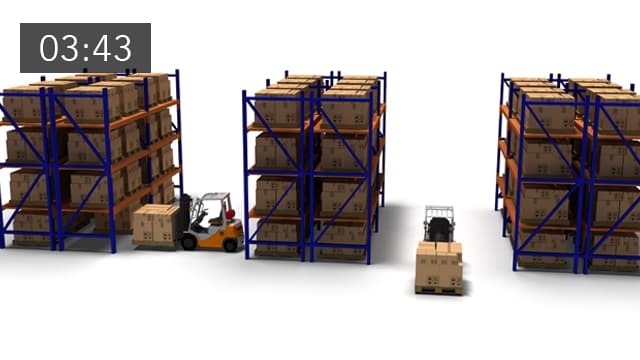
Rack systems are the backbones of modern warehouses, but without proper installation, use and repair, they can quickly turn into a safety hazard. This video reviews best practices for selecting the rack system that’s right for your business.

ATLANTA, GEORGIA, APRIL 13, 2026 — Damotech, is one of North America’s leading rack safety solutions provider, is proud to announce the launch of its Interactive Warehouse Rack Safety eLearning Platform at MODEX 2026, designed to help warehouse operators deliver consistent rack safety training across sites, shifts, and time zones.Flexible Rack Safety Training That Scales Across FacilitiesDeveloped by experienced rack engineers specializing in rack safety, the training platform combines interactive modules, instructional videos, and built-in knowledge verification tools to ensure standardized rack safety knowledge across teams. Downloadable reference documents are also included to support ongoing learning and day-to-day rack safety practices.“Rack safety training needs to be both consistent and adaptable,” said Eric Naaman, CEO of Damotech. “Our e-learning platform gives organizations the flexibility to train teams across facilities, shifts, and time zones, while maintaining a standardized and documented approach to rack safety practices across the entire organization.”Structured Learning with Built-In AccountabilityThe training program is organized into structured learning modules covering essential rack safety principles. Each section includes interactive content and built-in knowledge checks to validate comprehension before participants move forward.Throughout the course, five knowledge checks ensure participants have acquired the key concepts needed to complete the training successfully. These checkpoints reinforce critical topics and help maintain consistent understanding across all participants.Upon completing the full program, participants receive a Damotech Rack Safety Training Certificate, recognizing their understanding of rack safety fundamentals, damage identification, and proper reporting procedures.Designed for Distributed Warehouse TeamsThe learning platform is accessible through a browser on any device—no application or software download is required.Participants can: Complete training at their own pace within assigned timelines Pause and resume modules without losing progress Validate understanding through built-in knowledge checks and quizzes Revisit modules anytime for onboarding and refresher training Maintain consistent training across facilities without scheduling constraintsThis flexibility makes the platform particularly valuable for organizations operating multiple warehouses across different states or provinces, with varying shifts and time zones. Employees can complete training independently while maintaining consistent rack safety practices across the organization.The program is also ideal for onboarding new employees, allowing companies to provide structured rack safety education without organizing recurring in-person sessions or hiring external trainers for individual hires.Comprehensive Training CurriculumThe Rack Safety eLearning course covers essential topics, including: Pallet racking fundamentals, risks, and regulations Identifying and assessing rack damage and safety issues Reporting and prioritizing issues Prevention strategies and protective solutions Repair versus replacement decisions Implementing and maintaining a rack safety protocol for complianceThe training is suitable for: Warehouse workers Warehouse managers Maintenance personnel Rack installers Forklift operatorsExperience the Platform at MODEX 2026Visit Damotech at Booth B15146 for a live demonstration and to learn how our training platform can strengthen rack safety awareness and support compliance across your operation.For more information about Damotech’s training solutions, rack repair kits, protection products, engineering services, and rack safety software, visit www.damotech.com or call 1-877-990-3266.About DamotechFounded in 1989, Damotech is one of North America’s largest pallet rack safety solutions provider. More than half of Fortune 500 companies rely on Damotech’s engineered rack repair kits, warehouse protection products, and rack engineering expertise, including compliance inspections, load capacity calculations, and safety training. With an unwavering focus on safety and efficiency, Damotech partners with warehouse owners and managers to protect their investments and ensure regulatory compliance.Damotech acquired Mac Rak in 2024, reinforcing its position as the industry’s most comprehensive suite of rack safety solutions.

CHICAGO, ILLINOIS, MARCH 18, 2025 — Damotech, one of North America’s leading rack safety solutions providers, is proud to unveil several new rack safety products, delivering an unrivaled selection of cutting-edge rack repair and protection solutions designed to set a new standard in warehouse safety. This milestone reflects Damotech’s unwavering dedication to innovation and continuous improvement, bolstered by strategic investments in research and development and the successful integration of Mac Rak into the Damotech brand.The product launch underscores Damotech’s strong commitment to enhancing warehouse safety across North America while delivering unparalleled value to its customers. As its client base continues to grow, Damotech is further strengthening its U.S. product manufacturing capabilities, investing in its state-of-the-art facility in Moberly, Missouri, and harnessing the expertise and dedication of American workers to drive progress and ensure excellence.“With this expanded lineup, Damotech is better equipped than ever to meet the evolving needs of warehouse managers,” said Eric Naaman, CEO of Damotech. “Our streamlined product offering makes it easier to select reliable, high-quality solutions for rack repair and protection, ensuring a safer and more efficient warehouse environment.”New Product InformationDAMO BASE GUARD features an all-new design offering greater flexibility for adaptation to any rack column footplate size. This latest version combines exceptional impact resistance with flexibility, improved performance, and cost-effectiveness. DAMO BASE GUARD is designed to shield the bottom portion of rack columns from outrigger impact while allowing for seamless installation or removal of beams at floor level. Unlike traditional post guards, it is structurally independent of the rack and is securely anchored to the floor without obstructing the front punch holes of rack columns. The original DAMO BASE GUARD with a rounded front deflector will continue to be available to customers who request it.DAMO FRAME GUARD is a robust rack guard that protects pallet rack frames near dock doors from forklifts, pallet jacks, and debris. Anchored to the floor, it ensures lasting stability of your rack systems and prevents impact on both sides of rack frames from floor level to 12”. A variation of this product was previously marketed under the Mac Rak Dock Door Guard name.DAMO AISLE GUARD is designed for heavy-duty end-of-row and tunnel rack frame protection. It features a robust front deflector and a sturdy side angle for main aisle impact defense. Two variations are available: one with a rounded front deflector and another with a bent plate deflector designed for very narrow aisle configurations (VNA). A variation of this product was previously marketed under the Mac Rak Aisle Guard name.DAMO NOSE GUARD is a compact outrigger protector shielding rack columns from forklift damage. Made from impact-resistant steel, it is independently anchored to transfer impact energy to the floor, ensuring reliable protection. A variation of this product was previously marketed under the Mac Rak Max Guard V-Nose name.DAMO ADVANTAGE rack leg repair kit fixes damaged front rack columns, matches OEM frame punch styles, and allows for low-beam attachment. It’s available in the standard version (no front deflector) and a non-protruding deflector version for VNA configurations. A variation of this product was previously marketed under the Mac Rak Advantage name.The Mac Rak Elite line of rack repair kits remains available, ensuring continuity and consistency for loyal Mac Rak customers.Want to Know More?If you have any questions or would like to learn more about Damotech’s enhanced solutions, visit us at Booth S2555 at ProMat! Our team will be happy to discuss how we can help optimize your warehouse's safety and efficiency.For more details on Damotech’s updated safety product and service offerings, please visit www.damotech.com or contact a Damotech expert directly at info@damotech.com or 1-877-990-3266.About DamotechFounded in 1989, Damotech is North America’s largest pallet rack safety solutions provider. The company is renowned for its rack repair kits, warehouse protection products, and rack engineering expertise (compliance inspections, load capacity calculations, and safety training). With an unwavering focus on safety and efficiency, Damotech partners with warehouse owners and managers to protect their investments and ensure regulatory compliance.About Mac RakFor 25 years, Mac Rak has been a trusted name in pallet rack repair and protection, providing high-quality, engineered solutions to enhance warehouse safety and extend the lifespan of storage systems. Mac Rak has helped countless businesses reduce downtime and improve workplace safety. Now part of Damotech, Mac Rak’s expertise and legacy continue to strengthen the industry’s most comprehensive suite of rack safety solutions.ContactDamotechmedia@damotech.com
AR Racking strengthens its presence in North America with the creation of its US subsidiary and the opening of its office in Charlotte (North Carolina). The industrial storage solutions specialist thereby formalises its commitment to the American market, where it has already carried out large projects for various system integrators. AR Racking will bring to the fore its experience in all types of storage projects, its innovative character, the quality of structures and its comprehensive management capacity. AR Racking, company specialised in manufacturing, designing, calculating and installing storage solutions, strengthens its presence in North America with the creation of its US subsidiary and the opening of its office in Charlotte (North Carolina). It is a strategic commitment initiated at the end of last year that will be consolidated in 2023. AR Racking, present in more than 60 markets, has been carrying out major storage projects in the United States for years in partnership with the most important system integrators for large automated warehouses. AR Racking arrives in the United States to help American companies improve their competitiveness through the optimisation of their logistics centres or warehouses, regardless of their industrial sector and their intralogistics needs. For this it has a wide range of industrial racking solutions for both pallet loads and small and medium-sized loads. AR Racking Inc. is led by Pablo Montes, who has specialist training and extensive experience in various strategic and technical management roles, providing exhaustive product knowledge, as well as project and team management skills. “We have interesting contacts and customers, and in this initial phase our task is to be perceived in the United States as a reference in the sector and as a reliable, innovative company offering a specialised service that covers all the installation phases”, explained Montes. The core of the activity will be new projects in which AR Racking will provide its added value with the advanced technology of its systems, its excellent response capacity and maximum exposition of the “turnkey” concept. To offer the best solutions, AR Racking has strategic partnerships with pioneering intralogistics company specialised in technical and robot components integrated in its industrial racking systems. Members of MHI and presentation at ProMat AR Racking belongs to MHI (Material Handling Industry), the most important logistics and the supply chain association in the United States which has around 800 members and 18 interest groups, and RMI (Rack Manufacturers Group), which endorses the company’s expertise in everything related to steel, racking and engineering solutions. The company will also be present at one of the largest logistics and supply chain events in the United States, the ProMAT trade show, which will take place in Chicago from 20 to 23 March and serve as an ideal showcase to make itself known to the professional audience. AR Racking currently has offices in France, Germany, United Kingdom, Colombia, Chile and Peru, as well as its headquarters and production centre, both in the north of Spain. With an export rate of over 85%, AR Racking has carried out to date more than 34,000 storage projects worldwide. It has a production capacity of +100,000 tonnes of steel. AR Racking’s industrial racking systems come with a 5-year quality guarantee and are made of pre-galvanised material as standard. About: AR Racking is part of the Arania Group, an industrial group of companies with extensive experience and scope, and with a multi-sectoral activity based on the transformation of steel that dates back more than 80 years. AR Racking provides the market with a wide range of solutions with high certified quality standards and a comprehensive project management service. AR Racking’s industrial storage systems stand out for their innovation, reliability and optimum efficiency. Contact: press@ar-racking.com www.ar-racking.com
CHICAGO, ILLINOIS, MARCH 20, 2023—Damotech, an industry leader in warehouse safety and rack repair, launches DAMO CARE©, a new full-service pallet rack safety program that will transform the way companies approach rack safety. This innovative offering helps busy warehouse managers implement and manage their company-wide rack safety program by offering critical products and services, including rack inspections, routine assessments, employee training, maintenance planning, asset protection, rack repair, and management software. By leveraging the cloud-based Damotech Platform, leaders get real-time insights, making tracking maintenance and progress simpler than ever. “DAMO CARE helps our clients proactively navigate the challenges of overseeing a safety program by ensuring a smooth and stress-free process. It allows companies to focus on running their business while we take care of rack safety,” said Eric Naaman, President and CEO of Damotech. Built on Damotech’s 30-plus years of experience ensuring safety for large and small warehouses across North America, DAMO CARE is an all-encompassing solution providing a structured approach to warehouse rack safety. It is rooted in Damotech’s Rack Safety Flywheel©, a proven framework that outlines the founding principles that help companies establish a comprehensive and effective safety program. Thanks to DAMO CARE, organizations can achieve higher levels of employee well-being, operational efficiency, and compliance. Damotech’s industry-leading engineers will work closely with customers to define a roadmap and ensure their safety program meets all relevant industry standards and local codes. “By embarking on the DAMO CARE Rack-Safety-as-a-Service solution, companies can protect their workers and assets while simplifying their safety management process,” expressed Marc Rousseau, VP of National Accounts and Strategic Partnerships. Overview of DAMO CARE • DAMO CARE is a comprehensive Rack-Safety-as-a-Service solution designed by Damotech to assist organizations in running a rack safety program to improve employee well-being, operational efficiency, and safety compliance. • Founded upon the Rack Safety Flywheel, a 360-degree comprehensive plan, DAMO CARE provides a full range of products and services, including engineered inspections, routine assessments, load calculations, rack repair and protection solutions, management software, safety training, and more. • With a DAMO CARE subscription, companies receive discounted prices on Damotech repair and protection products, including the renowned DAMO PRO repair kit offered with a lifetime warranty against impacts. • DAMO CARE provides access to a team of rack safety experts and engineers across the U.S. and Canada. • Damotech’s all-in-one solution includes the Damotech Platform, providing real-time insights into a company’s rack safety performance from any device. About Damotech Pallet racks in warehouses are constantly damaged by forklift impacts. And this damage can lead to tragic consequences such as collapses if misdiagnosed or left unattended. With over 30 years of experience, Damotech is a leading rack safety specialist in North America. More than half of Fortune 500 companies choose Damotech’s engineering services, employee training, rack repair and protection kits, and rack maintenance software. By partnering with Damotech, companies gain peace of mind by making their warehouses safer while reducing maintenance and liability costs. For more information, visit www.damotech.com or reach a Damotech expert directly at info@damotech.com.
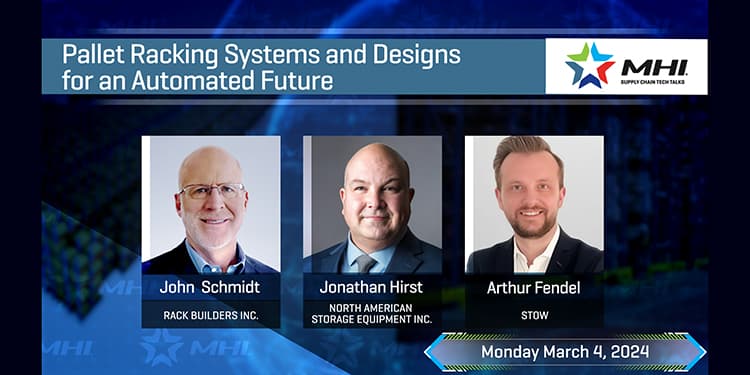
Hear best practices in merging racks with automation in this MHI Supply Chain Tech Talk, featuring experts from RMI & ASRS Industry Groups.
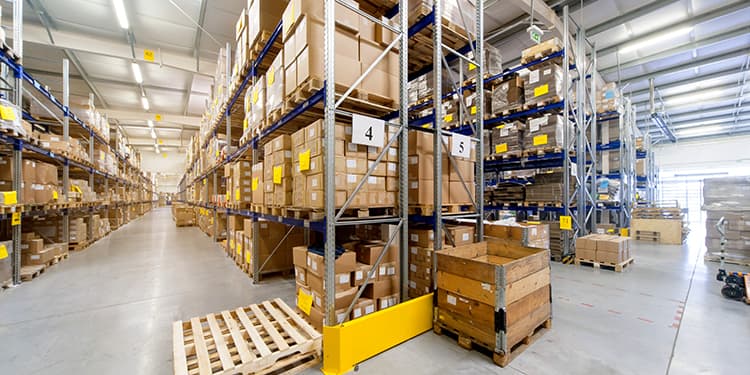
In this cautionary tale from MHI’s Solutions Community, learn why it’s important to learn the limits of all systems and structures in the building.
Click Here to Read More
Click Here to Read More
Price: $150.00This standard specifies minimum requirements for the structural design, testing, and utilization of industrial steel storage racks. It applies to industrial steel storage racks, movable-shelf racks, rack-supported systems, and storage racks associated with automated storage and retrieval systems (ASRSs; also known as “stacker racks”), constructed of cold formed and/or hot-rolled steel structural members. Such rack types also include push-back rack, pallet flow rack, case-flow rack, pick modules, and rack-supported platforms. This standard is also intended to be applied to the design of the storage rack portion of any rack structure that provides support to the exterior walls and roof, except as noted. It does not apply to other types of racks, such as drive-in or drive through racks, cantilever racks (see ANSI MH16.3 for guidance on cantilever racks), portable racks, or racks made of material other than steel.ANSI MH16.1-2023 replaces ANSI MH16.1-2021, which was a revision of ANSI MH16.1-2012(R2019). It updates seismic provisions to align with ASCE/SEI 7-2022, including use of software to obtain seismic data and new methods to obtain the seismic response coefficients. It also includes revisions to the cantilever testing provisions and to the cyclic beam-to-column testing provisions in this section, so that either test can be used to determine beam design spring constants.A summary of the major revisions between the 2021 and 2012 revisions include the following:Reorganization of the document to align with guidance in ISO/IEC Directives, Part 2, specifically moving requirements previously in Section 1 elsewhere in the document, adding Normative References to Section 2 (previously Section 10, “References to the Text”), and adding Terms and Definitions to Section 3 (previously “Nomenclature” in the Foreword);A requirement for post-installation inspection conducted by the owner;New stability design requirements similar to the requirements in ANSI/AISI S100 or ANSI/AISC 360 replace the effective length method for stability design outlined in previous editions;Seismic provisions (7.4) were revised to align with ASCE/SEI 7-2016, including revision of redundancy factors for multiple rows and revision of the Fa and Fv coefficients for the D-Default site class;New design procedure for perforated columns that includes a new definition of net section using reduced strips to represent the hole lines. Torsional properties are now to be calculated using rounded corners and a distortional buckling check is required for those sections subject to distortional buckling. The equation for the Q effect on the column strength has changed;New section on pallet support design;New section on frame tie and cross-aisle tie design; New provisions for base plate and anchor design where the seismic overstrength consideration is required;Interpretation of the cyclic tests for connectors has been added; The base fixity test and frame bracing test have been added;The portal test and the upright frame test in the 2012 revision were removed from the 2021 revision.
Price: $50.00This standard is established to provide a guideline for design, testing, fabrication, and utilization of industrial storage rack decking utilized as an accessory for industrial steel storage racks that conform to ANSI MH16.1, Design, Testing, and Utilization of Industrial Steel Storage Racks. Storage rack decking is placed on beams of industrial steel storage racks to create a surface on which to place materials that can be on pallets, in containers, or in some other form.This standard applies to uniformly loaded storage rack decking applications, as well as various concentrated and partially distributed loading conditions common to storage rack applications. Storage rack decking can be fabricated from welded-wire mesh with permanently attached reinforcements, metal bar grating, composite engineered wood, corrugated metal, perforated sheet metal, or other materials that meet the performance requirements for use in storage racks.This standard does not apply to:Storage rack decking manufactured prior to date of adoption of this standard;Storage rack decking that has been improperly installed, altered, damaged, or used in any manner other than that for which it was originally intended, designed, purchased, sold, or a combination thereof;Lumber not graded or stamped by the Southern Pine Inspection Bureau (SPIB), West Coast Lumber Inspection Bureau (WCLIB), or equivalent grading agency; orStorage rack decking that is intended to support any loads other than product loads (e.g., moving, or live, loads due to walking or stepping).
Price: $175.00 (a $25.00 savings)This combination package includes the following two American National Standards:ANSI MH16.1-2023, Design, Testing, and Utilization of Industrial Storage RacksANSI MH26.2-2023, Design, Testing, and Utilization of Industrial Storage Rack Decking
Price: $150.00The purpose of this standard is to specify the minimum requirements for the structural design, testing, and utilization of industrial steel cantilevered storage racks. A cantilevered rack is a storage system designed to store long, bulky, or irregular materials of almost any length. Cantilevered racks generally consist of freestanding columns connected to fixed bases that are anchored to the floor. Load arms cantilever from the column to create storage levels, with loads placed directly onto the arms. Columns are spaced to adequately support loads.

The late Dan Clapp, former Chairman of RMI’s Engineering committee discusses rack safety and why it is so important. RMI had two presentations at MODEX this year and you can listen to both of them on MHI Cast. Listen to Dan’s presentation on Storage Rack Safety 101 HERE or Carlos Oliver’s presentation, Planning Your Rack System & Traditional and E-Commerce HERE. For other RMI resources, visit mhi.org/rmi.

Simulation and digital twin technology are transforming Industry 4.0, optimizing distribution centers, overcoming space constraints, and enhancing energy efficiency. Join us for a deep dive into the future of industry processes.
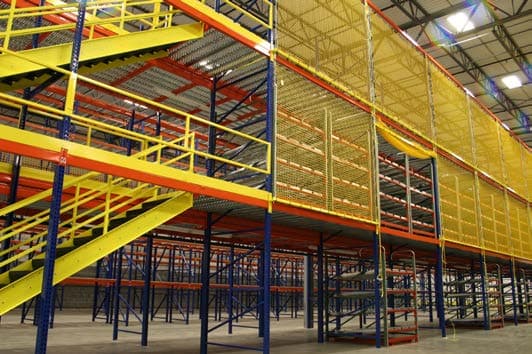
The challenge was to create a safety net barrier acting as a door to protect both products as well as employees in a warehouse setting. In addition the door needed to be accessible to the driver of a fork lift from the ground level.
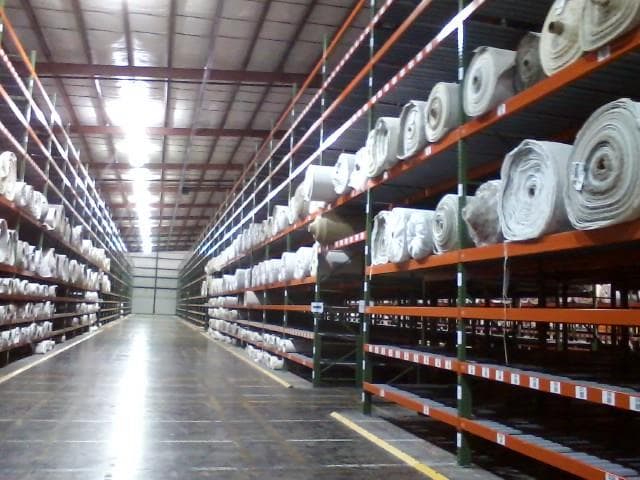
Commercial Storage Systems, a distributor of Husky Rack & Wire of Denver, NC, completed The Dixie Group’s rack system design on schedule and material began arriving within 4 weeks. Half of the system was installed within 6 weeks and the facility was at full capacity in 10 weeks. The final rack configuration was comprised of approximately 8,000 linear feet of storage, 28 feet tall, 12 feet deep and decked with corrugated metal. When Commercial Storage Systems utilized Husky Rack & Wire’s dependable lead time, The Dixie Group Operations, LLC distribution center was operational on time.
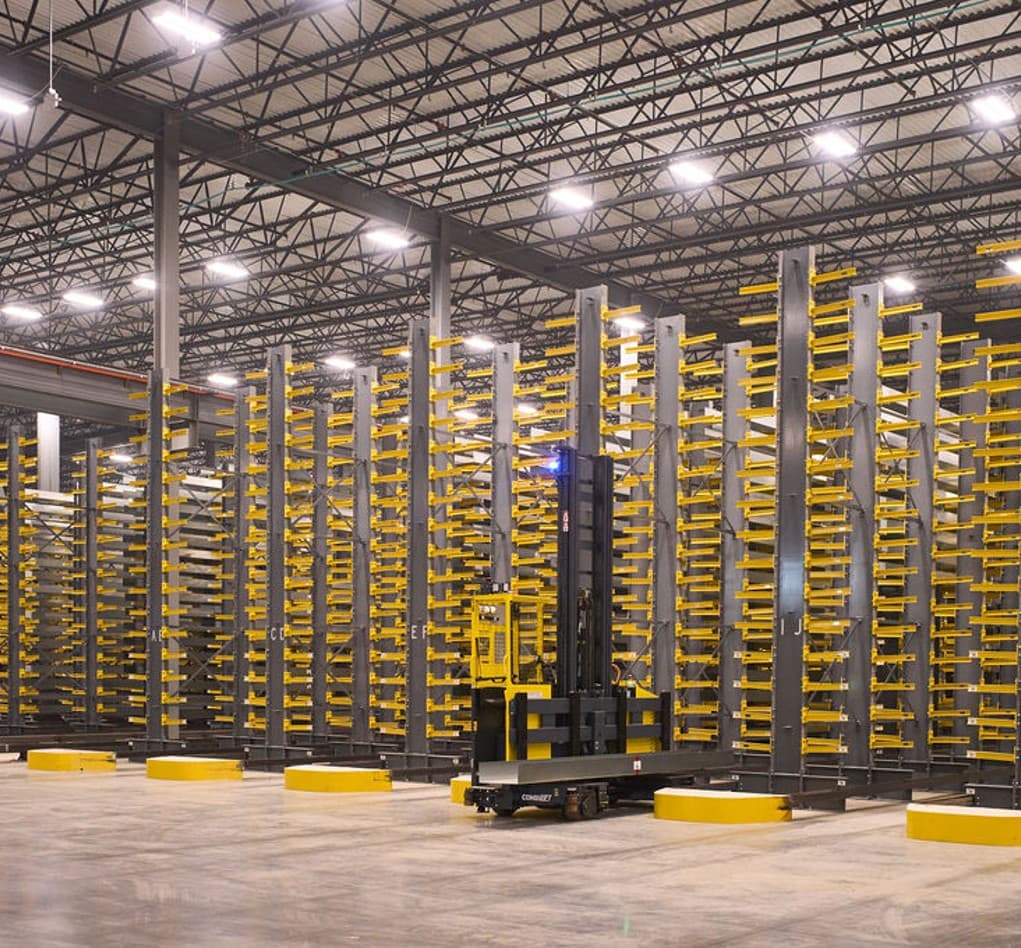
When Central Steel & Wire (CS&W), a high-quality metal products and services supplier, decided to move from the Chicago facility that had been its home for 80 years, it envisioned creating a state-of-the-art product depot and service center that used the industry’s most efficient material handling technology. It would be a major transformation for CS&W because the company was leaving behind a labor-intensive method of material handling in favor of using automated guided vehicles (AGVs) to move its wide range of metal products.
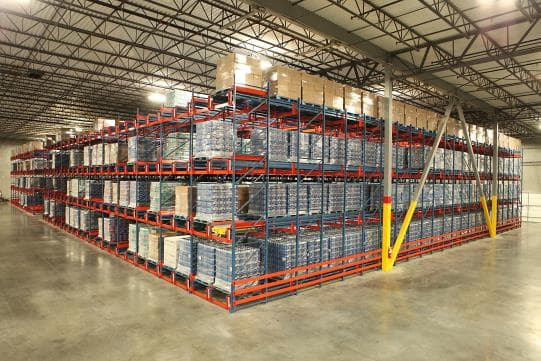
This National Bottled Water Manufacturer supplies many of the country’s largest grocery and warehouse chains with bottled water. With immediate expansion plans underway, they established an ambitious goal for the new turnkey processing and distribution center operation. A versatile 1 to 2-wide Pallet Mole System utilizing a 2-wide Cascade forklift attachment offered maximum density, 100% SKU selectivity and optimal productivity. Working in either FIFO or LIFO applications, the Pallet Mole significantly improves throughput by indexing loads directly to the first pallet position at the aisle face.

Utilizing wheels in the rack structure, this rack system allows palletized goods and materials to be stored by being pushed up a gently graded ramp. Stored materials are allowed to flow down the ramp to the aisle. This rack configuration allows for deep storage a each rack level.
A storage rack configuration (one or more levels high) that is designed specifically to store reels of materials such as cable and cord. The reels are "cradled" in the rack.
May be considered back-to-back selective rack. Inclined conveyor wheel sections are installed in the rack enabling back-loaded pallets are allowed to flow by gravity to the front or pick face. Pallet flow rack is useful for the movement of fast-moving items and serves to increase density of storage and throughput.
This type of rack utilizes upright frames, rails, and ties to allow a vehicle to enter a storage rack structure from one side only and pick up or deliver pallets on continuous rails. Drive-in rack is used to address repetitive products and serves to take advantage of cubic space available for storage, when such unit loads do not lend themselves to block stacking.

Updated May 2023. This Guideline was developed by the Rack Manufacturers Institute, an Industry Group of MHI and represents suggested practices and considerations for repairing or replacing damaged racks. It is intended to provide useful information and guidance for owners, users, designers, purchasers and/or specifiers of repairs to racks and rack systems. It is advisory only and should only be regarded as a simple tool that its intended audience may or may not choose to follow, adopt, modify, or reject. The following information does not constitute a comprehensive safety program, cannot guard against pitfalls in operating, selecting and purchasing such a system, its repair or its replacement, and should not be relied upon as such. However, such a safety program should be developed, and an independent adviser should be consulted in doing so.
Updated March 2023. The safe and efficient use of racked storage facilities depends on a number of factors. It is with these factors in mind that these considerations have been prepared to give advice to the warehouse operator who may not be a specialist in technical matters or in the detail design related to the storage facility. These considerations are intended to give an indication of good practice. They are not intended to be comprehensive, and where the user is in any doubt, or where this document does not appear to cover fully the particular situation being considered, then the user must consult the supplier or other sources for specialized technical advice.
GUIDELINES FOR DETERMINING MAXIMUM ALLOWABLE LOAD FOR PLASTIC PALLETS IN STORAGE RACK APPLICATIONS - This guideline covers the determination of performance of plastic pallets when used in a standard racking system. The guideline addresses methods of determining a plastic pallet's ability to resist deformation as a result of bending. This guideline is intended for double-faced pallets only.
THE ESSENTIALS OF MATERIAL HANDLING: PART II SECTION 1: STATIC STORAGE SYSTEMS MODULE 1.1 INDUSTRIAL PALLET RACKS - This module of the essentials of material handling series provides a basic understanding of the various storage rack configuration options available, the basic decision criteria involved, and awareness of operational considerations after the decision has been made.

The Protective Guarding Manufacturers Association (ProGMA) has published a blog to supplement its latest video on safety at pick modules. The video can be viewed at mhi.org/progma/videos.Here at ProGMA, we have produced a series of educational videos on protective guarding equipment in the material handling industry. ProGMA members provide fixed protective guarding products to protect personnel, equipment, and inventory in industrial facilities. A variety of such items are designed for installation at pick modules, which are multi-level structures typically constructed out of pallet rack that allow multiple pallets of product to be stored, broken down, picked, and packaged into specific orders for shipping.Our video is targeted at end users, system integrators, material handling warehouse design consultants / engineers, distributors, and safety professionals in manufacturing and distribution centers in the material handling industry, as well as students studying the sector. Many household and industrial goods we interact with every day were once stored or passed through a pick module. At the distribution centers of companies like CVS Pharmacy and Rite Aid Corporation, for example, goods are stored before being repackaged and shipped to individual stores.As the 2:23min-long video says at the outset, pick modules can have several elevated levels of materials that are handled by both automation and personnel. Although everything in the material handling industry is becoming more automated, separation of full stored cases into smaller, individual shipments is still being completed manually. The size of pick modules has been increasing over the years; in the past, you may have seen a floor plus one level system, then a floor plus two levels, and now it is not uncommon to see three or even four elevated levels. This increases potential hazards.As the video continues, it is of paramount importance that proper guarding is used from the ground up to protect structures, the product they hold and, most importantly, the people working within and around them. Rack upright columns can be difficult to replace and costly to repair because often the area has to be closed off, product has to be removed, and multiple sections need to be disassembled. These components are all dependent upon one another, so if one part fails, the entire system can fail.The video highlights three “easy and affordable” solutions: Free-standing pallet rack column protectors Post cushions Bumper guardsHowever, ProGMA members offer a variety of products for ground-level protection including guardrails, bumper guards, column protectors, bollards, rack guards, and product containment enclosures (i.e., wire mesh or netting); and for upper-level protection, such as side and back product containment enclosures (wire mesh or netting) to prevent products from falling below.What does ANSI say?The video continues, and quotes American National Standards Institute (ANSI) 6.4.3, which states that “…any gate that provides an access opening through the guards for the purpose of loading and unloading material onto a work platform shall be designed such that the elevated surface is protected by guards at all times. Gates that swing open, slide open, or lift or leave an unprotected opening in the guarding are not acceptable.”However, it is important to note that there are many mezzanines that were installed before the ANSI standards were created that used more conventional gates, such as removable, sliding, or swinging systems—and that is the same for pick modules. Systems can be retrofitted to achieve conformity with current standardization. There is no grandfather clause for ANSI (or OSHA) so all systems whether new or old should follow their guidelines. Note that many of the protective guarding products found in the video and on the ProGMA site are easily retrofittable to these older systems.As the video stresses, only dual-gate systems should be used. The same gates used on a pick module are also the preferred method for securing all elevated pallet drop areas whether they are in pick modules, on mezzanines, or on elevated work platforms such as storage or production / blending areas. The ANSI standards that recommended the use of dual-gate systems were written specifically for elevated work platforms and since a pick module is a type of elevated work platform that should be applied.The video demonstrates how a dual-gate system uses two counterbalanced and interconnected gates that are configured so when the first gate at the ledge is open, the second gate behind the pallet is closed. Fixed guarding on the sides—often the frame of the pallet rack in a pick module—prevents access into the side of the areas. This allows material to be loaded into the area while keeping employees a safe distance from the ledge and the material. When the rear / operator gate is opened, the ledge gate automatically closes, maintaining a barrier at the ledge while the pallet is accessed and picked. This creates what ProGMA calls a controlled-access area so there is always a barrier between the worker and the ledge.For information, ProGMA members that manufacture such solutions include Mezzanine Safeti-Gates Inc., Wildeck, and Heartland Engineered Products. Although companies still provide swing gates for pallet drop areas where a single pallet is loaded and staged, they are not an acceptable solution according to ANSI and could potentially create a situation where they are in violation of OSHA code.A self-closing swing gate, also featured in the video, should only be used when integrated with pallet flow lanes where multiple pallets are loaded into the system. The pallet flow lanes are pitched so the pallet rolls into the storage area. This allows the gate to immediately close once the pallet is loaded. By comparison, when used for a single pallet position without flow rails, the staged pallet would hold the swinging gate open, preventing it from closing.For securing multiple deep pallet flow lanes, a dual-gate system is the preferred safety method because not only does it make sure a barrier is in place all times for fall protection, but it also keeps people out of the pallet flow lanes when pallets are being loaded. The two types of incidents we see in these areas are falls from the ledges and pallets being pushed into the legs of employees who have entered the lane. Only the dual-gate system keeps people out of the lanes when the lane is being loaded. The self-closing swing gate, however, does secure the ledge for fall protection.Hand in gloveOftentimes, a safety aspect can be used to increase productivity. For example, the self-closing swinging gate on pallet flow lanes will allow pallets to be quickly loaded into the system. Any time the lift truck operator wants to load a pallet into the area, they just push the pallet through the swinging gates. The dual-gate system has the potential of the gates being in the incorrect position for loading, meaning that the ledge gate is closed when the lift truck is trying to replenish pallets into the area. So they can go to load but a barrier is in place preventing them from doing so.A user can power operate these gates for remote operation but often this isn’t feasible due to the number of areas. Manual operation can actually create a safer and faster environment. The position of the gates in a dual-gate system can be used as a signal between the picker up on the platform and the lift truck operator below. In other words, when the ledge gate is closed that means the picker is picking from the pallets or the area doesn’t need to be replenished.When the picker has finished in that bay or when they notice the pallets need to be replenished in that bay, they just manually close the gate near them, which opens up the ledge gate. Now the lift truck operator can look up and see which areas are safe and ready to be replenished. This is an example of a safety system helping communications among the different workers.In conclusion, it’s evident that, despite automation, people remain at the center of activity in and around pick modules. ProGMA and its members are a one-stop-shop for leading safety solutions, whether it be for preventing hazards associated with falling boxes, product, or workers; or structural protection of the system itself from impact. As the video serves to reiterate, even in automated systems there are still people moving around the facility, either on ground level or on the elevated levels. Even if people are not used for the picking of material, there are areas where empty pallets or totes are removed that need to be guarded.The product-centric video doesn’t feature specific brands, but free-standing pallet rack column protectors, post cushions, and bumper guards are available from ProGMA members including Adrian’s Safety Solutions, A-Safe USA, Bluff Manufacturing, Boplan, DamoTech, Folding Guard, Husky Rack & Wire, Heartland Engineered Products, Jesco, McCue, Slowstop Guarding, SpaceGuard Products, Steel King, Troax, VisiPlas, Wildeck, and WireCrafters.Costs range from inexpensive, light-duty products to more expensive, heavy-duty solutions. Importantly, talking with the manufacturer about the application will help source the right product/s for the facility. No two pick modules or applications are completely alike and that’s what the member companies of the ProGMA are here to help with.The ProGMA website—mhi.org/progma—features details of 22 member companies and hundreds of solutions to help companies with older systems find protective guarding solutions to update / upgrade their pick module system.See the latest video and others in the series at mhi.org/progma/videosShould you be using a ProGMA member to enhance the safety and productivity of your pick modules?About ProGMAThe Protective Guarding Manufacturers Association (ProGMA) members are the industry’s leading suppliers of fixed protective guarding products designed to protect personnel, equipment, and inventory in industrial facilities. Member companies meet regularly to review, discuss, and revise the standards for design and performance of protective guarding products used in the material handling industry. ProGMA member companies are committed to the development, maintenance, and publishing of industry standard specifications for these systems. Visit the website at mhi.org/progma.About MHIMHI is an international trade association that has represented the material handling, logistics and supply chain industry since 1945. MHI members include material handling and logistics equipment and systems manufacturers, integrators, consultants, publishers and third-party logistics providers. MHI offers education, networking and solution sourcing for their members, their customers and the industry as a whole through programming and events. The association sponsors the ProMat and MODEX expos to showcase the products and services of its member companies and to educate manufacturing and supply chain professionals.Contact for editorial enquiries: Ashley Skidmore, askidmore@mhi.org or 704-676-1190
To complement a new educational video, thought leaders representing the Protective Guarding Manufacturers Association (ProGMA), an MHI product group, discuss the importance of protecting personnel, equipment, and inventory in industrial facilities.ProGMA has recently launched the second in a series of videos about the importance of protective guarding products in the material handling industry. The video titled “Proper Safeguarding for Elevated Work Platforms” followed the inaugural, educational video titled, “Essential Safety Barriers for Automated / Robotic Workcells”. (http://www.mhi.org/progma/videos)Here, representatives of member companies expand on the themes explored within the latest video in the group’s first blog.Before we start, says Arlin Keck, corporate research and development engineer at Steel King (a manufacturer of pallet racks, mezzanines and guardrails), it’s important to clarify what we mean by “mezzanine” in this context. “The technical term for what my company and other members make is work platforms. Mezzanine was an old term for these systems; however, the word mezzanine had to be dropped because mezzanine, as defined in the building codes, refers to a specified type of floor within a building structure and carries with it added requirements for fire safety, egress, parking, and so on,” Keck explains.A typical work platform is design to support the site-specific load that will be placed on the floor, be it palletized loads, pallet jacks, foot traffic, work equipment, filing cabinets, racking or shelving units, to name just a few possibilities.Keck says that the main purpose of an elevated work platform is to add additional floor space into a building or room by taking advantage of surplus ceiling clearance that may exist in a warehouse or manufacturing facility. Aaron Conway, president at Mezzanine Safeti-Gates Inc. (a manufacturer of safety gates to secure the ledges of pallet drop areas on mezzanines and rack picking systems), says, “A company that has utilized all of its ground space can build upward. An elevated platform allows one to use the space for workflow or to store product.”As Hue Schlegel, director of marketing at Wildeck Inc. (a manufacturer of mezzanines and work platforms), puts it, “Move up, not out.” He adds, “Depending on the available height in a building, platforms can be one, two, or three levels high, with the most common height being 10 ft. top-of-deck and supporting a floor load of 125 lbs. per square foot. Their length and width are only limited by facility size.” Importantly, he explains, they cannot occupy more than two thirds of a fire-rated area within a building.Keck says work platforms are also used to create catwalks between separated platforms, and to serve as sortation and conveyance areas for mechanized systems. Conway agrees, adding, “Companies that supply elevated work platforms can fabricate them in virtually any configuration. They can be designed to accommodate specific workflow operations or to fit with existing structures in the building.”Industrial buildings are getting bigger and elevated work platforms are scaling up with them. Say, 50 years ago, facilities were much smaller and ceilings lower so there were fewer requirements for elevated platforms. Further, the equipment to load at such heights didn’t exist. Now, the capability of equipment is greater and taller structures are being utilized as a result. Within them, work and storage takes place on multiple levels.These multi-level work platforms present a danger of personnel and objects falling from height.As the latest video warns, the pallet drop area of elevated work platforms can lead to accidents if the ledge is open without adequate guarding. Falls to lower levels cost employers $5 billion annually in compensation claims in the U.S. alone. OSHA reports that it costs on average 16 lost working days per injured employee.Conway says, “Falling from an elevated level, whether it be people or products, is a serious danger and both should be addressed proactively, securing the situation before an incident occurs.” Schlegel adds, “The worst case, of course, is death; while the best scenario is that a worker survives a fall from the typical mezzanine height of 10 ft. sustaining only broken bones, fractures, and other injuries from hitting the concrete floor below. It is a serious matter not to be taken lightly.”Traditional railing or guarding systems are effective at preventing falls from height as long as they include a kick plate that is installed in conjunction with ANSI MH 28.3-2009. Adding netting or expanded metal and safety products to traditional railing systems provides added protection by capturing small objects that might otherwise fall into the work area below.OSHA Standard 1926.502, meanwhile, requires paneling or screening where tools, equipment, or materials are piled higher than the top edge of a toe-board or kick plate. ProGMA members also manufacture both netting and wire mesh panels that comply with that standard.However, David Brentz, chairman of ProGMA and vice president of member company Industrial Netting (a manufacturer of plastic netting), says, “That’s only a minimum requirement; added protection is financially prudent. The cost to install netting or wire screens around the perimeter of an elevated work platform pales in comparison to the cost of a single lost time accident. ProGMA members offer several simple, cost effective solutions to protect employees below loose objects that may fall or be kicked off work platforms.”Conway says, “In the past, properly guarding a pallet drop area or installing netting or wire was something that would be retrofitted, either after an incident occurred or after someone pointed out the issue. Designing proper safety guarding for the structure at the time of purchase makes for a much better fit; when retrofitting, there is often insufficient room for proper guarding and concessions have to be made. But, it is important to note that even if proper guarding wasn’t designed with the structure, it still should be installed. There are companies in the ProGMA that can customize solutions to fit these areas.”He continues, “Don’t confuse luck with judgment. If I visit a facility that was built, say, 20 years ago, I’m sure to find open pallet drop areas or insufficient guardrails. Just because these areas have been around for a while isn’t a reason not to properly secure them. I’ve heard the line, ‘Well, we’ve been doing it this way for 20 years and nobody has gotten hurt’. To that I say, ‘You’ve been lucky!’”Schlegel says, “The biggest safety risk is when a forklift access gate on mezzanine is left open creating a fall hazard for someone off-loading a pallet at the upper level. There are many products, provided by ProGMA members, that prevent the gate from being left open or that keep the operator at a safe distance, which should always be installed.”ANSI says, “Any gate that provides an access opening through the guards for the purpose of loading and unloading material onto a work platform shall be designed such that the elevated surface is protected by guards at all times. Gates that swing open, slide open, or lift up, leaving an unprotected opening in the guarding are not acceptable.”Dual gate systems such as a rolling gate ensure that the operator is separated from the ledge as well as the load. A pivoting gate ensures the operator is never exposed to the ledge and does not require him or her to walk near an open ledge to operate the gate.Unfortunately, sometimes it can take an incident and a facility to be shut down during an investigation for companies to understand the serious financial consequences of a workplace injury. There are many other companies that understand the risks and proactively secure their work areas. These diligent companies end up ahead in the long run:1. They typically get better solutions because they had the time to design them correctly;2. They get a better price because they can take their time and research the solutions;3. Safety solutions are in place before they need them.Conway concludes, “The large majority of people don’t want to get hurt and are not acting recklessly on the job. Typically, they are performing a repetitive operation, and in their process miss a step or push something too far and someone gets hurt. Proper guarding should be in place to prevent injury if this happens.”About ProGMAThe Protective Guarding Manufacturers Association (ProGMA) members are the industry’s leading suppliers of fixed protective guarding products designed to protect personnel, equipment, and inventory in industrial facilities. Member companies meet regularly to review, discuss, and revise the standards for design and performance of protective guarding products used in the material handling industry. ProGMA member companies are committed to the development, maintenance, and publishing of industry standard specifications for these systems. Visit the website at http://www.mhi.org/ProGMAAbout MHIMHI is an international trade association that has represented the material handling, logistics and supply chain industry since 1945. MHI members include material handling and logistics equipment and systems manufacturers, integrators, consultants, publishers and third-party logistics providers. MHI offers education, networking and solution sourcing for their members, their customers and the industry as a whole through programming and events. The association sponsors the ProMat and MODEX expos to showcase the products and services of its member companies and to educate manufacturing and supply chain professionals. http://www.mhi.orgContactAnupam Berry Boseabose@mhi.org704-676-1190
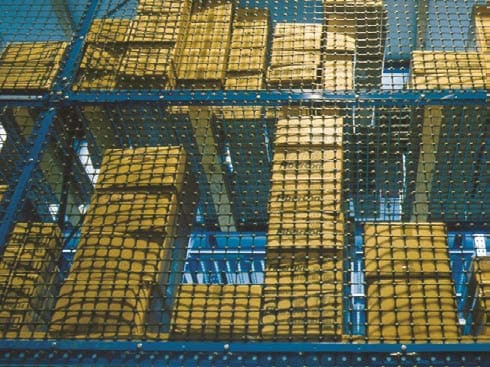
For some people, job safety is one of those back-of-the-mind things; for others it is a way of life. Imagine a tragic accident in which a forklift retrieving a pallet from a high shelf inadvertently dislodges the pallet on the shelf behind it. The unseen pallet falls from its shelf and strikes a worker in the adjacent aisle.
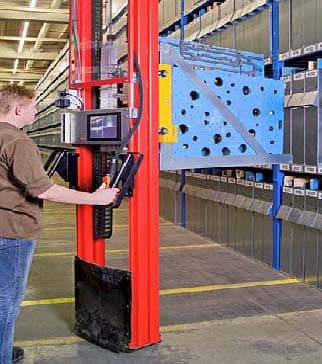
A manufacturer of cutting dies and related machinery had an urgent need for a quality handling system capable of placing and retrieving equipment in storage racks. A Demag KBK Crane System with a KBK Stacker Mast provided a productive and cost effective solution for this task. The stacker mast with 360 degree rotation could easily pick or place any part into the racks on either side of the aisle.
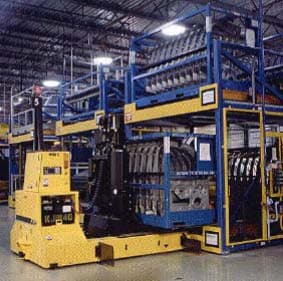
Racks of stamped parts are off loaded at several docks onto gravity fed conveyors. A system of automatic guided vehicles (AGVs) delivers full racks of stamped parts to over and under conveyors. Indexing of conveyors creates the automatic demand for additional AGV delivered parts, Empty are then returned by AGVs to the originating dock for return to vendor. The AGVs operate on 2 shifts per day
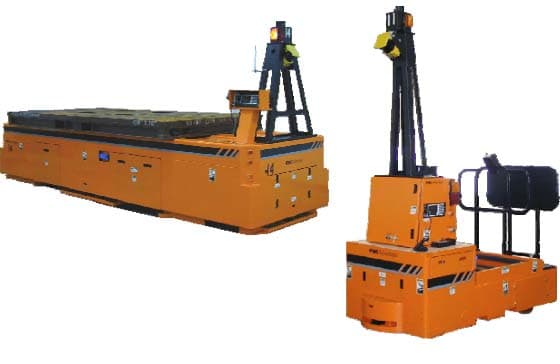
The use of automatic guided vehicles (AGVs) has opened up a large amount of unused manufacturing space in this automotive stamping plant. A fleet of five AGVs pick up steel blanks at the receiving area load stand. The vehicles transport the steel about one-half mile up a ramp leading to the second floor. The AGVs then transfer the steel to a press for stamping into truck door and hood panels. A second fleet of AGVs pull three trailers, take away the racks of door panels to a work-in-process station where they’re staged on three high racks to await final assembly and shipment. The system has increased productivity within a “fork-free” manufacturing environment.