
Follow Us


Copyright MHI © 2026 | All Rights Reserved

A pioneering AI-driven system that works directly in the aisle, operating 24/7 to increase throughput while reducing manual labor by 90%.WILMINGTON, MA: April 13, 2026: Locus Robotics, a leader in Flexibility-First Warehouse Automation, today announced the global launch of Locus Array. The fully autonomous fulfillment system combines mobile robotics, an integrated robotic picking arm, and AI-powered perception with autonomous execution to complete end-to-end workflows without manual intervention. Deployments are already underway with early access customers in North America, as the company prepares to scale Locus Array globally across Europe and APAC to meet accelerating demand for fully autonomous fulfillment.“For years, autonomous fulfillment has been more hype and promises than reality — until now,” said Rick Faulk, CEO of Locus Robotics. “Warehouse operations are facing increasing pressure from labor constraints, rising costs, and constant variability that traditional systems can’t absorb. Locus Array brings autonomy into real-world operations at scale, introducing a fundamentally different, system-level approach designed to solve these challenges at their core.”Among early access customers with Locus Array in live operations is DHL Supply Chain, a long-standing global customer:“The launch of the Locus Array marks a pivotal moment in DHL’s Accelerated Digitalization journey, moving us beyond traditional assisted picking into a new era of high-density, autonomous fulfillment. At DHL, we believe an idea is only as good as its ability to scale, and our partnership with Locus Robotics has consistently proven that we can turn cutting-edge concepts into global operational standards,” said Sally Miller, Global Chief Information Officer, DHL Supply Chain. “By being the first to deploy Locus Array, we are not just addressing today’s labor and capacity challenges; we are actively engineering a more agile supply chain. This innovation allows us to maximize vertical space and dramatically reduce manual touches, ensuring that we continue to provide our customers with the speed and reliability they expect from the world’s logistics leader.”Locus Array enables operations to achieve: Rapid, high-density throughput with streamlined order fulfillment: Processes orders in parallel and consolidates work directly in the aisle, increasing throughput with the ability to operate 24/7. Autonomous execution across multiple workflows: Handles picking, putaway, induction, drop-off, slotting, and replenishment in one system, reducing manual labor by 90%. Faster time to value with minimal disruption: Deploys in weeks without redesigning facilities or adding complex infrastructure. Flexible, scalable performance in dynamic environments: Scales with volume and adapts to changing layouts, SKUs, and demand without reworking workflows. Coordinated, multi-robot execution: Works seamlessly with Locus Origin and Locus Vector to cover 100% of SKUs within a single, unified system—delivering rapid ROI with a scalable, low upfront-cost Robotics-as-a-Service model.Introducing Robots-to-Goods (R2G)Together, these capabilities introduce a new category of warehouse automation: Robots-to-Goods (R2G). In this model, intelligent robotic systems, like Locus Array, go directly to inventory and execute fulfillment tasks within the aisle. By embedding multiple workflows directly into the robot, R2G expands automation beyond assisted processes to become fully autonomous.Unlike traditional systems that move inventory through fixed processes, robots like Locus Array are dynamically assigned to tasks in real time. This minimizes travel, maintains continuous SKU availability, while also enabling higher storage density within existing warehouse layouts.Powered by LocusONE™, the AI-driven orchestration platform, Locus Array operates as part of a unified fleet alongside Locus Origin and Vector. LocusONE dynamically assigns work based on real-time demand, coordinating robots, workflows, and inventory movement as a single system that scales and adapts with operations over time. This enables automation to extend across all fulfillment workflows, delivering consistent performance and the operational confidence required to outperform in an uncertain environment.Locus Array will be demonstrated live at MODEX 2026 in Atlanta, Georgia.To learn more, visit GetLocusBots.com.Frequently Asked QuestionsWhat is Locus Array?Locus Array is a fully autonomous warehouse robot that performs end-to-end fulfillment workflows directly within the aisle. It is an advanced Physical AI system that combines AI-powered vision, real-time decision-making, and robotic manipulation to perceive its environment and execute tasks such as picking, putaway, induction, drop-off, and slotting without manual intervention.What problem does Locus Array solve?Locus Array addresses three core challenges in warehouse operations: labor constraints, rising costs, and the need to maintain service levels as demand fluctuates. It reduces reliance on manual labor by up to 90%, maintains consistent throughput under changing conditions, and enables operations to scale and adapt without redesigning infrastructure.How many Locus Array robots can be used in a warehouse?Locus Array is designed to scale within constantly changing warehouse environments. Fleets can range from a few robots to hundreds, depending on throughput requirements. Multiple Array robots can operate within the same aisle and across different levels, including mezzanines. This allows operators to increase automation density in both brownfield and greenfield environments without redesigning existing workflows.What is Robots-to-Goods (R2G)?Robots-to-Goods (R2G) is a new category of warehouse automation pioneered by Locus Robotics, where robots go directly to inventory and execute fulfillment tasks within the flow of operations. By keeping inventory stationary and bringing automation to the work, R2G enables continuous operation, higher storage density, and throughput that is not constrained by labor.About DHLThe logistics company for the world. DHL is the leading global brand in the logistics industry. Our DHL divisions offer an unrivalled portfolio of logistics services ranging from national and international parcel delivery, e-commerce shipping and fulfillment solutions, international express, road, air and ocean transport to industrial supply chain management. With approximately 389,000 employees in more than 220 countries and territories worldwide, DHL connects people and businesses securely and reliably, enabling global sustainable trade flows. With specialized solutions for growth markets and industries including technology, life sciences and healthcare, engineering, manufacturing & energy, auto-mobility and retail, DHL is decisively positioned as “The logistics company for the world”.DHL is part of DHL Group. The Group generated revenues of approximately 82.9 billion euros in 2025. With sustainable business practices and a commitment to society and the environment, the Group makes a positive contribution to the world. DHL Group aims to achieve net-zero emissions logistics by 2050.About Locus RoboticsLocus Robotics is the leader in Flexibility-First Warehouse Automation, delivering Operational Confidence to warehouse operators navigating an environment defined by constant uncertainty. Locus Robotics enables organizations to plan, execute, and adapt across volume volatility, labor variability, and evolving order profiles.Powered by the LocusONE platform, Locus Robotics orchestrates fulfillment workflows across picking, replenishment, sorting, and pack-out through a unified system of robotics, orchestration, and applied AI. The platform provides predictive visibility, adaptive decision-making, and elastic execution—giving operations leaders clear insight into capacity, throughput, and risk without fixed infrastructure or disruptive facility redesigns.Trusted by more than 150 retail, healthcare, 3PL, and industrial brands across 350+ sites worldwide, Locus Robotics supports operations at every stage of the automation journey.Delivered through an industry-first Robots-as-a-Service (RaaS) model, Locus Robotics enables performance to evolve as operational needs change.

Company Continues to Advance Collaborative Safety for Commercial Humanoid RobotsSALEM, Ore. – March 31, 2025 – Agility Robotics, creator of the humanoid robot Digit, has unveiled new capabilities and advancements that expand the work Digit is able to perform for Agility’s growing customer base. These innovations were unveiled recently at the manufacturing and supply chain industry’s premier global event, ProMat.Designed in close collaboration with customers, these new features support the rapid and scaled deployment of Digit fleets, and include: Expanded battery capabilities which run more efficiently and last up to four hours Autonomous docking onto charging station Streamlined manufacturing of Digit Additional safety features such as a Category 1 (CAT1) stop, a Safety PLC, an on-robot E-stop, wireless teach pendant with integrated E-stop, and Functional Safety over EtherCAT (FSoE) New robust limbs and end effectors, giving Digit a wider range of grasping angles and unlocking new use cases with expanded possibilities for manipulation“These upgrades allow Agility to expand Digit’s capabilities to meet our expanding commercial and customer needs,” according to Melonee Wise, Chief Product Officer at Agility Robotics. “Together, they reinforce our commitment to cooperative safety, and demonstrate a path for Digit and human colleagues to one day work side by side.”The path to widespread adoption for humanoids is paved by real-world deployments. Agility Robotics leads the industry with the first and only commercially-deployed humanoid in warehouses and manufacturing facilities. This unique position allows Agility to collaborate closely with customers – testing, deploying, building skills, and measuring the true value of these robots in real-world applications.AMR IntegrationHumanoid robots should be designed to work alongside Autonomous Mobile Robots (AMRs), not replace them, and Digit is no exception. Humanoids and AMRs have complementary strengths. Humanoids excel at complex manipulation, grasping, and navigating human-centric spaces, while AMRs are masters of efficient transportation over longer distances. Digit can autonomously dispatch an AMR to deliver items to their next location, such as packout stations. This level of autonomy reduces the need for constant human intervention, allowing workers to focus on more complex tasks. It further maximizes the efficiency of people, existing automation as well as the fleet of humanoids.As warehouse technology has evolved, AMRs have become one of the fastest adopted automation systems in warehouse and manufacturing facilities, but have created islands of automation. The ability for humanoids to integrate with other systems becomes more critical than ever. Digit, the industry’s only commercially deployed humanoid, now is successfully working with leading AMR companies.Agility’s Arc cloud robotic platform now can deploy and talk with AMRs and their corresponding platforms by calling and dispatching AMRs to the task at hand. Digit already has been working alongside AMRs at the Digit deployment for GXO near Atlanta, Georgia. Agility's integration with AMRs from MiR and Zebra Technologies was on full display at the ProMat trade show in Chicago, Illinois earlier in March.SafetyStandards exist for machine and robot safety, but safety standards for Dynamically Stable Industrial Mobile Robots such as Digit that require stability and balancing are in the development stage. Agility is committed to pushing the industry forward with cooperative safety applications to meet the standards of OSHA-regulated environments necessary for humanoids to work alongside humans. Digit’s latest version has new safety features that adhere to safety standards for industrial mobile robots, and represent a significant advancement toward deploying cooperative safety applications. Digit's enhanced user interface now features at-a-glance, front and back displays that help monitor Wi-Fi status, connectivity, connection to Agility Arc, battery levels and maintenance ports, making it easier than ever to monitor and manage the robot. New safety features including: A Category 1, or CAT1 stop, involves maintaining power to the machine actuators during the deceleration process, allowing the machine to stop smoothly and safely, before removing power. Safety PLC, also known as a safety programmable logic controller, is used on robots to provide safety functions that meet performance level d (PLd). An E-stop (emergency stop) button on a robot is a safety feature designed to immediately halt all robot movements and operations in case of an emergency. Its main purposes include preventing accidents, ensuring worker safety, complying with safety regulations, protecting equipment, providing quick response control, and more FSoE (FailSafe over EtherCAT) is a safety protocol used in robotics and industrial automation to ensure safe communication between devices over an EtherCAT network. It enables the transmission of safety-critical data, such as emergency stop signals and sensor feedback, while also maintaining real-time performance. Commitment to safety and step towards a cooperatively safe humanoid applications with additional and continued compliance with multiple standardsAgility ArcAgility Arc is the cloud-based automation platform that gives customers complete control of their fleet of robots and equipment by deploying and fully integrating a wide range of automated workflows into their logistics and manufacturing operations. Agility Arc is the first humanoid fleet management system to successfully integrate and deploy humanoid robots in a commercial environment. One of the newest and most exciting features is integration with AMRs. Digit now successfully integrates with industry-leading AMR companies such as MiR and Zebra Robotics, allowing customers to use Agility Arc to deploy and talk with AMRs and their corresponding platforms. Other new Agility Arc features include: Digit support Charger support Workcell EMS support Easy webhook integration Remote monitor, support, and maintenance of Digit and all accessories Continued and expanded Enterprise Systems Integration (MES, WMS, WES, PLC)New Use CasesOn the ProMat show floor, Digit also demonstrated new use cases – including those integrated with AMRs – such as stacking and unstacking of totes, G2P or Unit Sorter, AMR loading and unloading, palletizing and depalletizing, nesting, flowrack and carts, and automated putwall.About Agility RoboticsHeadquartered in Salem, Oregon, with offices in Pittsburgh, Pennsylvania and Palo Alto, California, Agility Robotics’ mission is to build robot partners that augment the human workforce, ultimately enabling humans to be more human. Agility’s groundbreaking bipedal Mobile Manipulation Robot (MMR) Digit is the first multi-purpose, human-centric robot that is made for work™.ContactTim SmithElement Public Relations415-350-3019media@agilityrobotics.com
Berkeley, Calif. - (March 14, 2023) - Ambi Robotics, a leading provider of AI-powered robotic solutions for parcel sorting operations, today announced a commercial partnership with OSM Worldwide, an innovative global parcel and logistics services company. Under the partnership, Ambi Robotics will deploy its flagship AmbiSort A-Series system to OSM Worldwide’s warehouse locations in Atlanta, Chicago, and Las Vegas in a minimum four-year Robots-as-a-Service (RaaS) agreement. The AmbiSort A-Series system helps global shippers like OSM Worldwide accelerate parcel sortation to last-mile delivery providers while enabling ecommerce customers to benefit from cost-savings, order accuracy, and predictable performance. Solutions from Ambi Robotics are rooted in human-centric design and enable the evolution of warehouse work by automating repetitive and potentially injurious manual sorting tasks while empowering associates to work more efficiently and safely. “We are excited to partner with OSM Worldwide to deploy our AI-powered robotic parcel sorting systems and empower their warehouse associates to handle more,” says Jim Liefer, CEO of Ambi Robotics. “Our AmbiSort A-Series systems will help OSM Worldwide unlock new levels of productivity and profitability while improving the safety and job satisfaction of their valued employees.” The AmbiSort A-Series is a configurable, AI-powered robotic sorting system that rapidly adapts to pick and sort mixed parcels like polybags, flats and boxes into last-mile mailsacks. The systems are modular and configurable to accept parcels via rolling bin or the new conveyor-fed automated induction system. The new AmbiSort A-Series conveyor-fed system improves the efficiency of existing parcel sorting applications by autonomously sorting parcels in a modular footprint that can be overseen by one operator for every three to four robotic systems. “At OSM Worldwide, we are always looking for ways to improve our sorting and delivery operations, and we’re excited to partner with Ambi Robotics to empower our workforce with cutting-edge technology across our warehouses,” says James Kelley, President at OSM Worldwide. “With the AmbiSort A-Series systems, we can improve order accuracy and speed to our ecommerce customers while improving efficiency and safety for our warehouse employees amid rising parcel demand.” Ambi Robotics solutions are powered by AmbiOS, the company’s proprietary operating system that leverages advanced simulation-to-reality (Sim2Real) artificial intelligence (AI). This breakthrough technology enables Ambi Robotics systems to be hardware-agnostic and can be configured to meet the unique needs of each customer. AmbiSort systems are full-stack solutions combining both hardware and software. AmbiSort systems from Ambi Robotics are first designed and trained in simulation, which speeds up training 10,000x faster than teaching algorithms in the physical world. “With increasing customer demand, our workforce at OSM Worldwide has grown over 126 percent in one year, and it’s critical that we equip our associates with the tools they need to operate efficiently and safely,” says Eric Hermonson, Senior Director of Human Resources at OSM Worldwide. “While the technology speaks for itself, what makes Ambi Robotics such a world-class partner is the people - and their dedication in elevating the working conditions with assistive-automation.” Ambi Robotics deployed an additional 60 robots to the company’s US customer base in under 60 days with less than 60 people, ahead of the 2022 peak holiday season. Now, Ambi Robotics has AI-powered robotic sorting systems spanning over 13 cities across the US and will add additional AmbiSort A-Series systems to three OSM Worldwide locations starting in April 2023. About Ambi Robotics Ambi Robotics is an artificial intelligence (AI) and robotics company developing advanced solutions that scale ecommerce operations to meet demand while empowering humans to handle more. The company’s AI operating system, AmbiOS, leverages proprietary simulation-to-reality (Sim2Real) technology to operate highly-dexterous robotic systems. Founded in 2018, by roboticists, AI researchers, and leading business professionals work together to build the supply chain's most valued systems. The company is located in Berkeley, Calif. For more information, please visit www.ambirobotics.com. About OSM Worldwide OSM Worldwide provides reliable, data-driven shipping solutions that help businesses deliver packages faster and more cost-effectively. The OSM Premium Network® and partnership with the U.S. Postal Service enables the company to ship packages anywhere in the nation in as few as 1–5 business days. OSM’s commitment to customer service means that clients can expect individualized delivery options, simple invoicing and personal assistance to help their businesses succeed. Headquartered just outside Chicago, OSM ranks #2017 on the 2022 Inc. 5000 list of “Fastest Growing Private Companies,” its twelfth consecutive year on the list. For more information, please visit osmworldwide.com.
URBX Robotic Storage System Delivers 500 Cases or Totes Per Hour Per Robot, Reaches 125 Feet High, and Eliminates Traditional Aisle RequirementsWIXOM, MI – October 8, 2025 – Integrated Systems Design (ISD) announces the launch of its URBX automated storage and retrieval system, a Cube robotic ASRS system that fundamentally changes how distribution centers, warehouses and manufacturers operations approach high-density storage and rapid fulfillment.The URBX Cube Robotics ASRS system addresses three critical pain points facing warehouse operators: insufficient floor space, unsustainable labor costs, and inadequate throughput capacity to meet ecommerce and omnichannel delivery demands."Traditional ASRS systems require aisles for cranes or forklifts. This robotic cube system eliminates that waste," states Bob Jones, Senior Analyst and Consultant at ISD. "You're storing inventory in what used to be empty air. That matters when you're paying $15 per square foot."The Floor Space Problem Gets WorseDistribution centers and warehouses face a fundamental constraint—they're running out of room. Adding square footage increases inefficiencies and wastes valuable time. Industrial real estate rates continue climbing. Building new facilities takes 18-24 months and requires capital expenditures that strain budgets.Meanwhile, inventory requirements increase. SKU proliferation forces warehouses to stock more items in more variations. Ecommerce returns add to storage demands. Safety stock levels rise to buffer against supply chain disruptions.The math doesn't work. You need 40% more storage capacity but can't expand your footprint. Traditional solutions—racking configurations, mezzanines, off-site storage— don't solve the core problem."We've seen operations store inventory in trailers parked in their lots," Romaine explains. "That's not a storage strategy. That's desperation. You can't efficiently pick from a trailer 200 yards from your packing stations. I’ve seen a facility that parked trailers permanently at non-essential dock doors and just kept the doors open and utilized it as storage. This creates hazards and congestion and simply indicates a much larger problem… lack of floor space."How URBX Cube Robotics ASRS Changes the EquationThe new ISD URBX Cube robotic ASRS operates on different principles than conventional crane and aisle and other Cube automated storage systems.Instead of using cranes moving through fixed aisles, autonomous robots traverse a three- dimensional grid structure. They climb vertically and move horizontally without dedicated travel lanes. Each robot accesses any storage location within the grid. The system stores totes in a dense Cube arrangement—eliminating the wasted aisle space that traditional ASRS requires.The storage density improvements are significant. A Cube robotic system typically achieves 3-4 times the storage capacity of conventional racking in the same footprint. The system reaches heights up to 125 feet—utilizing vertical space, which most facilities leave empty.Each robot handles up to 100 pounds and completes up to 500 presentations per hour. That's 1000 transactions hourly when counting both storage and retrieval operations.Multiple robots work simultaneously within the same grid structure, scaling throughput based on demand."Think of it as three-dimensional chess," notes Ed Romaine, VP Marketing and Business Development at ISD. "The robots know where every tote or case sits. AI-driven software constantly optimizes their pathways.They're storing popular SKUs in easily accessible locations and moving slow-movers to deeper positions—automatically, continuously, without human intervention."Technical Specifications That MatterThe system's capabilities address real operational requirements:Storage Performance• Handles cases and/or totes• Maximum height: 125 feet• Load capacity: up to 100 pounds per tote• Tote or case handling rate: 500 per hour per robot• Transaction rate: 1000 storage/retrieval cycles per robot hourly• Tote and case dimensions: accommodates 6-inch to 24-inch containers for maximum flexibilityIntegration Capabilities• Compatible with standard conveyor systems• Interfaces with warehouse management software (WMS), warehouse control systems (WCS) and/or warehouse execution systems (WES)• Integrates with existing pick-to-light and goods-to-person technologies• Integrates with palletizers and outbound shipping systemsOperational Features• Machine learning algorithms optimize robot tasking and routing• AI-driven grid technology maximizes throughput• Vision systems detect dimensions, anomalies, and barcodes• Redundant robot fleet ensures continuous operationSystem Architecture• Modular design allows phased implementation• Scalable configuration grows with business requirements• Fault-tolerant operation continues during individual robot maintenance• Remote monitoring enables predictive maintenanceReal-World ApplicationsThe Cube robotic ASRS serves multiple industries facing storage and throughput challenges.Ecommerce operations benefit from rapid order fulfillment speeds and high inventory visibility. The system handles split-case picking efficiently—a critical requirement for direct-to-consumer fulfillment.Case handling applications allows organizations to cost-effectively store, sequence, buffer, stage, and retrieve cases automatically without any human intervention.Retail distribution centers use the technology for omnichannel order processing. The same system fulfills store replenishment orders and individual customer shipments without reconfiguration.Third-party logistics providers leverage the system's flexibility to serve multiple clients from shared facilities. They reconfigure storage allocations quickly as customer requirements change.Pharmaceutical distributors appreciate the system's accuracy and inventory control capabilities. The technology provides real-time location tracking and supports first-expired-first-out (FEFO) picking strategies.Electronics manufacturers utilize the system for component storage and kitting operations. The high-density storage accommodates thousands of low-volume SKUs in minimal floor space."One automotive parts distributor we worked with needed to double their SKU count without expanding their building," Romaine states. "Traditional racking couldn't deliver that. The Cube robotic system gave them 3.5 times their previous storage capacity in the same footprint. They canceled a planned facility expansion that would have cost $12 million."URBX Cube Robotics ASRS Implementation ApproachISD's OptimalOps-Process framework guides Cube robotic ASRS implementations from initial assessment through system validation.The process starts with comprehensive data analysis. ISD examines order profiles, SKU velocity, inventory characteristics, and workflow patterns. This analysis determines optimal system sizing and configuration.Design work considers both upstream and downstream operations. The Cube ASRS doesn't operate in isolation—it connects to receiving processes, picking workstations, packing stations, and shipping sorters. ISD designs these integration points for seamless material flow.Implementation planning addresses operational continuity. Most facilities can't shut down for system installation. ISD develops phased deployment strategies that maintain operations during construction and commissioning.Training programs prepare staff for new workflows. Technology changes how workers interact with inventory. Comprehensive training ensures smooth transitions and rapid productivity ramp-up."The technology works beautifully—when it's implemented correctly," Romaine emphasizes. "Poor integration kills ROI. We've seen expensive systems underperform because nobody thought about how totes move from receiving to the ASRS input, or how picked orders flow to packing stations. You need integrators who understand the entire workflow, not just the equipment."Return on Investment Factors for URBX Cube Robotics ASRSCube robotic ASRS investments typically deliver ROI through multiple operationalimprovements:Labor Reduction Manual picking requires workers to travel, search, and retrieve items. The Cube system brings inventory to stationary picking positions. Labor productivity typically improves 3-4 times compared to manual operations.Space Optimization Increased storage density eliminates expansion requirements.Organizations avoid capital expenditures for building additions or new facilities. Some operations consolidate multiple locations into single automated facilities.Accuracy Improvement Automated storage and retrieval eliminates location errors. Vision systems verify tote contents. Pick accuracy typically exceeds 99.9%—reducing returns, customer complaints, and reshipment costs.Throughput Capacity The system scales throughput by adding robots to the grid structure. Organizations handle peak volumes without temporary labor surges or overtime expenses.Inventory Visibility Real-time location tracking provides accurate inventory data. Organizations reduce safety stock requirements and improve inventory turns."One Ecommerce operation calculated their payback at 22 months," notes Romaine. "They eliminated 18 picking positions, gained 12,000 additional pallet positions, and improved order accuracy from 98.1% to 99.7%. Those aren't hypothetical benefits. They're documented results measured six months post implementation."Why ISD as Your URBX Cube Robotics ASRS Integration PartnerISD brings 60-plus years of warehouse automation experience to Cube robotic ASRS implementations. The company's OEM-agnostic approach ensures clients receive optimal solutions rather than vendor-locked specifications.ISD's expertise extends beyond equipment installation. The company analyzes entire facility operations—from receiving through shipping—designing integrated solutions that maximize performance across all processes.The OptimalOps-Process framework provides systematic methodology for assessment, design, implementation, and validation. This structured approach minimizes risk and accelerates time to full productivity.ISD maintains relationships with leading material handling equipment manufacturers. This network provides access to proven technologies and ensures long-term support availability."We're integrators who happen to manufacture some products—not manufacturers trying to be integrators," Romaine concludes. "That difference matters. We recommend Cube robotics if it's the right solution. We recommend other technologies when they fit better.Your operational success is our success. We're partners, not vendors."For organizations evaluating automated storage solutions or seeking to optimize existing warehouse operations, ISD offers free consultations to assess operational performance and identify improvement opportunities.About ISD - Integrated Systems DesignISD is a leading systems integrator specializing in warehouse, distribution, and manufacturing operations, as well as an OEM provider of the UltraStore Mid-Load ASRS system. Our proprietary OptimalOps-Process™ features an 8-step framework designed to enhance operational efficiency, reduce costs, expedite ROI, and future-proof operations by optimizing picking, sorting, packing, and shipping processes.At ISD, we prioritize collaboration, working closely with clients to define objectives, conduct comprehensive data analyses, and implement strategic planning. This partnership creates high-performance, tailored solutions that align with operational and business KPIs.Our extensive offerings encompass conveyor systems, Automated Storage and Retrieval Systems (ASRS), Autonomous Mobile Robots (AMRs), robotics, sortation systems, warehouse software, pallet handling, packaging automation, and order fulfillment technologies.With 60-plus years of experience and an OEM-agnostic approach, ISD delivers customized solutions that maximize ROI and operational effectiveness. For more information, visit www.isddd.comVideo Link: https://youtu.be/vfHuAcZZpNQContactEd RomaineChief Marketing Officereromaine@isddd.com.
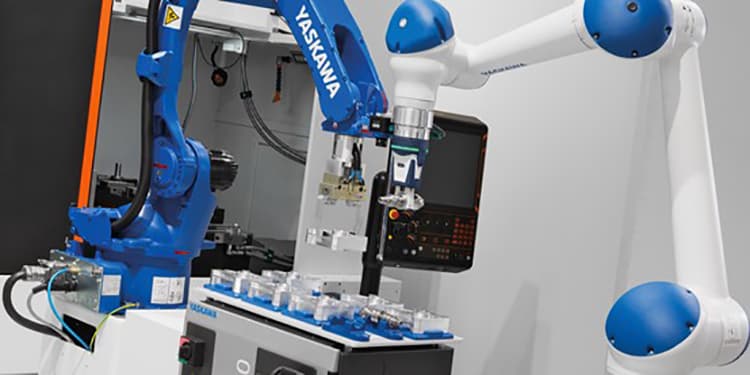
To ensure an effective robotic implementation outcome, learn about the five key areas to consider and address prior to investing in a solution.
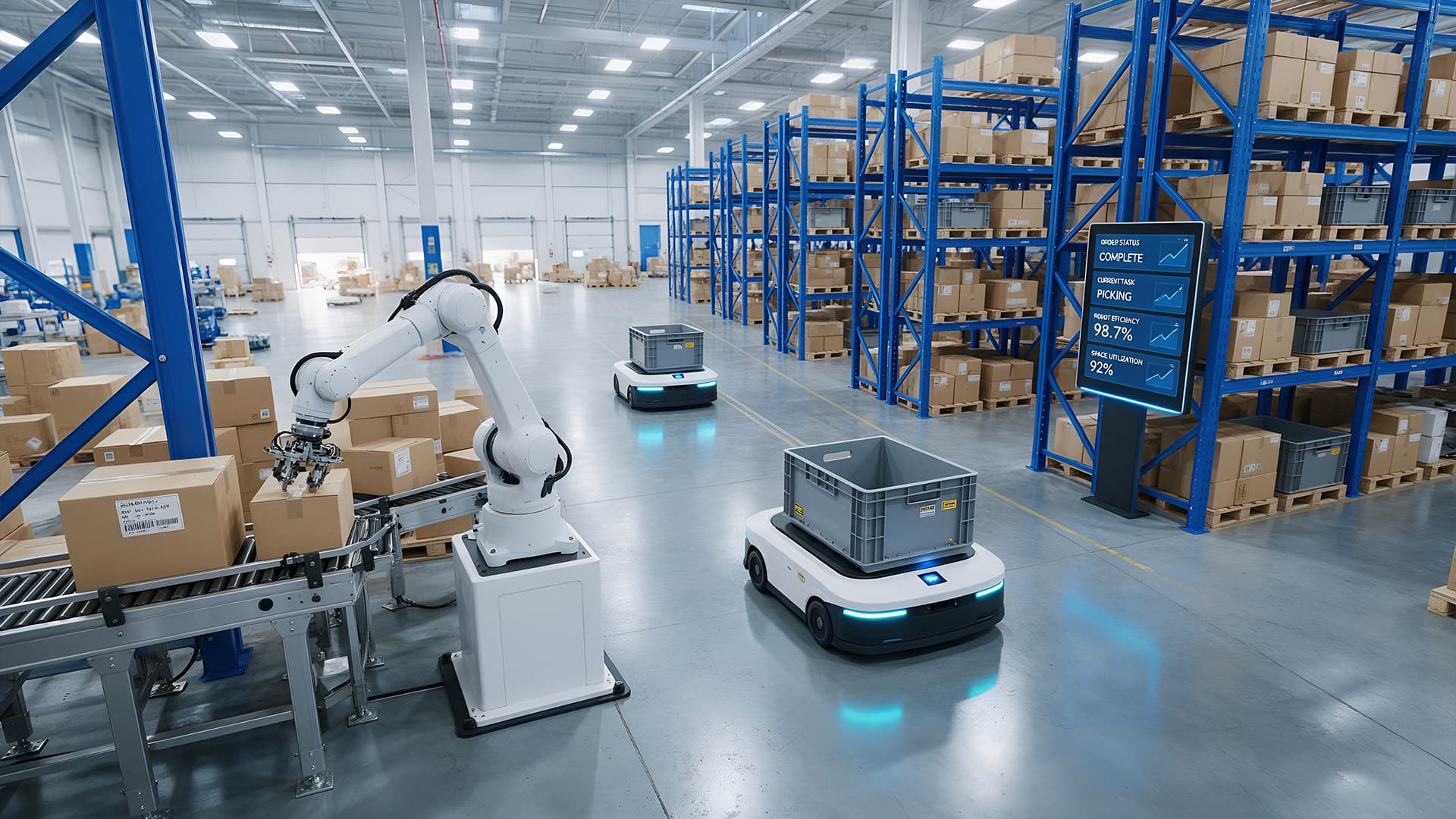
Warehouse robotics projects often stall on software, not hardware. Here are seven WMS integration challenges warehouses face and how orchestration software helps.
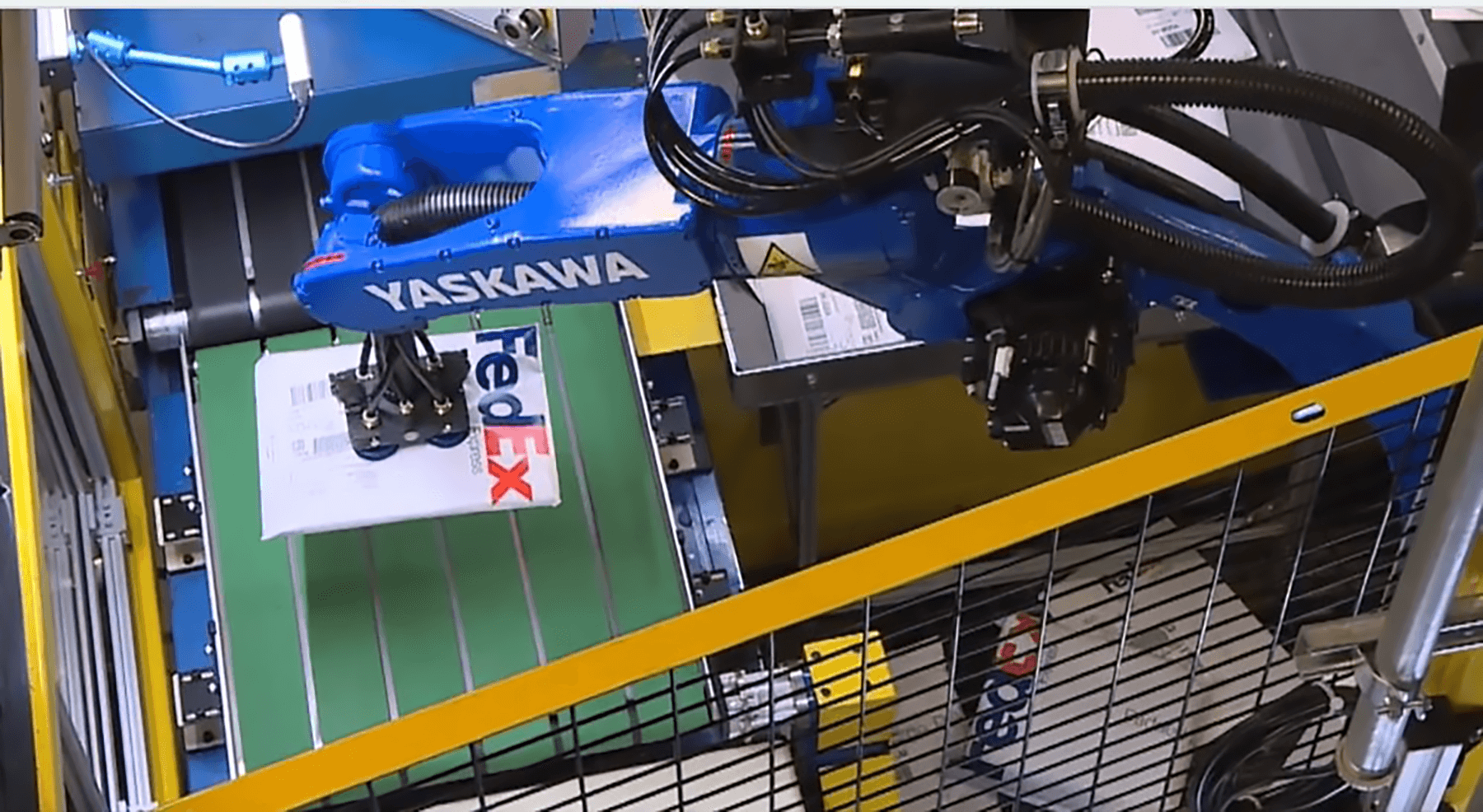
Robotics systems can be a daunting investment, and the buying journey includes critical steps to reach a successful integration.
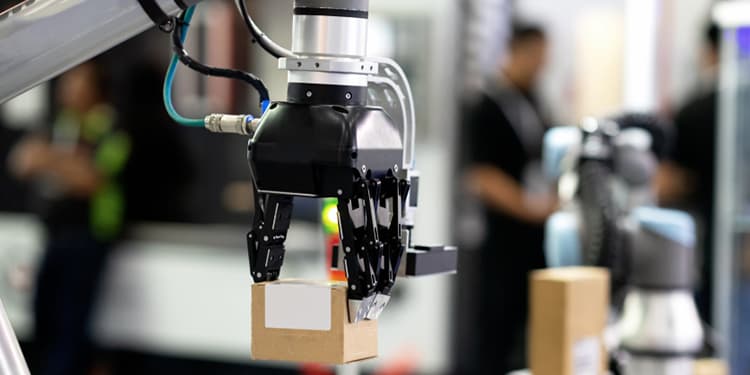
Newest source for information on robotic deployments in distribution and fulfillment helps companies address potential barriers to adoption.
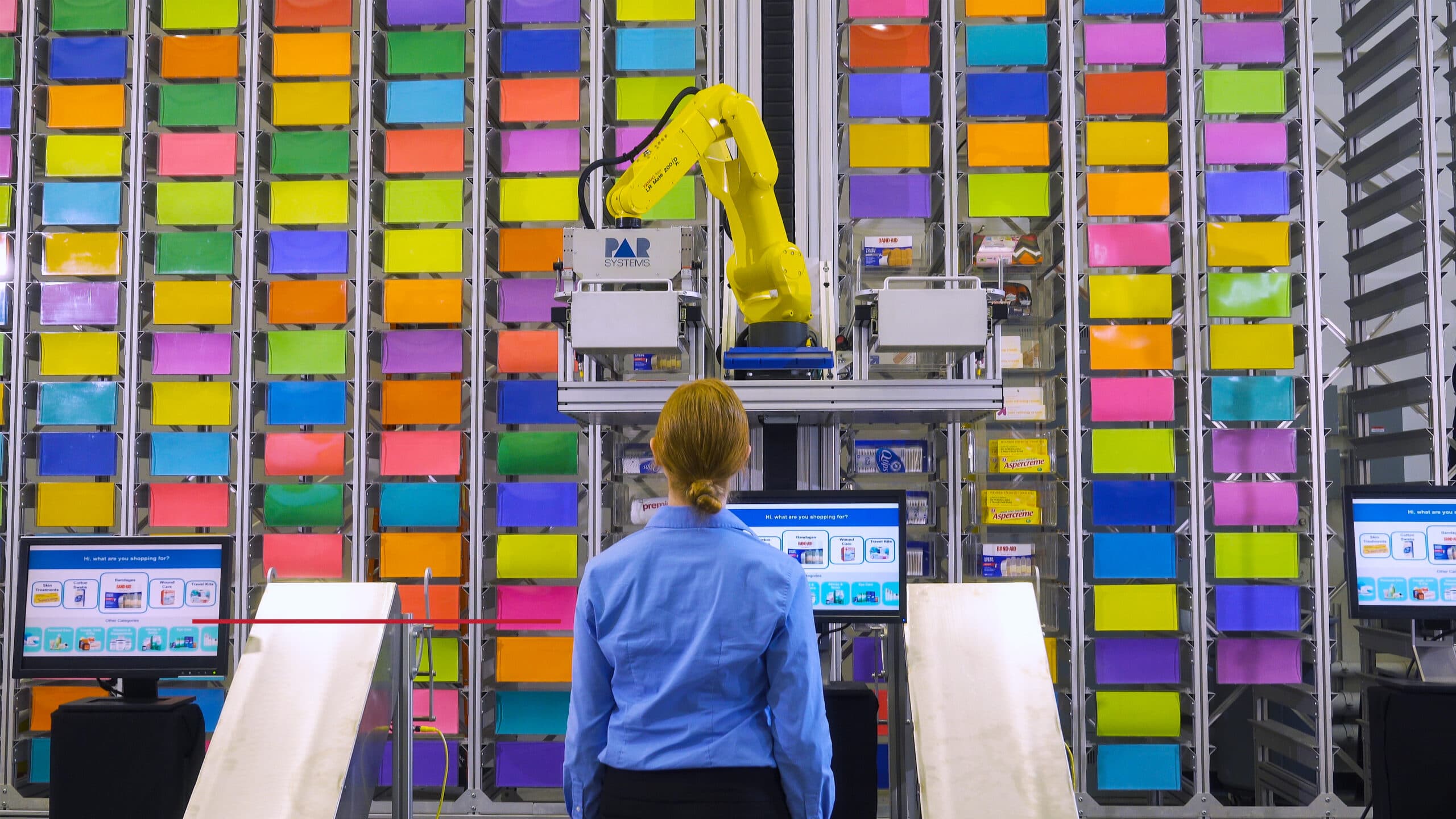
Robotics and Automation topped distributive technologies that would provide companies with competitive advantages in the next ten years since MHI started publishing its Industry Annual Reports, and the year 2024 was no different. We are on the verge of a significant increase in robotics adoption due to the increasing sophistication of robotic systems that can autonomously perform tasks such as picking, packing, and data-driven decision-making. Key technologies like sensors, vision systems, machine learning, Artificial Intelligence (AI), and edge/cloud computing are converging to enable more autonomous robotics. While such technological advances accelerate the adaptation of robotics in manufacturing and material handling systems, the recent social trends shape how and where robotics are used. By examining these dimensions, we aim to provide actionable insights into the transformative potential of robotics in the era of Industry 4.0 and Industry 5.0.
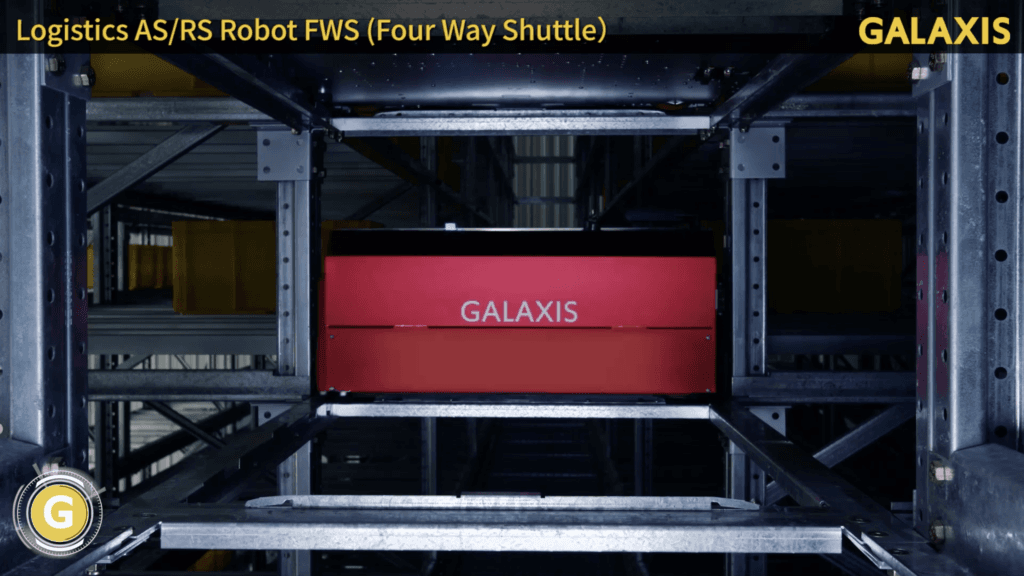
This is a paid advertisement. Galaxis Technology is the leading provider of logistics robots and intelligent equipment, and innovated logistics robots — four-way shuttle as an ideal case-type AS/RS solution, which can accommodate 1 million locations in 24-meter-high warehouse with flexible expansion and high efficiency.

Automation can be a valuable tool within a warehouse, but only if it’s integrated safely. By investing in vision capable, motion detecting robots, and choosing the right models for your existing operations, these tools can revolutionize how you conduct business.
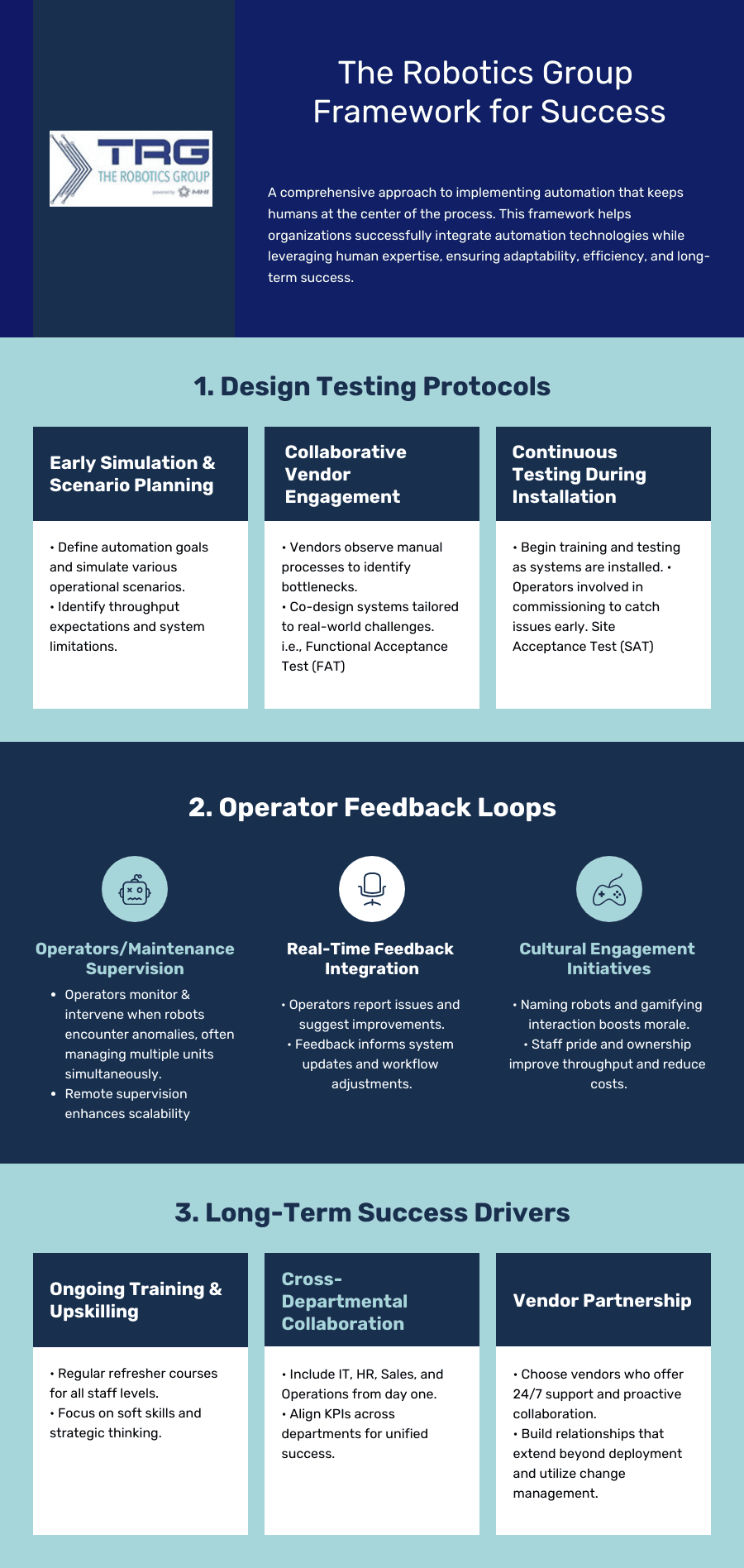
A comprehensive approach to implementing automation that keeps humans at the center of the process. This framework helps organizations successfully integrate automation technologies while integrating human expertise, ensuring adaptability, efficiency, and long-term success.
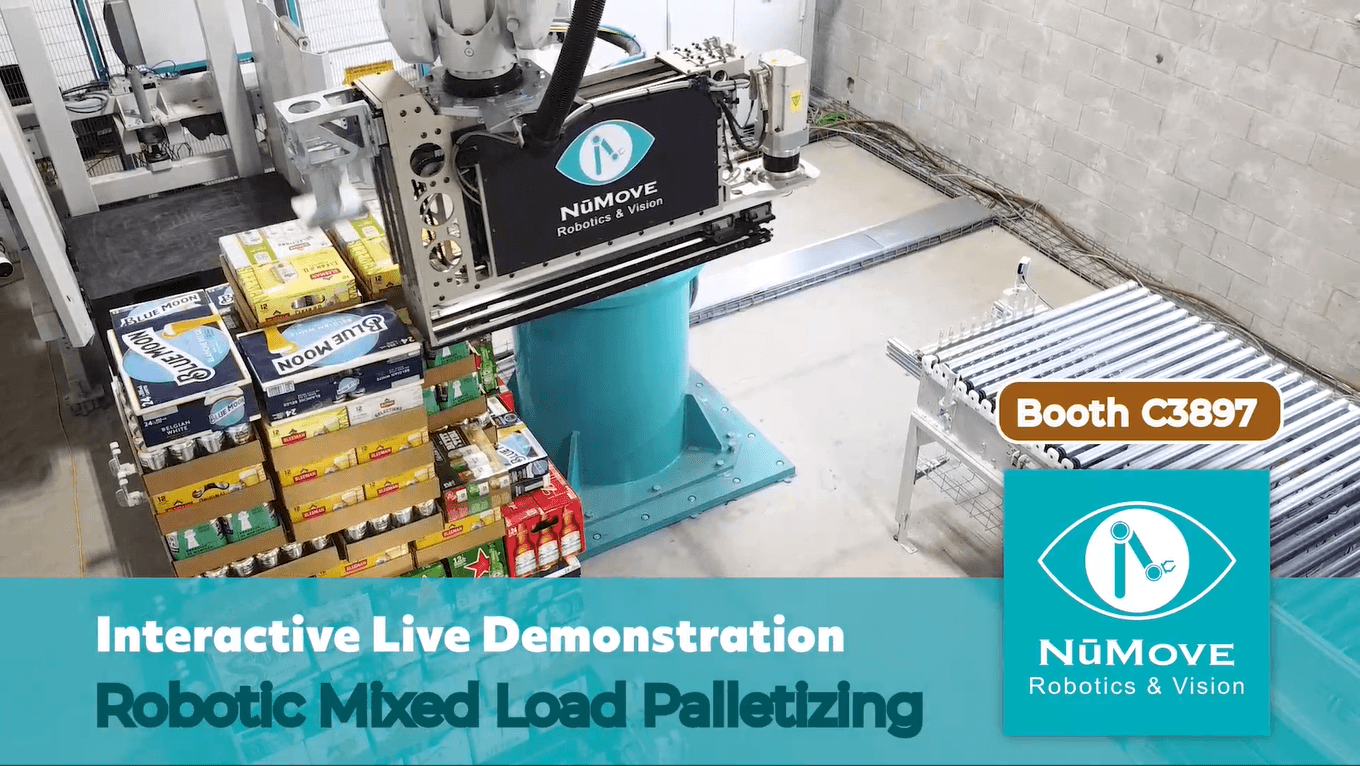
This is a paid advertisement. Seize the opportunity to test NūMove’s Robotic Mixed Load Palletizer during MODEX 2024! At booth #C3897, select a range of products, and witness the palletizing of your custom order in real-time. Immerse yourself in the future of your own facility’s potential and experience how we can help you optimize your outbound operations.

This is a paid advertisement. Have you thought of automating operations in your plant to increase ROI and solve labour issues? Meet NūMove at ProMat! NūMove is a robotic automation solution manufacturer and integrator who develops flexible applications for warehouses and distribution / fulfillment / ecommerce centers. Watch NūMove’s systems in action: mixed load, palletizing, depalletizing, order packing!
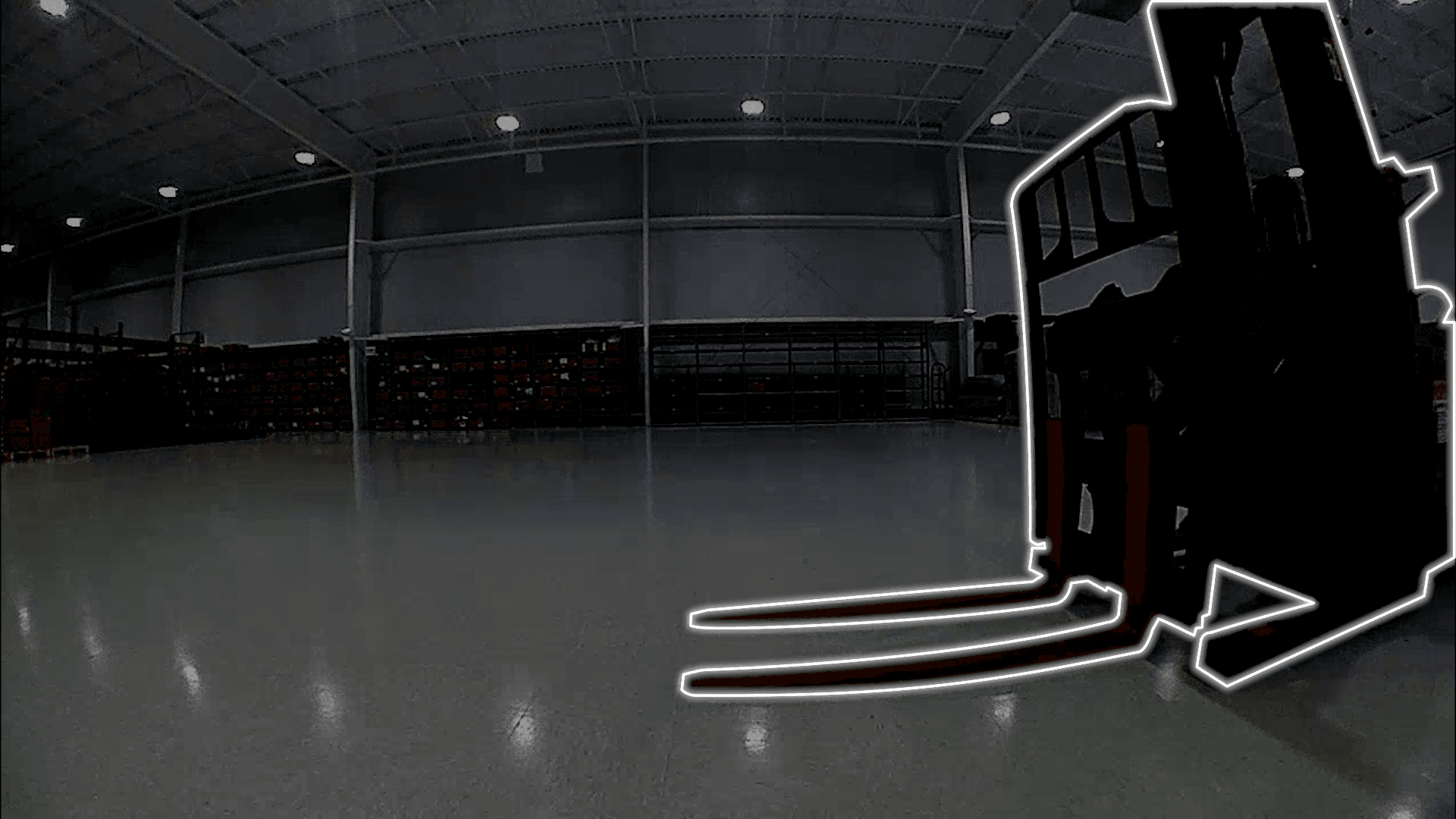
This is a paid advertisement. Unlock the full potential of Autonomous Mobile Robots (AMRs) by increasing efficiency and availability of each robot. The new Obstacle Detection System (ODS) software from ifm aims to reduce friction during development and deployment of AMRs across industrial environments. Solving the problems of floor segmentation and false positives, ODS solves for obstacle detection above and below the safety LiDAR, reduces unplanned stops and collisions, and shortens costly integration time.

Robots can act as a solution service for clothing companies, moving boxes, food handling, and much more. Tune in to this video to learn more about the differences between leasing them or buying robots as a service and the importance and impact leasing has on the business world today.

Melonee Wise, CEO of Fetch Robotics, and Erik Nieves, the CEO and founder of Plus One Robotics join us to discuss the impact of the pandemic on the mobile robotics industry.
The future of AI-driven robotics is near. From humanoid robots to advanced AMRs and other innovative tech, supply chain professionals must find the balance between human and machine collaboration to boost efficiency in the supply chain arena.

In this episode of MHI Cast, we talk with two members of The Robotics Group, Matt Kulp and Tyler McCoy. TRG is MHI’s newest Industry Group. Its goal is to inspire user confidence and foster the adoption of robotic solutions in supply chain applications.
One of the most recognizable images of the modern supply chain is the autonomous robot. Today’s solutions are often as simple as a robotic arm, designed to pick product quickly and efficiently. It is these innovations we’re here today to discuss.
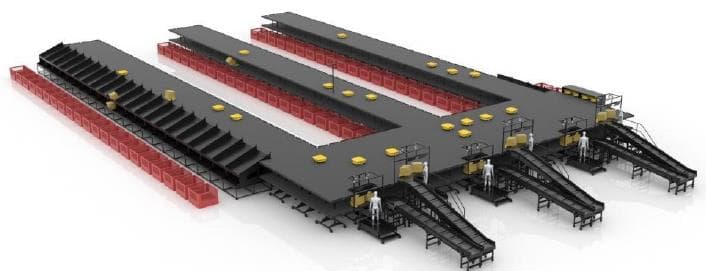
In the case of Wesfarmers retail division Kmart, the continued growth in their business necessitated evaluating new technologies to pilot and implement in their New Zealand D&F hub. Seeking a best-in-class automation solution and through a detailed RFP process, Kmart ultimately selected Tompkins Robotics’ tSort system. This tSort system and program was implemented remotely across multiple time zones including the USA, Australia, New Zealand, and India. This was achieved through the challenges of a global pandemic with strong collaboration and teamwork.
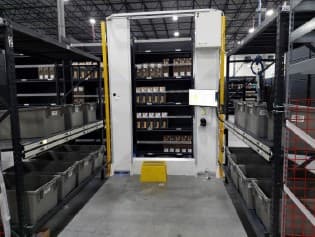
The Project ChallengeWith the increased demand in ecommerce and need for facility optimization at their new 1 million sq. ft. distribution hub, Ariat searched for ways to automate their warehouse throughput, productivity, and reduce physical strain for associates.Our SolutionGeek+ worked together with its strategic partner, Körber Supply Chain Solutions, to deploy 88 shelf-to-person picking robots and 2,000 racks in Ariat's new distribution hub. After their initial order, Ariat expanded the solution with an additional 30 picking robots. Since then, Ariat has experienced a significant increase in picking efficiency and warehouse productivity.
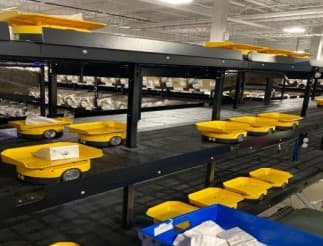
Supply Chain leaders were looking for a cost-effective solution to build a system that sorts customer prescription orders to hundreds of stores. The client successfully implemented a dynamic sortation solution to service 447 stores while improving sortation accuracy for the 3-level system design allowed the company to meet their increased production requirements, while remaining within the existing footprint. tSort ensures high throughput per square foot with low capital investment relative to traditional sortation systems.
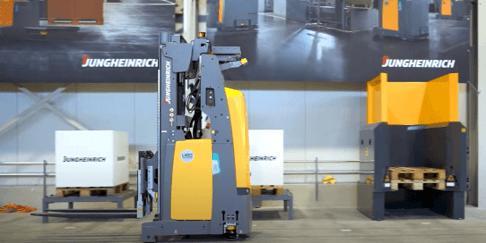
The Challenge: mobile robots with safety laser scanners cannot sense objects above a certain height.With recent technology, mobile robots have become highly efficient. Within their facility, Jungheinrich uses them to move goods, often in the same space as human personnel. They need to ensure their robots are not only operating efficiently, but also safely around their warehouse.
Over the years, technology has become so advanced that we’re seeing monumental shifts in the supply chain industry, especially with the rise of automation and robots.
The hardest part of the delivery process is the last mile. The supply chain industry is continuously implementing solutions to get packages from the warehouse to the customer.

New technologies, changing demographics and new ways of thinking are impacting the work we do and how we do it. The Jobs of Tomorrow docuseries highlights different jobs across industries, examining how they have changed and will continue to change.Together we will reflect on our past, celebrate victories and look with optimism toward the almost unrecognizable future of work.

If more companies really start to use robots in their distribution centers, human workers could avoid endless repetitive work. And with the help of robots, even physically disadvantaged people can find jobs on the factory floor. There’s a huge amount of upside to this, but what would the dynamic be like between these new-age co-workers?
In response for the growing need for automated solutions in the supply chain, MHI is launching a new Industry Group focusing on robotics. MHI’s 16 Industry Groups are collectives comprised of leading manufacturers in material handling and logistics - and they are dedicated to operational safety, efficiency and innovation. The new robotics industry group will be your go-to resource to power up your supply chain and find solutions from the leading providers.
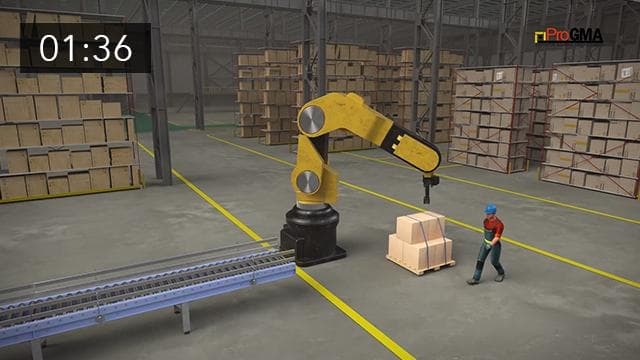
The Protective Guarding Manufacturers Association provides examples and best practices for protective guarding solutions to protect personnel from hazards associated with robotics or automation applications.
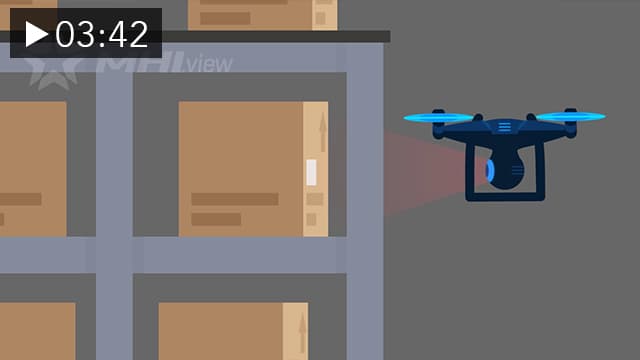
Drones have a wide variety of applications in supply chains - find out how you can use drones to improve your inventory management procedures.

A Robotic Storage Retrieval solution (RSR) storage and retrieval system consists of automated equipment that stores and retrieves products automatically to/from various styles of racking systems. The robotic retrieval system stores the product in a compact manner when compared to more traditional forms of storage. The automated equipment that stores and retrieves product can be in many forms/configurations and is typically under some type of computer direction. Heights for these systems can vary from low to in excess of 100+ feet.
The "pick and place" industrial robot is used to feed or disengage parts or tools to or from a machine, or to transfer parts from one machine to another. A variation of a "pick and place" robot is used to build and undo unit loads on a pallet.
A Self-Guided Vehicle (SGV) is an autonomous, self-directed robotic delivery system for the movement of product in diverse environments. An SGV operates independently to navigate around fixed and moving obstructions without the need for an external guide path network or sensors, such as buried wires or mounted magnetic or optical strips. Instead, an SGV uses on-board sensory inputs and navigational software to dynamically plot a path as the robot moves to each goal or task destination.
A Self-Guided Vehicle (SGV) is an autonomous, self-directed robotic delivery system for the movement of product in diverse environments. An SGV operates independently to navigate around fixed and moving obstructions without the need for an external guide path network or sensors, such as buried wires or mounted magnetic or optical strips. Instead, an SGV uses on-board sensory inputs and navigational software to dynamically plot a path as the robot moves to each goal or task destination. See also AGV or Automatic Guided Vehicle or AGVS .

When you’re manufacturing product for a customer, the final step in the packaging process usually to place containers of products onto a pallet for shipping – either to a distribution center or directly to your customer – so it’s a pretty important step. However, manual palletization (employees physically putting containers on pallets) is often considered one of the least desirable activities; the containers are heavy to lift and in many cases the position on the pallet requires extended reaching. It can be a back breaking job and it may even be causing employee safety concerns for the company. But there is another option. Robotic palletizing exists, and it can be a solution for your company.
Both automatic guided vehicles (AGVs) and autonomous mobile robots (AMRs) are computercontrolled, wheel-based load carriers (normally battery powered) that run on a plant or warehouse floor (or, if outdoors, on a paved surface).

Sponsored ContentThis MHI Tech Talk invites panelist Jim Kirby, VP of Services Advantage at Ricoh to discuss scaling new technologies from automation to robotics, including supply chain as a service.Watch the recording here - https://videos.mhi.org/scale-tech-with-ease-with-supply-chain-as-a-service/