
Follow Us


Copyright MHI © 2026 | All Rights Reserved
Find out when to upgrade your WMS systems and how they improve efficiency, support fleet software, and deliver real-time visibility.

While warehouse management systems (WMS) still have a place in some operations, today’s industry is largely migrating to a cloud-based model.
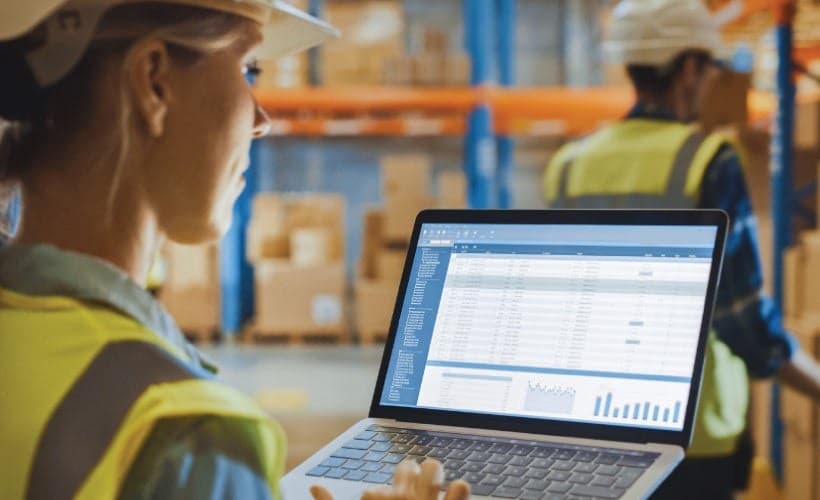
A comprehensive WMS that includes WES and WCS can provide a scalable solution for businesses and is more sophisticated and capable than ever
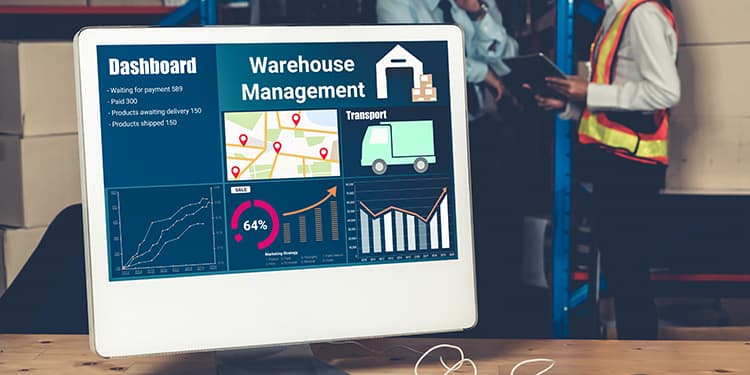
With overlapping functionality and capabilities in certain areas, it can be challenging to determine which software is ideal for an operation.

Northlake, Texas (July, 09, 2026) EPG (Ehrhardt Partner Group), a leading provider of unified supply chain execution software, announced the continued global expansion of its standardized AutoStore integration for EPG ONE™ Warehouse Management System (WMS). Built to tightly connect warehouse management and cube storage automation, the integration helps companies orchestrate AutoStore operations in real time, improve storage density, accelerate fulfillment, and scale automated warehouse processes without relying on custom middleware or fragmented system architecture.Shorter delivery expectations, expanding product assortments, labor constraints, and rising warehouse space costs are accelerating demand for compact, high-performance fulfillment systems. AutoStore has become one of the most widely adopted cube storage solutions for maximizing storage density while supporting fast, dynamic order fulfillment. EPG recognized this potential early and invested in a standardized interface between AutoStore and EPG ONE WMS. Today, that integration is proven across numerous live installations and provides the foundation for faster automation projects, greater operational control, and scalable warehouse performance.From the very first implementations, the standardized EPG ONE WMS interface proved to be the key to seamless orchestration between warehouse management and automation. With every project, EPG gained additional experience, continuously refining and enhancing the solution. “We invested early in creating a solution that tightly integrates AutoStore into our WMS,” explains Jett Chitanand, President of EPG Americas. “That early investment gives customers a stable and scalable architecture from day one. For companies investing in automation, long-term value depends on how effectively that technology connects to day-to-day warehouse execution. A reliable, repeatable, and scalable integration gives customers the flexibility to grow while protecting their automation investments.”From Pioneer Project to Proven Industry SolutionEPG has steadily evolved its AutoStore integration through successive customer implementations, making it a standard component of the EPG ONE™ Suite that now supports numerous live environments around the world.For B2B wholesaler AXRO, the integration supports fulfillment operations defined by complexity, speed, and flexibility. A broad product portfolio, highly variable order structures, and international supply chains require the ability to process time-sensitive orders quickly and reliably. “Our product portfolio is extremely diverse, and many customer orders are highly time-sensitive, with same-day shipping requirements,” says Mike Jonescheit, Managing Director at AXRO. “Thanks to the close collaboration with EPG, we were able to integrate AutoStore seamlessly into our operations. Today, we benefit from greater transparency, increased storage density, shorter processing times, and a scalable foundation for future growth.”Global zipper manufacturer YKK relies on the solution with a strong focus on process reliability. Its AutoStore system is directly integrated into production supply processes. Through the standardized interface, EPG ONE WMS processes inventory changes without requiring additional middleware or custom integrations, enabling rapid response times and complete operational visibility. “For us, it was crucial that the AutoStore solution could be integrated directly into our logistics processes,” says Alexander Sann, Deputy Factory Manager at YKK. “With the standardized EPG ONE WMS interface, inventory changes are processed in real time. This provides the transparency and reliability we need to respond flexibly to the requirements of both manufacturing and logistics.”“The AXRO and YKK projects demonstrate how versatile AutoStore can be across very different operational environments,” says Michael Bolz, Consulting Alliance Director at AutoStore. “Combined with the standardized EPG ONE WMS interface, customers gain a solution that delivers stability, scalability, and long-term reliability across industries.”End-to-End Automation Control in Real TimeThe standardized AutoStore integration within EPG ONE WMS enables end-to-end control of the core processes required to synchronize warehouse management and automation, including goods receipt, storage, replenishment, picking, and order consolidation. EPG ONE WMS acts as the central control platform, processing inventory updates, order priorities, and bin movements directly within the WMS environment. “For AutoStore, close integration with powerful warehouse management systems like EPG ONE WMS is essential,” Bolz adds. “The combination of hardware and intelligent software ensures that customers can operate their facilities with stability, transparency, and scalability.”The benefits become particularly evident in dynamic warehouse environments, where order priorities, inventory levels, and replenishment requirements constantly change. The result is complete operational transparency, greater process reliability, and a system that scales alongside the business.Experiencing the Technology in PracticeEPG also showcases the integration at its global headquarters in Germany through a dedicated demonstration environment featuring a fully operational AutoStore installation with bins, robots, a CarouselPort 4.0 workstation, and a mini-grid. The environment gives customers and partners a realistic view of how AutoStore and EPG ONE WMS work together across automated storage, replenishment, picking, and order consolidation, while also serving as a development and training platform that helps reduce implementation risk before customer go-lives.About EPG – Smarter Connected LogisticsEhrhardt Partner Group (EPG) is a global leader in unified supply chain execution technology, supporting global brands for over 35 years with smarter connected logistics. Over 1,600 organizations around the world put their trust in EPG and its suite of solutions to optimize complex logistics processes from manual to fully automated warehouse environments. EPG ONE™ unified supply chain software centralizes solutions including WMS, WCS, WFM, voice, multi-carrier global shipping execution, intelligent route optimization, dock management, contract and billing management, and supply chain control tower, enabling integrated supply chain and logistics management end to end. Complementing the EPG ONE™ Suite, EPG AURA provides an AI-native environment designed to connect and synchronize data across systems and intelligently enhance execution alongside the EPG ONE Suite or independently with third-party systems. To learn how EPG powers smarter connected logistics for organizations worldwide, visit epg.com.ContactLindsay SchuemannDirector of Marketing, EPG Americaslindsay.schuemann@epg.com

Seamless Integration into EPG’s WMSNorthlake, Texas (April 27, 2026) Ehrhardt Partner Group (EPG), a global leader in unified supply chain execution and warehouse management technology, announced today it is further expanding its technological network in warehouse automation through a strategic partnership with Locus Robotics. Based on the full integration of the Locus Robotics solution into EPG’s Warehouse Management System (WMS), EPG can now provide companies with a ready-to-use solution that sustainably accelerates picking processes and enables flexible scaling in warehouse operations. The Locus fulfillment solution is already in use at EPG's Logistics Solution Center (LSC) in Boppard. With this collaboration, EPG is responding to a growing demand for solutions that can keep pace with dynamic market requirements and increasing order volumes.Many companies are facing the challenge of stabilizing picking processes while simultaneously reducing the workload for employees. The combination of EPG’s WMS and the software-driven fulfillment solution from Locus Robotics provides a robust foundation for this. As part of the Locus fulfillment solution, the mobile units take over travel-intensive transport routes, relieve employees, and enable structured process control, with all operations coordinated via EPG’s WMS. The WMS manages the order backlog and distributes tasks to the autonomous robots, which are orchestrated via Locus software. These move safely through the warehouse, position themselves at the designated picking stations, and save time by reducing walking distances. This reduces pick times and increases picking performance. The close integration of EPG’s WMS and the Locus Robotics system is a key quality feature.“With Locus Robotics, we are gaining a strong partner whose technology ideally matches our goal of making automation quickly integrable and practical for everyday warehouse operations,” explains Jens Heinrich, Principal Strategic Product Manager at EPG. In his view, the live integration in the Logistics Solution Center provides decisive added value for companies that are facing an automation decision. “Our visitors experience first-hand how flexibly EPG’s WMS controls different robotics solutions and how quickly the systems adapt to changing conditions.”Locus Robotics also views the new partnership as an important step forward. “EPG and Locus share the vision of more efficient, safer, and scalable warehouse logistics,” says Denis Niezgoda, Chief Commercial Officer at Locus Robotics. “Integrating our software-driven fulfillment solution into EPG ONE WMS delivers clear added value for customers and demonstrates how powerful software-supported human–technology processes can be in the warehouse.” The integration of AMRs into EPG’s WMS shows how well modern robotics can be integrated into existing IT landscapes and the contribution they can make to ongoing operations. Experiencing Automation at the Logistics Solution CenterFor many years, the Logistics Solution Center at EPG’s headquarters in Boppard-Buchholz has provided a practical environment in which EPG demonstrates a wide range of hardware and software components working together in operational processes. With the integration of the Locus Robotics system, the company is expanding its existing showroom with another example of technology-open automation. Visitors can experience in real time how manual and robot-assisted process steps interact – for example handovers between systems – providing transparent insight into the control logic of EPG’s WMS.The direct comparability of different technologies is a decisive advantage. In addition to solutions from cube storage pioneer AutoStore and lift storage provider Kardex, EPG now also showcases the Locus Robotics fulfillment concept as a complementary, flexible solution. This creates a comprehensive picture of how different levels of automation interact, how they can be scaled, and which configurations are suitable for different warehouse profiles. On this basis, companies can make well-founded decisions about entry scenarios or expansion stages.Outlook on Upcoming DevelopmentsThe partnership with Locus Robotics is part of the continuous expansion of EPG’s automation portfolio. Additional robotics solutions and further demonstrators for the Logistics Solution Center are already in preparation. The goal is to provide companies with a comprehensive platform that enables both entry-level projects and large-scale automation initiatives to be implemented on a shared technological foundation. About EPG – Smarter Connected LogisticsEhrhardt Partner Group (EPG) is a global leader in unified supply chain execution technology, supporting global brands for over 35 years with smarter connected logistics. Over 1,600 organizations around the world put their trust in EPG and its suite of solutions to optimize complex logistics processes from manual to fully automated warehouse environments. EPG ONE™ unified supply chain software centralizes WMS, WCS, WFM, voice solutions, multi-carrier global shipping execution, intelligent route optimization, dock management, contract and billing management, and supply chain control tower, enabling integrated supply chain and logistics management from end-to-end. To learn how EPG powers smarter connected logistics for organizations worldwide, visit epg.com.About Locus RoboticsLocus Robotics is a global leader in AI-powered mobile warehouse automation, enabling maximum flexibility, virtually unlimited throughput, and data-driven insights to optimize logistics processes. At the core is the AI-based LocusONE™ platform, which seamlessly integrates mobile robots into existing warehouse environments to significantly increase efficiency, reduce costs, and scale processes flexibly. More than 150 leading companies in retail, healthcare, 3PL, and industrial sectors rely on Locus Robotics at over 350 sites worldwide. The solutions enable rapid payback, reduce labor costs, and deliver sustainable productivity gains. With the industry’s first Robots-as-a-Service (RaaS) model, Locus Robotics offers continuous innovation, flexible scalability, and high cost transparency—without large upfront investments. Thanks to proven applications across a wide range of workflows, from picking and replenishment to sorting and packing processes, Locus Robotics helps companies handle peak volumes confidently and adapt to dynamic market requirements. For more information, please visit locusrobotics.comContactLindsay SchuemannDirector of Marketing, EPG Americaslindsay.schuemann@epg.com
In a market where forecasting is no longer enough and immediacy is the new norm, Generix Group is stepping up investment in its solutions to maintain its leadership in the supply chain and serve its 400 or so WMS customers worldwide. Every day, some 2,000 warehouses operate with a Generix Group WMS. The company's investment in innovation is one of the cornerstones of its strategic transformation, and has recently resulted in the launch of RMS, Resource Management System, for the planning and optimization of warehouse resources. This latest solution addresses two key issues for warehouses: optimizing resource planning while preserving human resources and meeting the customer promise at all times thanks to analytical and predictive work processed with AI. This solution helps to attract and retain talent in a profession where resources are under pressure. Generix Group is a specialist in flow management, and its solutions are deployed in 60 countries, for players in omnichannel retail, FMCG, manufacturing, luxury goods, pharmaceuticals and 3PLs. Generix WMS and SOLOCHAIN are highly complementary solutions. Thanks to its exceptional functional scope and standard processes, Generix WMS covers the needs of customers in a large number of industries, often with complex challenges: stored, cross-dock, e-commerce, mix-flows, multi-trade and multi-customer flows on the same site, whatever the constraints linked to the products (ambient, fresh and frozen, etc.). This solution has also been enriched by recent requirements, such as customization of orders, value-added operations and large volume variations, while complying with all regulatory constraints, both in France and internationally. SOLOCHAIN is totally flexible and integrates a Manufacturing Execution system (MES) to supply manufacturers' production lines. It also offers an integrated project management and documentation tool. In addition, Generix Group offers solutions such as TMS, OMS, YMS and now RMS and a scalable API catalog. "We believe, being named in the Magic Quadrant™ again this year, is a recognition of our R&D efforts to support our customers in their warehouse performance issues, whether they have one or dozens of sites, and whatever their industry. As part of the deployment of our Boost Together strategic transformation plan, this investment dynamic reached another major achievement this year with the announcement of Resource Management System (RMS). For the first time on the market, a solution combines performance analysis and planning services for combined resources (human & machine), for the benefit of day-to-day efficiency in the warehouse. We are continuing, and even stepping up, our investments so as to be more than ever the partner of choice for Supply Chain Leaders, through a "business" approach and by taking into account our customers' future challenges. This is why we believe; we have been recognized by a reference organization", comments Nicolas Picquerey, Chief Solutions & Services Officer, Generix Group. About Generix Group: Generix Group is an expert in the Collaborative Supply Chain with presence in 60 countries thanks to its subsidiaries and network of partners. More than 6,000 companies around the world use its SaaS solutions. The group’s 800 employees provide daily assistance to clients such as Carrefour, Danone, FM Logistic, Fnac-Darty, Essilor and Ferrero in the digital transformation of their Supply Chains. Its collaborative platform, Generix Supply Chain Hub, helps companies keep their promises to their customers. It connects companies to all their partners so together they can operate physical flows, digitize information flows, and collaboratively manage processes in real time. Generix Supply Chain Hub is intended for all actors in the supply chain: manufacturers, logistic service providers (3PL/4PL), and distributors. To find out more, please visit www.generixgroup.com.

Generix – a global business software company offering a broad portfolio of SaaS solutions and services in supply chain, finance, commerce and B2B Integration – has released multiple innovations for its two WMSs including labor planning & forecasting powered by AI and in the areas of predictive and prescriptive analytics. In a dynamic market where AI and the Cloud reign supreme, Generix reaffirms its commitment to innovation, bolstering its SaaS solutions to maintain leadership in the supply chain execution domain and cater to its 500+ WMS customers globally. With approximately 2,000 warehouses operating daily with its two distinct WMSs, Generix WMS and SOLOCHAIN, the company remains dedicated to maximizing warehouse efficiency and performance. With a broad and deep functional scope coupled with standardized processes, Generix WMS solution covers the needs of companies across a wide spectrum of industries, often dealing with complex operations. In addition, SOLOCHAIN WMS solution offers complete flexibility and is designed to simplify business process integration with powerful visual tools. The synergy between Generix WMS and SOLOCHAIN offers comprehensive solutions tailored to diverse industry needs, including stored, cross-dock, e-commerce, and multi-customer flows. Generix’s commitment to innovation and sustainable growth remains unwavering. The strategic investments in research and development (R&D) have started to generate results. These investments reinforce Generix’s mission to digitally connect all businesses together across global value chains. “We are honored to be recognized in the Magic Quadrant™ for the six consecutive year. We believe this underscores our relentless commitment and efforts to empowering companies across industries to continuously innovate their warehouse operations, digitize their key business processes and continuously optimize their overall performance. From our perspective, the analysis of our two WMSs is a strong marker of our technological shift and the acceleration of better data exploitation with AI to best serve our customers.” comments Si-Mohamed Saïd, Chief Marketing & Product Officer. For more information on the benefits of Generix WMS SaaS offerings and case studies click here. To access the full Gartner report click here. About Generix Generix is a global SaaS company helping connect businesses together to turn each digital connection into digital value. It offers a leading portfolio of cloud solutions and services powered by AI to drive with confidence the most mission-critical digital business processes in supply chain, finance and commerce. It also provides end-to-end B2B integration and collaboration solutions so companies can fully operate across digital business networks. Nearly 1,000 Generix talents are dedicated to best serve over 5,000 customers across more than 60 countries. The company helps to process more than 17 billion messages, prepare more 600 million pallets, manage over 500 million invoices and more than 1 million transport operations per year. Generix believes in the immense growth potential of the networked economy in a sustainable world. For more information, visit www.generixgroup.com.
Are you looking to take your manual warehouse to the next level? Introducing Warehouse Management Software (WMS) into your supply chain operation can help reduce labor costs, elevate inventory management, and provide innovative solutions for your facility’s desired business objectives and KPIs. Learn more about what WMS can do for you.
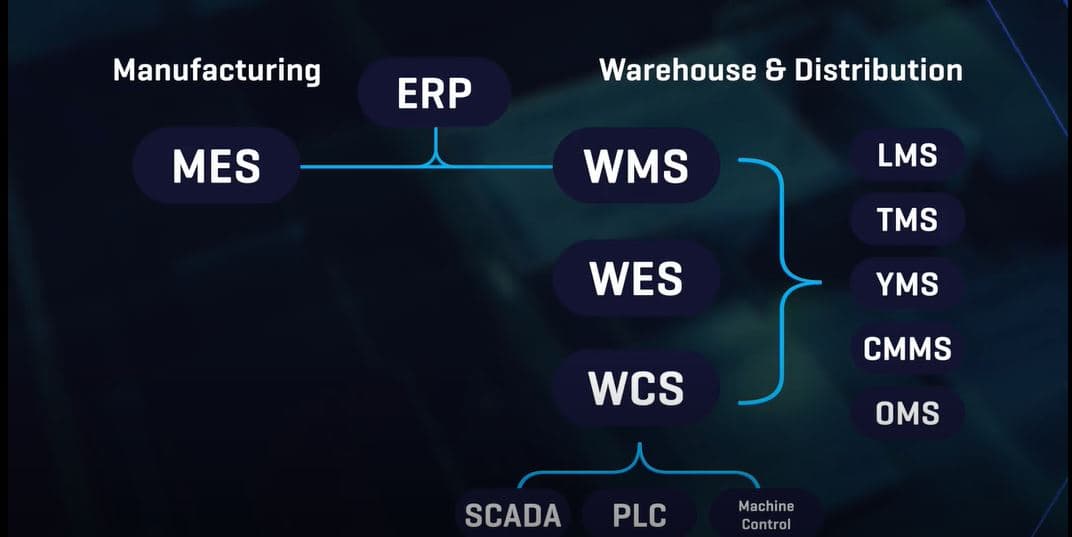
Having the right software is important in making your operations flow seamlessly. How do you choose the right software?
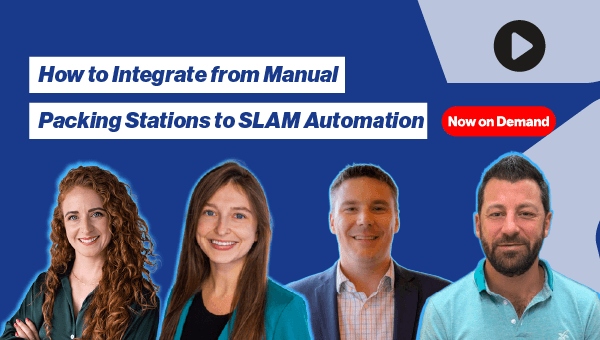
What can you expect when transitioning from manual packing stations to automated processes? How do you integrate new WMS applications with ease? This MHI Tech Talk invites Kyle Smith, Gina Baldwin, and Greg Berguig to address what supply chain professionals need to do when integrating new packing solutions.

This is a paid advertisement. We needed to be able to grow and scale the business. With Ascent’s warehouse automation software we eliminated three software systems and complex integrations from our distribution and warehousing operations. The result of implementing Ascent’s solution enabled us to double productivity with 20% fewer staff while our business grew 60%. Our efficiency is insane now!
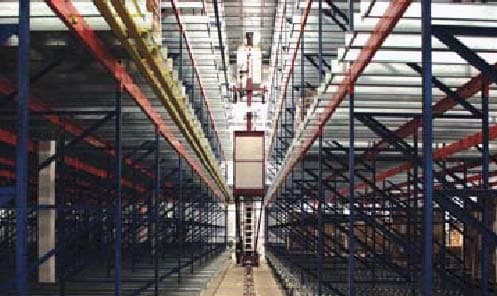
A famous brand Greek yogurt producer has installed an Automated Storage and Retrieval System (AS/RS) with Warehouse Management Software (WMS) at their plant in Johnstown, NY. The single aisle AS/RS handles storage and order picking in the 35°F cooler warehouse. Originally designed to store 1600 pallets, the AS/RS was recently expanded to 4100 pallet positions.
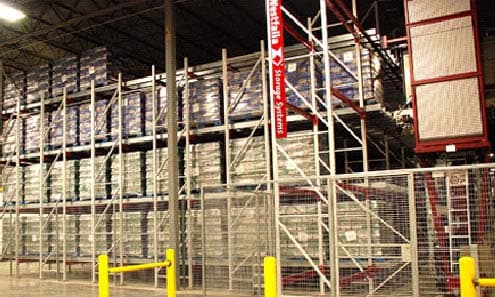
To meet demand for high throughput, a leader in the private label bottled water industry installed an Automated Storage and Retrieval System (AS/RS) and Warehouse Management System (WMS), which increased their storage density 40%. In a few short months, a marked improvement in safety has already been noticed due to fewer forklifts being used. Their WMS manages all product movements resulting in less waste and product lost.
Project BackgroundJD Logistics is a leading international logistics company offering Retail-as-a-Service, managing inventory and fulfilling e-commerce orders on behalf of their customers. Their order fulfillment facility located in Fontana, California, was growing quickly and to maintain the industry leading service their customers have come to rely on, JD Logistics once again turned to Hai Robotics.In 2021 JD Logistics’ California location upgraded their manual processes by implementing Hai Robotics’ Autonomous Case-handling Robotic (ACR) Automated Storage and Retrieval System (ASRS) to speed up order fulfillment, increase storage density, increase efficiencies, and improve inventory management.The SolutionAll shelving and totes were standard non-precision assets that are readily available on the market. This allowed the system to both be designed to best support the facility’s needs and avoid unnecessary costs. These ACRs are intelligent enough to work in real-world environments. The robots needed only standard configuration typical for all installations so robotic grippers match the tote size selected for the shelves.Hai Robotics’ ACRs seamlessly integrated via a flexible interface communication layer with JD Logistics’ existing WMS system, helping to minimize the adjustment period to the new workflows and integration time.Throughput and Efficiency Picking efficiency improved to 100% accuracy Daily order fulfillment improved 42% — at just a third of the system’s maximum performance capacityFlexibility During Black Friday Week, JD Logistics successfully fulfilled 118%+ more orders over the normal weekly rate — with the same ASRS and no additional temp-staffing That’s nearly 175% more throughput JD Logistics was able to fulfill during the busiest time of yearLabor Training has been significantly reduced from about 2 weeks to 2 days Employees previously walking 10+ miles a day now pick in ergonomic, operator friendly workstationsDensity Storage height grew from ~5 feet to 17 feet — an increase of 240% vertical storage Using the same storage footprint, the number of unique SKUs increased 43% with room to grow
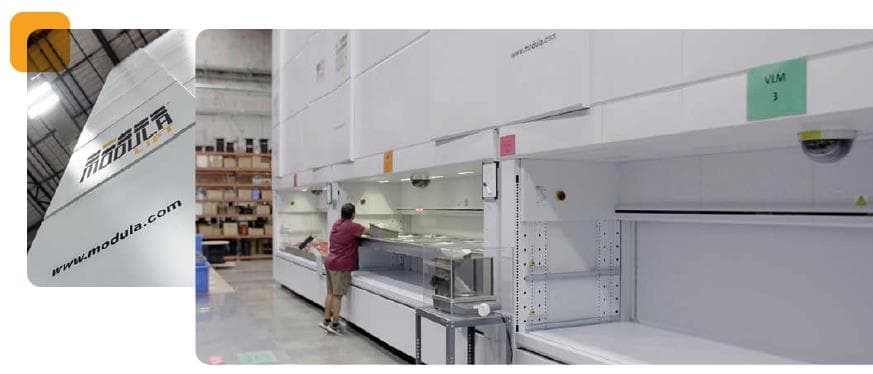
Global O-Ring and Seal, a leading supplier of O-rings, seals, and other sealing-related products, stocks thousands of SKUs. The management team decided to look for the most efficient picking system they could find. Global O-Ring decided the answer was in the form of vertical lift modules from Modula. They bought three Modula ML50D VLMs that provided 12,000 square feet of storage space on just 465 square feet of floor space, reducing their operational footprint by 90%. Global O-Ring purchased the Modula Warehouse Management System (WMS) that tracks and updates inventory in real-time. This was in turn connected to Global’s ERP to further boost efficiencies.

This Module is all about how MAVs fit into the bigger picture and what areas need to be considered for a successful automation project.1. Vehicle(s)2. Stationary Sensors and / or Cameras3. Communication4. Mapping, Layout, and Configuration Software5. Traffic Controller / Management Software6. Middleware Software to ERP / WMS / WCS / WES7. Human / Machine Interface (HMI)8. Battery Charging

Order picking or order selection is the process of retrieving individual items (from storage locations) for the purpose of fulfilling an order for a customer. Schemes by which to achieve efficient order picking will vary widely. However, in all cases it involves locating the items in storage; creating a plan for retrieving the items; physically picking the items (either automatically or manually); sorting and/or assembling them into discrete orders; and in the end even packaging the orders for delivery. Although defined as a process, order picking cannot be achieved without the appropriate computer software and mechanical equipment, including the storage medium, such as pallet racks, shelving, AS/RS (including carousels) and flow delivery racks, and a means for transporting items from receiving to storage and from storage to packaging and shipment. A variety of industrial trucks and conveyors will be found in most order picking applications. Order picking may also involve robotic like devices for physically picking discrete items from their storage location. See also Warehouse Management Systems or WMS .

Finding a trusted 3PL to manage your inventory and processing can be challenging, especially when your business has specific needs and regulations to follow. In this episode, we talk with a leader in the Medical Products Division about strategies to find and keep a good relationship with your 3PL.