
Where Are You in Your Warehouse Automation Journey?
SOLUTIONS COMMUNITY

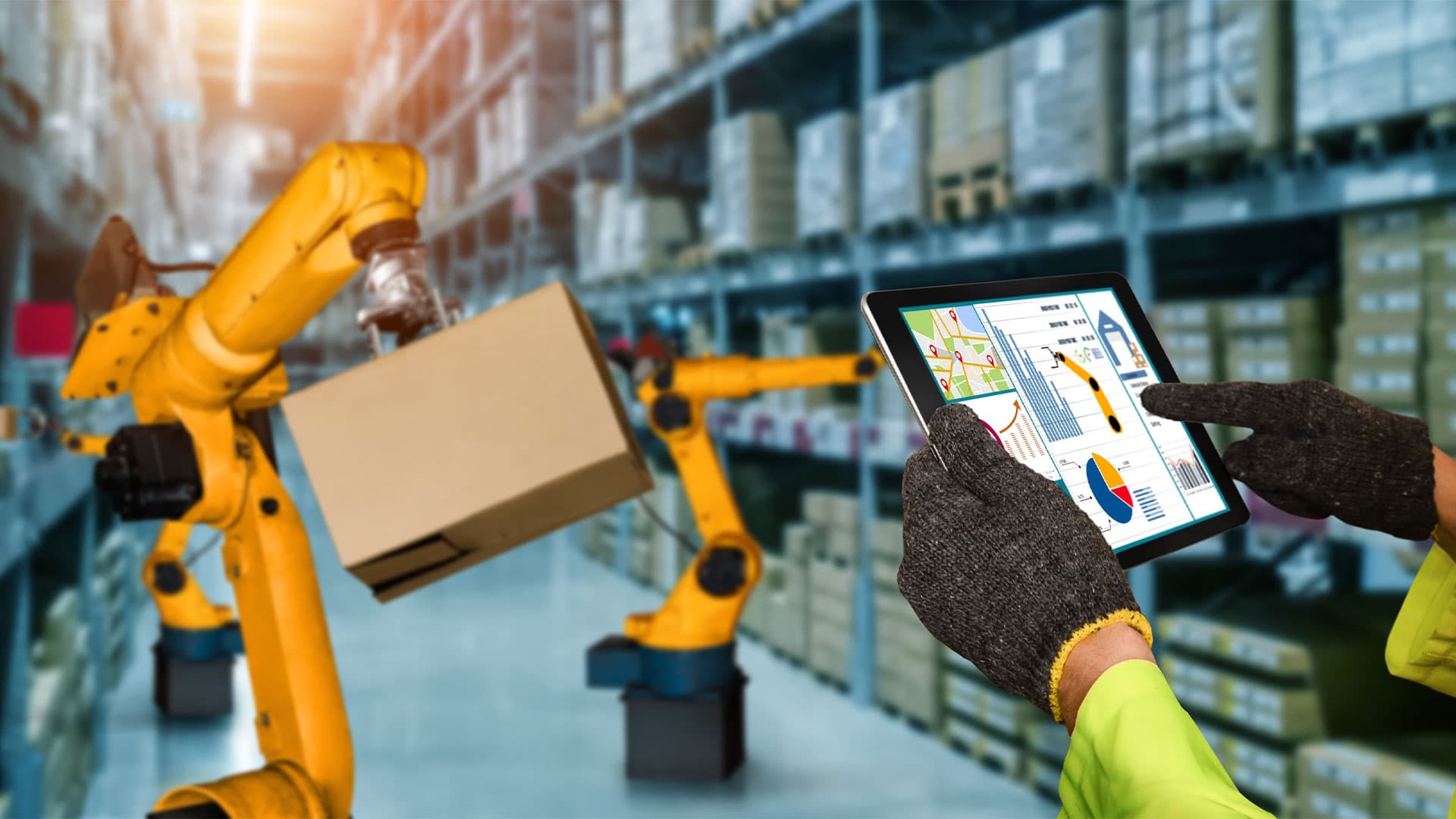
Knowing the answer to that question will ensure you can reap the benefits of your automation investment—and prepare for the future as well.
Like many warehousing operations, you’re probably already invested in automation to some degree. With today’s fast-moving, complex SKU landscape, most warehouses cannot keep up with demand without some level of automation. But in many cases, there’s more you can gain from the automation you already have.
You also might be considering next steps in your automation journey, but before you can take those steps, you need a thorough understanding of where you are along that path.
Many companies with automation have some processes in place, but often they are not updated or modernized. You may have an outdated legacy system. You may be underutilizing the data in front of you and, as a result, are faced with inconsistent performance across your various sites. You and your team may question why, if you’ve invested a great deal in automation, you aren’t getting the expected results.
This is the point where you need to assess your current state and develop a game plan for moving forward. It may be helpful to bring in an integrator or OEM to assist with the audit and assessment.
When examining your current automation, consider factors such as the mix of older and newer technologies as a starting point. Also look at your sensors and systems. Are they from multiple vendors or a single provider? Did you implement your automation all at once, or at different times with no standardization? And how much integration do you have between systems? It may be limited—and that’s worth noting.
With disparate systems that aren’t well integrated, you likely haven’t achieved the results you expected. You may be collecting data but unable to leverage it effectively. Performance gaps may exist across lines or facilities. Maintenance and troubleshooting tend to be reactive rather than proactive, and scaling improvements becomes difficult.
Drilling down into your sensors and systems, consider details such as barcode reading errors and missed detections on production lines. By working with a vendor, you may uncover opportunities to add high-performance sensing, leading to improved accuracy and reliability.
In your assessment, you may also identify several small failures that can lead to major disruptions. With better sensors designed to perform in harsh environments, you’ll be able to operate at a higher, more efficient level. These small failures may include sensor misalignment, dirty lenses, environmental interference, or failure points that aren’t proactively monitored.
Another issue you may discover is a lack of visibility into operations. Your systems generate data, but it isn’t actionable. Poor-quality data provides no value. Operators may not fully understand why issues occur, leading them to guess without data to support their decisions. In addition, you may lack real-time insight into performance.
A potential solution is to use sensors as data enablers—helping you become more proactive and providing real-time, actionable insights.
If your challenge is scaling automation into the modern age, you may find that what works in one facility doesn’t translate easily to another. Customer integrations can slow progress, and there may be no standardized best practices in place. Standardized, modular solutions and proven applications across multiple industries can help address this issue.
Another common challenge is integration complexity—new technology doesn’t easily fit into existing infrastructure. You may face an IT/OT disconnect and concerns about disruption during upgrades. However, if your integrator works with integration-friendly solutions and has experience within existing environments, you can minimize downtime and risk.
The bottom line is that your automation journey is highly dependent on accurate data and effective data capture. If your sensing technology falls short, everything downstream suffers. The goal is to modernize without a full “rip and replace.”
Establish a plan that focuses on incremental upgrades and adding intelligence to existing systems. Look for ways to improve performance without replacing entire systems.
You should seek a provider or integrator with expertise in conveyor systems, robotics integration, safety environments, and outdoor conditions.
Ultimately, this might resemble a case like this: A distribution center with automated sorting still struggles with misreads during peak volume, leading to manual rework and delays. By bringing in the right integrator or OEM, read accuracy and consistency can be significantly improved.
Automation is a critical component of successful warehousing. But if you don’t understand where you are in your journey—and what you need to move forward—you’ll miss out on the full value of your investment.
Need help with automation? Visit MHI's Solutions Community to find a provider who understands your operations.
Contributor: Ethan Bollom, SICK
Reviewed by: Solutions Community Marketing Committee
View more blogs by:
Related Content
BLOG
AI in the Modern Warehouse

BLOG
Improving Warehouse Labor Productivity with Real-Time Insights
BLOG
Post-Installation Training for Warehouse Automation
BLOG


